 Karmactive Staff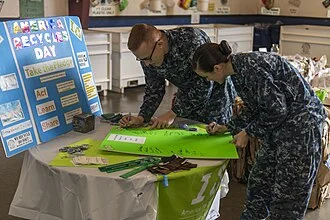
America Recycles Day arrives on November 15, 2026, a national observance focused on recycling and reducing waste. For many households, recycling feels straightforward: put plastic, paper, and metal in the bin, and assume it gets processed into new products. But recycling is more complex, and how well it actually works depends on what goes into those bins. America Recycles Day overview.
Contamination—putting things in the recycling bin that don’t belong there—is the biggest problem most recycling programs face. Plastic bags, food-soiled containers, garden hoses, and other non-recyclable items jam machinery at sorting facilities, causing equipment breakdowns and creating expensive waste removal. The solution is simpler than it seems: knowing what your specific program accepts and putting only those items in recycling bins.
Most curbside programs accept clean, dry paper and cardboard; aluminum and steel cans; and certain plastics (usually labeled 1 through 7, though specific numbers vary by program). But there are real exclusions. Plastic bags clog machinery—bag them separately if your program accepts them, or take them to retailers. Styrofoam (expanded polystyrene) clogs sorting equipment and isn’t recyclable through most curbside programs. Small items smaller than a phone or a tennis ball get lost in the system and jam equipment. Wet or food-soiled items contaminate whole batches of otherwise recyclable material.
Calling your local program or checking their website (most programs have simple guides) tells you exactly what’s accepted. It takes fifteen minutes and prevents contamination. Putting a printed guide on your recycling bin helps everyone in your household get it right.
The circular economy depends on recycled material being usable. If a batch of cardboard is wet or has food residue, it’s not usable for new cardboard. If aluminum cans are full of liquid, they’re harder to process. Taking thirty seconds to rinse containers and let them dry dramatically improves the quality of recycled material. It’s not about being perfect; it’s about making material usable.
Plastic recycling is more limited than most people realize. Plastic bottles and containers labeled 1 or 2 (PET and HDPE) are actually recycled reasonably well. Plastics labeled 3-7 are recycled much less. Most plastic that goes into bins ends up being either downgraded into lower-quality material or exported to other countries where it’s processed less stringently. Reducing plastic consumption—buying products in glass or metal instead of plastic, refusing plastic bags, choosing items with minimal packaging—matters more than assuming recycling will handle all your plastic.
Electronics recycling deserves separate attention. Phones, computers, and electronics contain valuable materials like gold, copper, and rare earth elements, but they also contain toxic substances like mercury and lead. Most curbside programs don’t accept electronics. Finding certified e-waste recyclers through your city’s website or calling your local solid waste program prevents toxic materials from ending up in landfills. Many retailers like Best Buy accept electronics for recycling. Some manufacturers accept their own used products.
Composting organic waste (food scraps, yard debris) is part of the circular economy too, but it’s separate from recycling. Some municipalities offer curbside composting; others don’t. If composting isn’t available through your city, starting a home compost bin—even a small one—diverts food and yard waste from landfills. In landfills, organic material breaks down anaerobically, producing methane, a greenhouse gas. In compost, it breaks down aerobically, producing soil amendment instead.
Textiles and clothes aren’t accepted through curbside recycling, but they can be donated to thrift stores, clothing swaps, or textile recycling services. Shoes, accessories, and worn-out items that can’t be worn again can go to textile recyclers. This keeps material out of landfills and sometimes finds new use.
Hazardous materials—paint, batteries, chemical cleaners—require special disposal. Most communities have hazardous waste collection events or facilities. Putting these items in regular trash or recycling creates dangers at landfills and recycling facilities.
The most important part of the recycling system isn’t the sorting; it’s what happens after material is collected. Markets for recycled material need to exist for recycling to be worthwhile. Buying products made from recycled material creates demand that makes recycling economically viable. Looking for items labeled as containing recycled content—from paper products to plastic items to textiles—closes the loop. Recycled aluminum is cheap to produce and infinitely recyclable. Recycled paper is common and good. But the system only works if people buy recycled products.
Recycling is genuinely important, but it’s also less important than reducing consumption and reusing items. Before putting something in the recycling bin, ask if someone else could use it. Before buying new, check if you could borrow, buy used, or do without. Recycling is the end of the line, not the beginning of the solution. This November 15, take fifteen minutes to check what your local program accepts, print the list, and commit to putting only those items in your bin. It’s a small action with real impact on whether recycling actually works. UK Digital Waste Tracking Rules covers waste policy. Australia renewable energy provides circular economy context.