 Sunita Somvanshi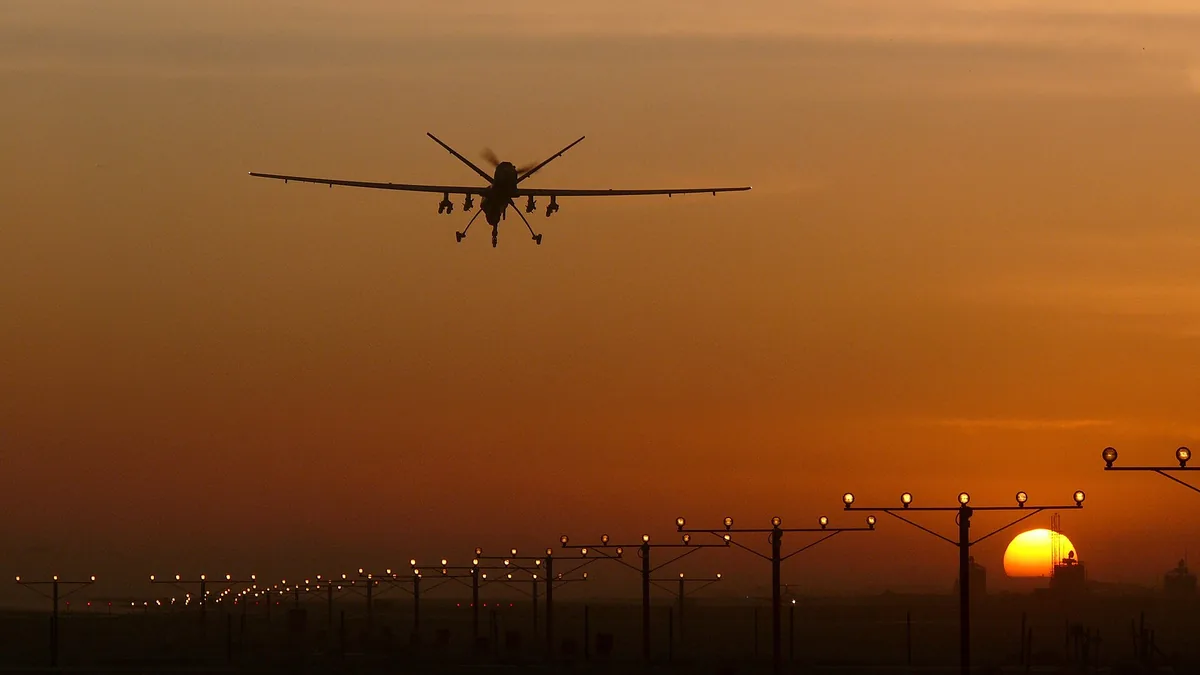
# UK’s ‘War Book’ Rewrite: What the Drone Surge and Stockpile Advice Really Mean
If you’ve seen advice this week telling you to keep bottled water and tinned food in the cupboard, you’re not imagining a shift. Britain’s government is rewriting its secretive “war book” for the first time since 1991. Its top military officer says the country is living through the most dangerous period of his 35-year career.
The Ministry of Defence confirmed this week it is updating the war book. It’s a Cold War-era plan setting out how government, emergency services and industry would respond to armed conflict or a comparable national emergency. Air Chief Marshal Sir Richard Knighton, the UK’s Chief of the Defence Staff, said the threat picture now includes drone incursions, cyberattacks and sabotage. Conventional military risk sits alongside all of it. A freedom of information request obtained by The Independent found drone security breaches at UK military sites rose sharply. The count went from 126 in 2024, to 250 in 2025, to 340 in the year to August 2026.
If you live near a major UK port or depend on ordinary supermarket deliveries, this matters more than it sounds. Roughly 95% of UK imports and about half the country’s food arrive by sea. Officials say those supply lines are vulnerable to a single deliberate disruption. The government’s standing advice is to keep 2.5 to 3 litres of water per person per day, plus several days of tinned food. This isn’t because war is imminent, but because officials no longer rule out short, sharp shocks to supply.
Much of the public conversation has focused on troop numbers and defence budgets. The more immediate vulnerability sits somewhere less visible: energy and import infrastructure. Analysts point to ports such as Felixstowe, Milford Haven and Grangemouth as potential single points of failure. Undersea cables and GPS-reliant tankers carry the same risk. Russian naval activity, including the surveillance vessel Yantar operating near undersea infrastructure, has sharpened this concern. A hostile actor could disrupt fuel or freight without firing a shot. The 2025 cyberattack on Jaguar Land Rover cost the UK economy an estimated £1.9 billion, according to the Cyber Monitoring Centre, making it the most economically damaging cyberattack in British history. It’s cited as a preview of how one incident can ripple through supply chains households never think about.
The drone breach numbers tell a story that isn’t really about Russian capability. Experts quoted in the reporting say the sharper explanation is that British military bases have little to no counter-drone defence in place. That means even unsophisticated intrusions succeed. The jump from 126 to 340 breaches in two years looks less like a technological leap by any adversary. It looks more like a gap in basic site security, left unaddressed. The Ministry of Defence itself has said the rise partly reflects better detection technology and improved reporting, alongside any new threats.
There’s also a budget argument that rarely makes it into headlines. Britain’s defence spending is often compared unfavourably to European allies. That comparison can be misleading. Since 2010, the UK has folded its nuclear deterrent and intelligence budgets, covering MI5 and MI6, into the overall defence figure. Strip those out, and Britain’s spending on conventional forces sits close to Italy’s, at roughly £48 to £50 billion. That complicates the narrative that the UK simply spends too little compared with NATO peers.
Other countries have taken a different approach to public readiness. Finland maintains a reserve force built on near-universal male conscription. It has stored strategic supplies including grain and fuel since the 1960s through its National Emergency Supply Agency. Sweden has revived civil defence pamphlets advising households on emergency supplies. Retired general Sir Richard Shirreff, a former deputy NATO supreme allied commander in Europe, argues Britain’s civilian population is far less prepared for disruption than its Nordic neighbours. He notes both face a similar threat picture. Historian Margaret MacMillan has noted that societies tend to underestimate how quickly a period of relative peace can shift. She has traced this pattern across earlier eras of European history.
What is the UK’s “war book”? It is a Ministry of Defence plan, last treated as a live Cold War-era framework until 1991, that sets out how government, emergency services and industry should respond to armed conflict or a comparable national emergency. Officials confirmed in September 2026 that it is being rewritten, with the update due to be completed by the end of the year.
None of this means a war is about to start. The government has been careful to frame current advice as general emergency preparedness rather than mobilisation for conflict. That distinction has gotten lost in some of the public reaction to stockpiling guidance. Officials have not yet published the rewritten war book itself. Its eventual release, alongside any update to UK defence spending targets, will be the next concrete sign of how far this shift goes.