 Govind Tekale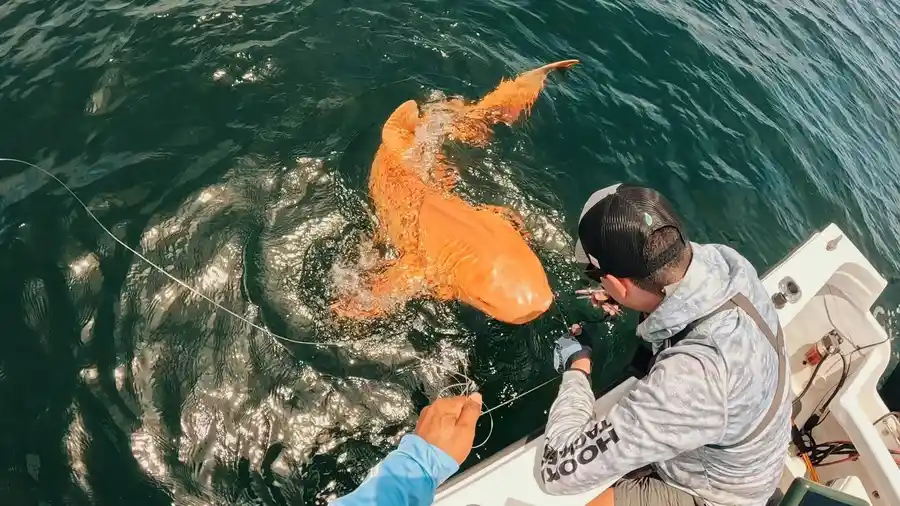
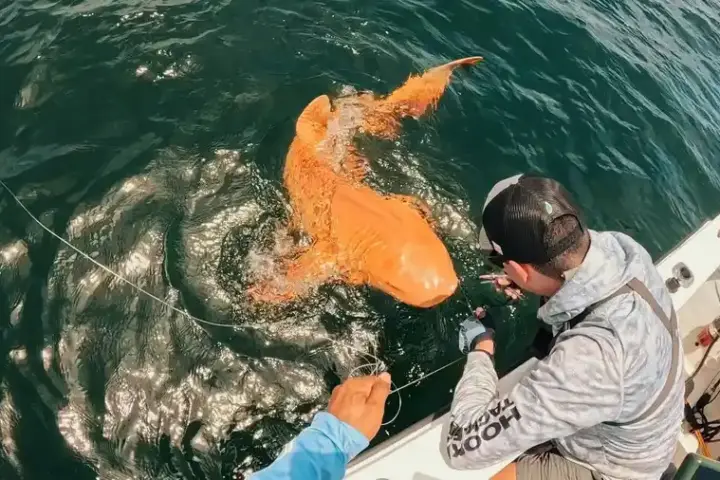
A 1,600-pound great white shark tagged by OCEARCH has reached Newfoundland waters for the first time in the research organization’s tracking records. The journey marks a significant milestone for understanding how white sharks are expanding their range into the northern Atlantic.
The shark, named Contender, triggered receivers positioned in Newfoundland, making it the first OCEARCH-tagged shark to venture into that region. OCEARCH tracks large sharks using acoustic and satellite tags that ping detection networks across the Atlantic, allowing researchers to monitor migration patterns and habitat use.
The significance of Contender’s arrival lies in what it reveals about white-shark distribution. Newfoundland and Atlantic Canada are increasingly recognized as part of the western North Atlantic white-shark range, but each documented shark presence adds concrete data to this expanding picture. For a mature animal like Contender to reach those waters provides additional evidence of white-shark presence in Atlantic Canada, supporting OCEARCH’s broader assessment that Newfoundland is part of the expanding western North Atlantic range.
OCEARCH researchers use tracking data to examine how white sharks move with changing prey patterns, seasonal conditions, and habitat use across the Atlantic. Tracking individual sharks like Contender provides evidence researchers need to understand where mature animals travel and how often they use northern waters.
Contender’s size—roughly 1,600 pounds—makes this shark particularly important to monitor. Adult great whites of this scale are apex predators whose movement patterns influence ecosystem dynamics across wide ocean areas. By tracking where mature animals travel, researchers gain insight into how the species uses the full Atlantic habitat.
The practical implications extend to Newfoundland’s maritime communities. Fishermen and coastal operators benefit from knowing that white sharks have been documented in waters off the Canadian coast, as demonstrated by Contender’s presence. While white-shark presence is not inherently dangerous, accurate distribution data allows communities to factor this information into safety protocols and resource management decisions.
OCEARCH’s tracking network has grown over years of expeditions, with receiver arrays positioned along migration corridors and habitat zones. Each new animal tagged—and each location reached for the first time—fills gaps in the scientists’ understanding of these ocean giants.
Contender’s presence in Newfoundland represents the kind of discovery that continuous tracking makes possible: a shark migration milestone that, before satellite technology, would likely have gone entirely undetected.