 Sonali Tiwary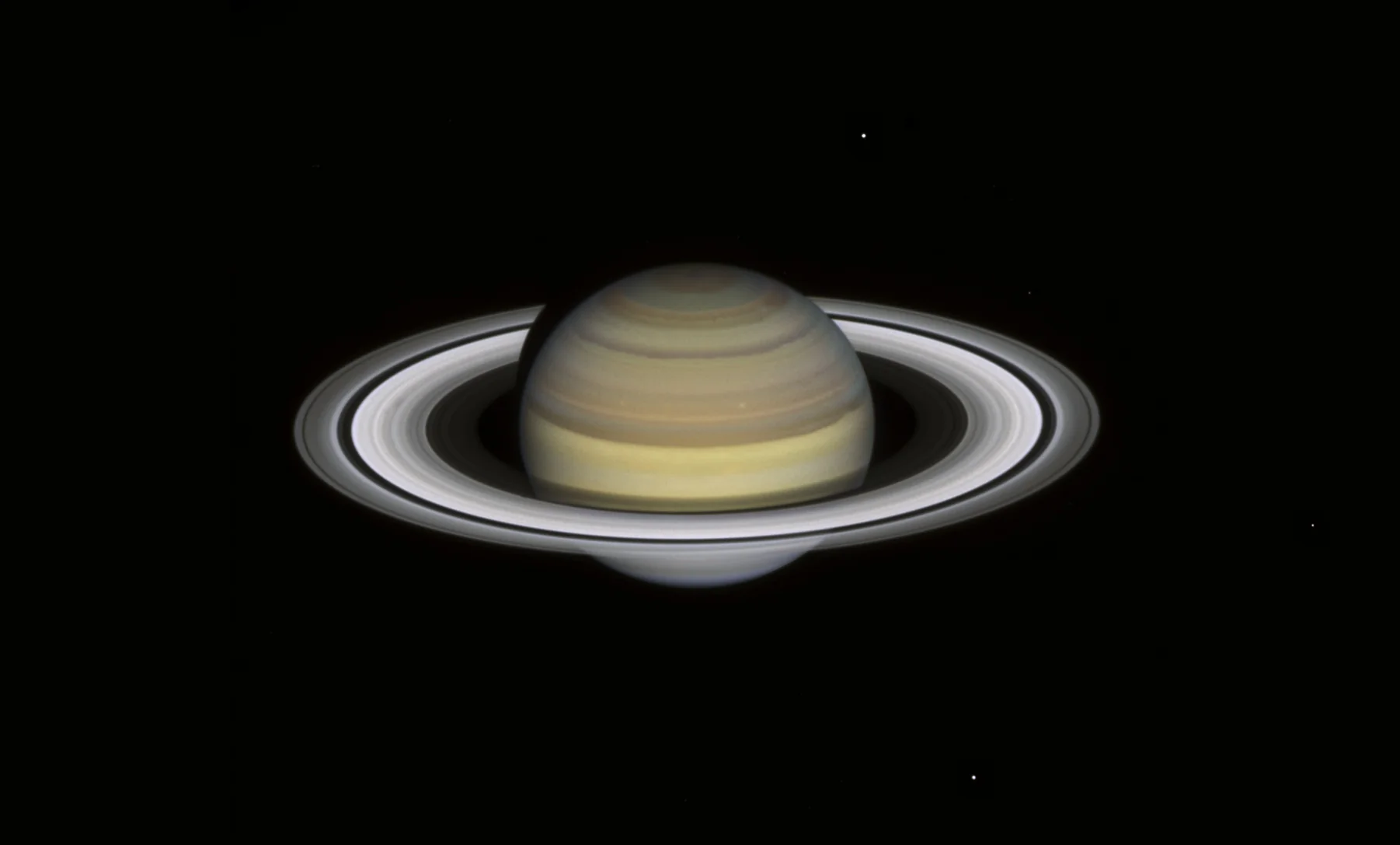
For over four decades, Saturn’s north pole has held astronomers’ attention with its distinctive hexagonal atmospheric pattern, discovered by Voyager spacecraft in 1980 and later observed in detailed mapping by NASA’s Cassini mission. Now evidence shows Saturn’s southern pole displays a different geometric structure: a 10-sided atmospheric wave, or decagon.
NASA’s Hubble Space Telescope captured images revealing this southern feature in observations dated August 29, 2025, though the findings were announced in September 2026. Planetary scientists have identified it as a large atmospheric wave embedded in one of Saturn’s powerful jet streams.
Observations indicate that the southern decagon is evolving, and scientists are still working to understand what drives it and how it formed. NASA’s released imagery also notes missing data at the central polar region, while Hubble’s WFC3/UVIS instrument captured the images using advanced optical technology.