 Karmactive Staff
 Govind Tekale
—
A youth movement that began as a satirical act of protest against India’s political class is now splitting into factions — mirroring the very dysfunction it set out to mock.
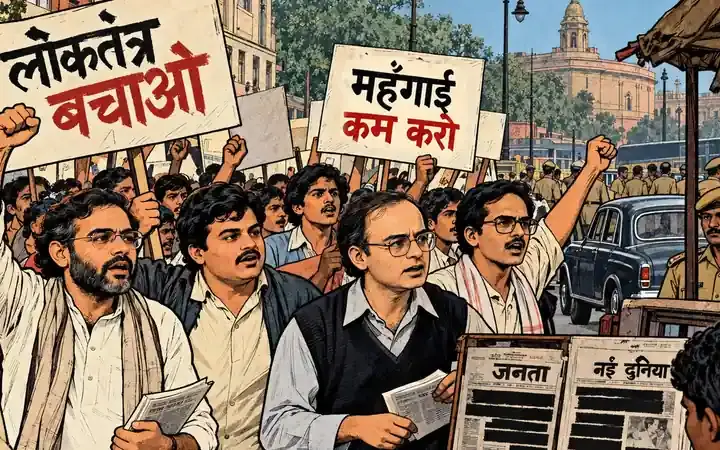
The Cockroach Janta Party, known as CJP, was founded on May 16, 2026, by a young activist named Abhijeet Dipke. The name came directly from a controversy: remarks attributed to Chief Justice of India Surya Kant referred to certain people as “cockroaches” and “parasites.” The Chief Justice later clarified that the remarks were directed specifically at individuals with fake or bogus degrees, not at unemployed youth broadly. The controversy still sparked outrage among unemployed educated youth who felt they were being dismissed by institutions meant to serve them. Dipke and others flipped the insult into a platform, and CJP grew quickly — using social media, street protests, and sharp satire to draw attention to exam paper leaks, judicial delays, anti-defection laws, and youth unemployment.
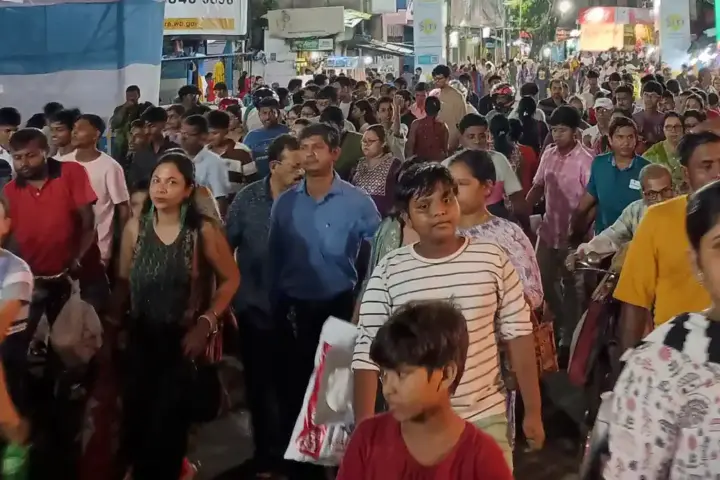
The movement’s most visible moment came at Jantar Mantar in New Delhi, where large-scale protests contributed to the resignation of Dharmendra Pradhan as India’s education minister. That was a real political consequence from a group that started as a punchline.
Then came the fracture. On September 3, 2026, a former CJP volunteer named Manish Brahmbhatt announced the launch of a breakaway group called the Cockroach Janata Party-Democratic, or CJP-D, in Delhi. Brahmbhatt said the new party would focus on transparency, accountability, and genuinely democratic decision-making — with membership open through social media, WhatsApp, and a missed-call facility.
The split came with serious allegations. Brahmbhatt claimed that after the Jantar Mantar success, CJP was “sold out and politicised.” He alleged that eight of the twelve people selected for CJP’s national committee had ties to the Aam Aadmi Party (AAP), and that not a single volunteer or Jantar Mantar protester was consulted before the committee was formed. He accused the movement of becoming “Team Kejriwal.” He also said dissenting members had proposed a national structure with five representatives per state, which was rejected in favor of what he called an “arbitrary” selection process.
CJP’s leadership structure, as it stands, lists Dipke as national convenor, Saurav Das and Ashutosh Ranka as co-conveners, and Aafreen Nawaz as national secretary. Dipke has acknowledged having a past connection to AAP but maintains he currently has no ties to Arvind Kejriwal’s party. Kejriwal and other AAP figures did appear alongside Dipke during the Jantar Mantar protests, which has kept the perception issue alive, though that alone doesn’t confirm Brahmbhatt’s claim of AAP control. As of the time most reports were published, neither CJP nor Dipke had formally responded to Brahmbhatt’s specific allegations.
CJP continues to operate, currently running a nationwide campaign called “School Thik Karo” — roughly translated as “Fix the Schools” — which reflects its stated choice to function as a pressure group rather than a formal political party.
Whether the split weakens or redefines both factions remains to be seen. What’s clear is that a movement that started with a borrowed insult now faces the oldest problem in politics: what happens after the first victory.
— —