Karmactive Team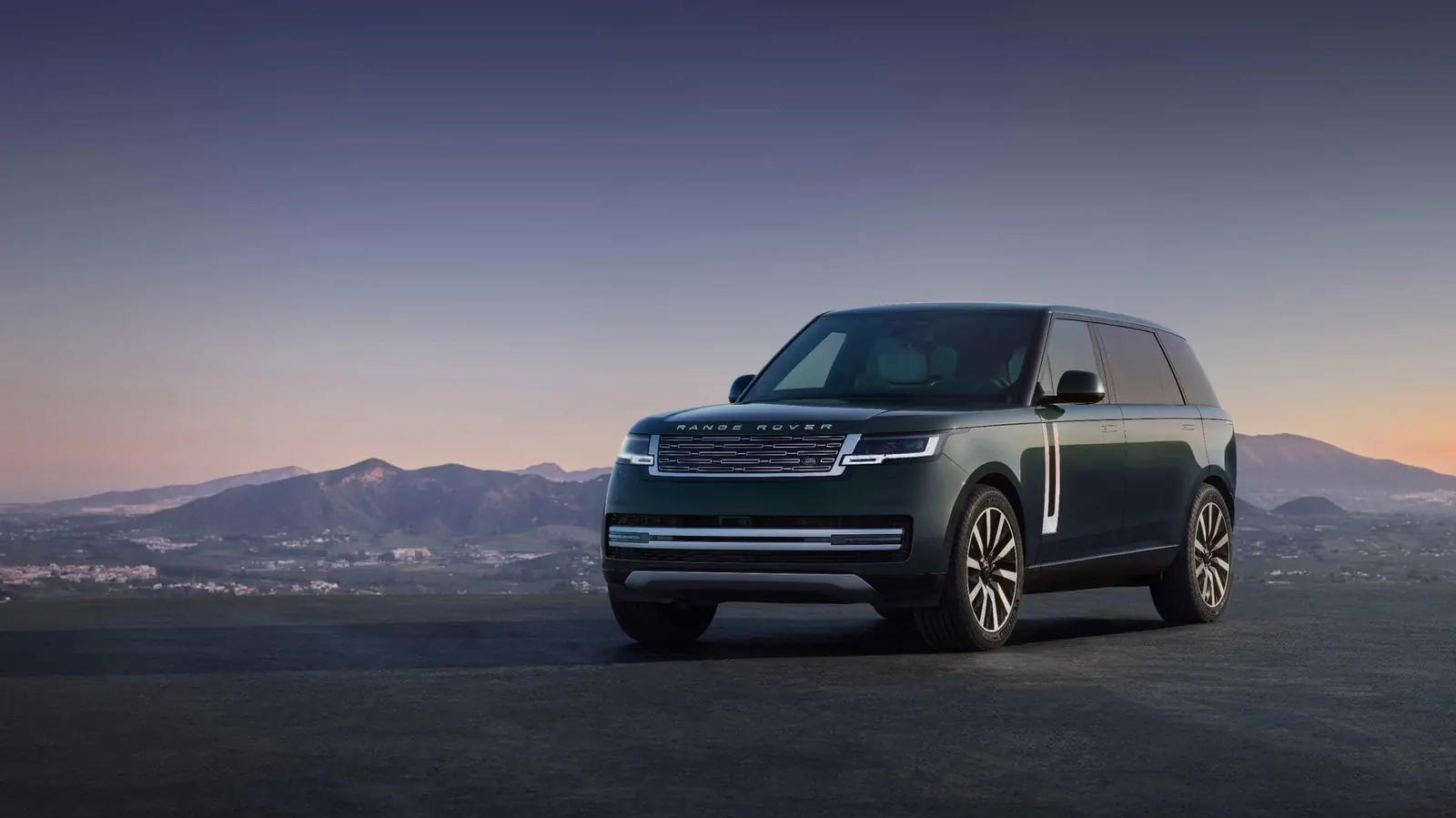
Range Rover has opened orders for its first fully electric model, the Range Rover Electric—and it’s breaking a stereotype about electric vehicles: batteries and off-road capability don’t have to be enemies.
The Range Rover Electric can wade through water up to 900 millimeters deep—that’s roughly three feet. How that’s possible tells you something about how EV engineering is evolving.
The electrical architecture behind it
The vehicle runs on an 800-volt electrical system, which is significantly different from most current EVs. That voltage architecture supports ultra-fast DC charging at high-output public chargers—a 350kW DC charger can charge the battery from 10% to 80% in 22 minutes. The 118.5kWh liquid-cooled battery uses a smart thermal buffer designed to protect against degradation from repeated charging cycles.
For wading, the battery and high-voltage electronics are sealed against water ingress. Land Rover’s Wade Sensing technology, which uses ultrasonic sensors in the door mirror housings, monitors water depth during a crossing and displays real-time depth information to the driver.
Twin motors replace mechanical transfer cases
Traditional off-road vehicles use differential lockers and transfer cases to distribute power to wheels. The Range Rover Electric uses twin permanent-magnet electric motors—each producing 260kW—delivering a combined 550PS and 850Nm of torque. Software-controlled traction management handles power distribution across axles, managing wheel slip on loose ground or in water.
Terrain Response 2 software adapts traction automatically to the terrain. When you’re crossing a water obstacle or navigating sand, the system adjusts continuously in milliseconds.
Battery warranty and long-term costs
Jaguar Land Rover guarantees the traction battery for eight years or 100,000 miles, whichever comes first. Liquid cooling and thermal management are designed to maintain battery health through regular charging cycles.
Manufacturing and charging reality
Range Rover Electric is built at JLR’s Solihull plant in the West Midlands. Battery packs and electric drive units are produced at JLR’s Electric Propulsion Manufacturing Centre in Wolverhampton. The 800-volt system means charging times at high-output DC chargers are substantially faster than older EV architectures.
The vehicle’s maximum towing capacity is 2,500 kilograms. That matters if you’re hauling trailers or equipment, which off-road users regularly do—though this is notably lower than the combustion Range Rover’s 3,500kg rating.
The consumer question everyone asks
Can batteries and deep water really coexist? The manufacturer’s answer is yes, with a critical qualification: check the route and exit before wading. Water wading capability is not flood-safety—it’s controlled water crossing in known terrain. Attempting to ford rivers in rainstorm conditions is dangerous in any vehicle, electric or not.
Why this matters
For decades, electric vehicles were urban commuter cars. They couldn’t tow much, couldn’t handle serious terrain, and weren’t built for deep-water crossings. EV engineering is evolving to combine an all-electric powertrain with the manufacturer’s stated off-road and wading capabilities. That’s a meaningful combination of specifications for buyers who use vehicles for country properties, rural work, or outdoor recreation and who have previously ruled out electrification for those uses.
The 900-millimeter wading depth and 2,500-kilogram towing are the manufacturer’s stated specifications. For outdoor enthusiasts skeptical of electrification, the specifications give concrete performance numbers to evaluate rather than relying on perception alone.