 Sonali Tiwary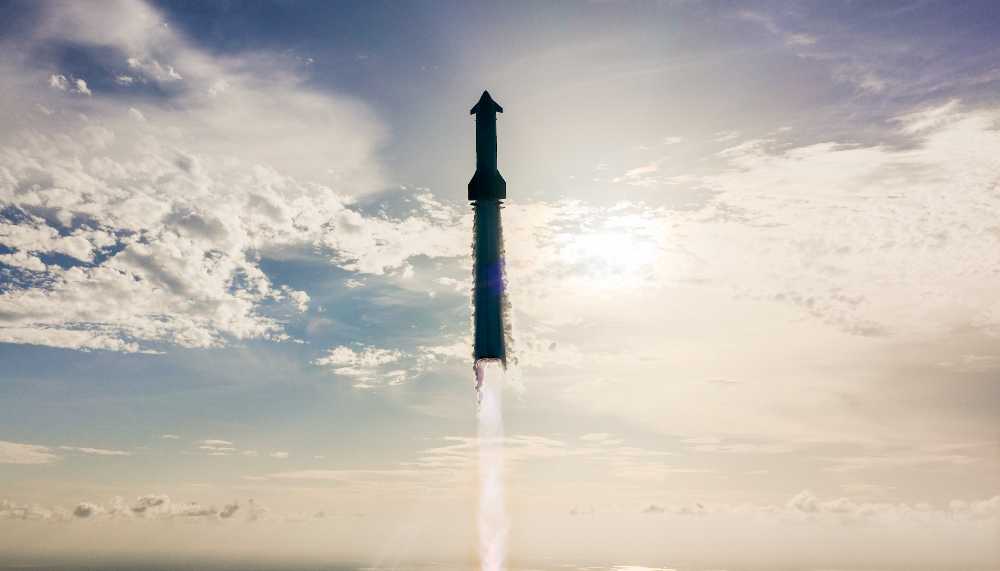
SpaceX has successfully completed a ground test for the next Starship flight, firing all 33 engines on the massive Super Heavy booster at the company’s Starbase facility in Boca Chica, Texas. The static fire test of Booster 21 and upper stage Ship 41 represents a major checkpoint before launching Starship Flight 14.
Static fire tests involve igniting rocket engines while the vehicle remains secured to the ground. Engineers monitor propellant flow, pressurization systems, and ground equipment response to verify test operation and gather performance data. For Starship’s Super Heavy booster, coordinating 33 engines simultaneously requires extremely precise timing and control.
The test occurred on August 28 on the Orbital Launch Mount, SpaceX’s ground infrastructure at Starbase. The facility includes massive steel structures that secure the rocket during testing and capture thrust measurements. The 33 Raptor engines fired in a roughly 15-second full-duration static fire, demonstrating successful engine sequence and ignition systems during ground testing.
A successful static fire demonstrates successful test operation under controlled conditions. The test verified propellant flow and engine controller function while the vehicle remained secured. Static fire completion provides engineers data for understanding engine performance and system responses, contributing to the overall development sequence.
Starship represents SpaceX’s next-generation heavy-lift launch system designed to carry large payloads to orbit. The Super Heavy booster provides initial thrust to lift the entire system. Ship 41, the upper stage vehicle, is designed to continue the mission following separation from the booster.
Flight 14 will be an orbital test flight, meaning Starship will attempt to reach orbit around Earth. This marks progression from earlier test flights that focused on controlled ground operations and vehicle recovery procedures.
The Federal Aviation Administration oversees commercial spaceflight licensing and safety. SpaceX operates under FAA commercial space transportation authority, which requires companies to demonstrate operational capability through sequential testing and flight validation. Static fire tests provide essential performance data that contributes to the overall understanding of vehicle systems and supports the broader development program.