 Rahul Somvanshi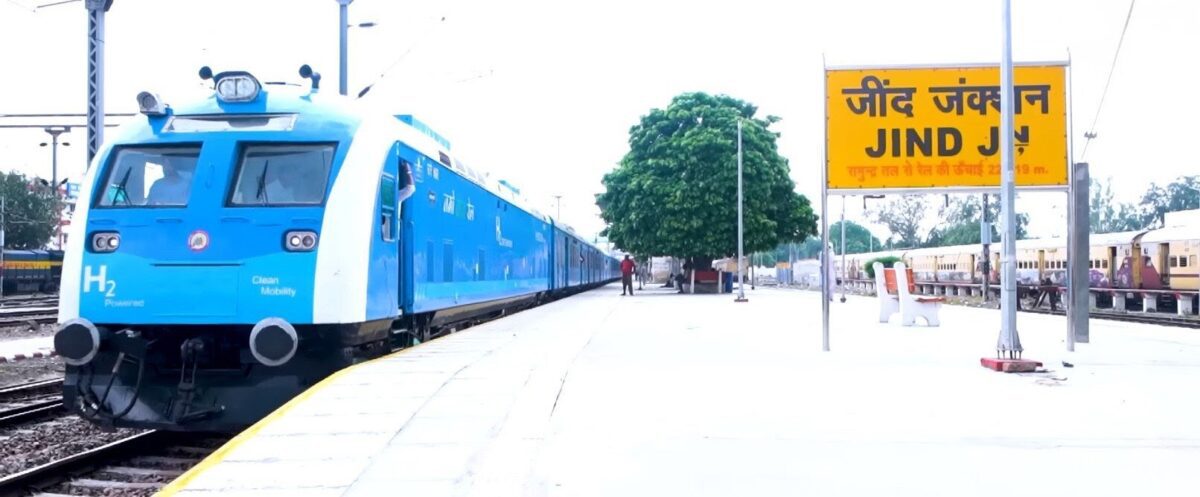
India has achieved something no other country has done: launched a hydrogen-powered train that dwarfs similar projects worldwide. The “NaMo Green Rail,” flagged off by Prime Minister Narendra Modi on July 17th in Haryana state, carries 2,600 passengers across 10 coaches—roughly five times the capacity of Germany’s hydrogen trains and far larger than experimental prototypes in Japan.
The train operates on hydrogen fuel cells, a technology that produces only water vapor and heat as exhaust—no carbon emissions or air pollution. Two power cars generate 2,400 kilowatts of total power, roughly equivalent to 3,200 horsepower. The system combines Ballard fuel cells producing 1,600 kilowatts with batteries storing 800 kilowatts, letting the train switch between fuel cell power and battery discharge to optimize efficiency.
The route runs between Jind and Sonipat in Haryana, covering 89 kilometers through 12 stations in about two hours. Two complete round trips operate daily, allowing daily ridership to reach thousands. Remarkably, a ticket costs just 10 rupees—roughly 12 cents—making it accessible to everyone regardless of income.
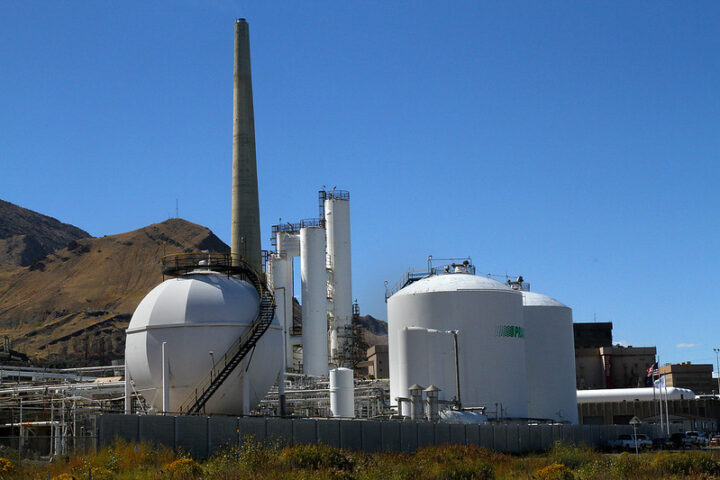
What makes this achievement distinctly Indian is the manufacturing. The Integral Coach Factory, India’s state-owned rail manufacturer, designed and built the entire train domestically. Alongside the train itself, India constructed the world’s largest hydrogen storage facility at Jind, capable of holding 3,000 kilograms of hydrogen—the refueling infrastructure required to keep the train operating. Regulatory approval came from PESO, India’s petroleum and explosives safety organization, while German firm TÜV SÜD conducted independent third-party safety verification.
The costs reflect India’s approach to public services. Each train costs 80 crore rupees (roughly $10 million), with an additional 70 crore ($8.75 million) invested in per-route infrastructure. These are massive investments, yet the government prices tickets so low that affordability matters more than maximizing revenue.
Union Minister Ashwini Vaishnaw positioned the launch as symbolic of India’s broader energy transition. “This milestone marks the latest chapter in the evolution of Indian Railways,” Vaishnaw said, “from coal and steam to cleaner, more sustainable sources of energy.” India joins Germany, Japan, China, and the United States in operating hydrogen rail technology, but exceeds them in passenger capacity.
Germany’s hydrogen trains, built by Alstom and called the Coradia iLint, typically carry 160 to 300 passengers across 2 to 4 coaches. Germany stopped running these trains in late 2024 after deciding electric rail was more practical for their network. Japan has tested hydrogen rail prototypes but hasn’t deployed commercial service at scale. China operates hydrogen trains in limited capacities.
The Indian government has announced an ambitious expansion plan called “Hydrogen for Heritage,” targeting 35 hydrogen trains for heritage and scenic routes across the country. If executed, this initiative could make India the world’s largest operator of hydrogen passenger rail. The project demonstrates that developing nations can leapfrog outdated technologies, adopting cutting-edge solutions faster than wealthier countries stuck with legacy infrastructure.