 Govind Tekale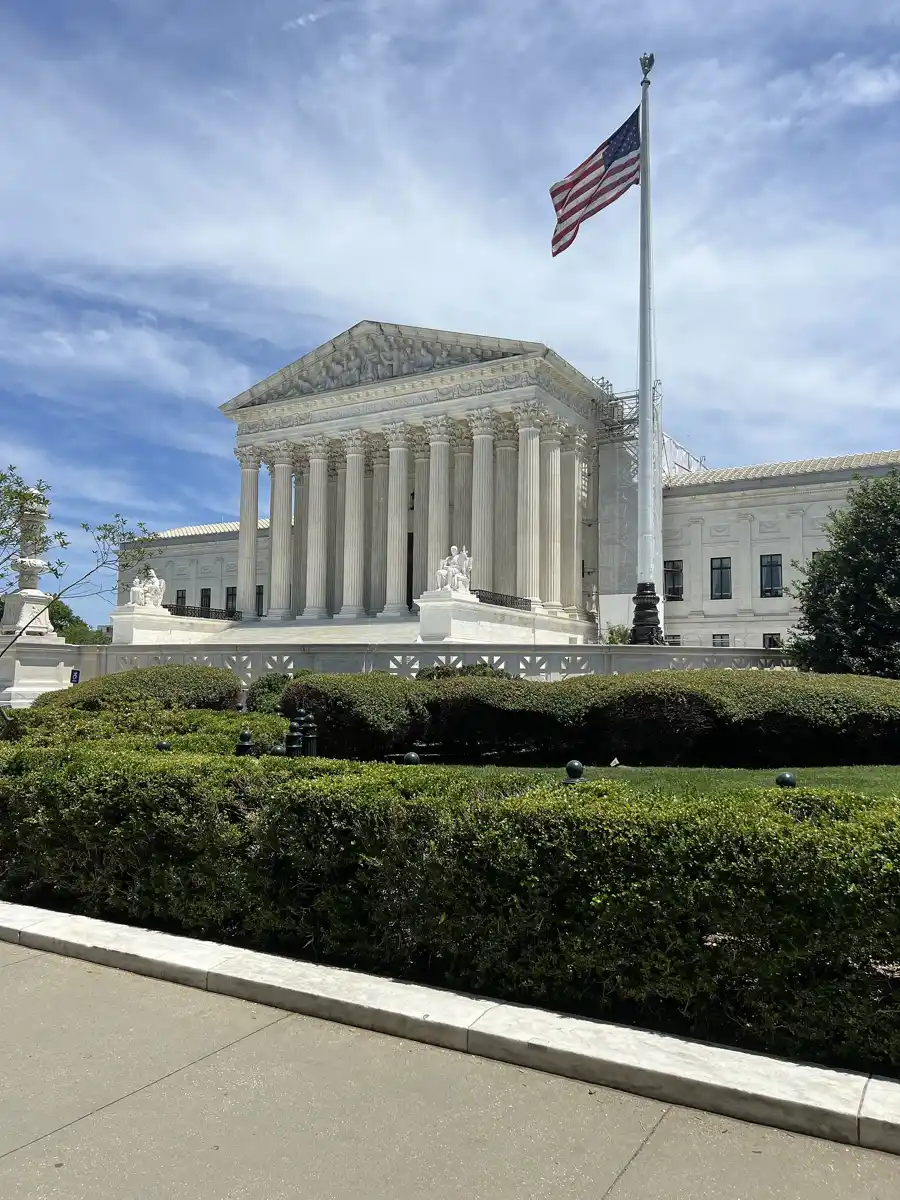
A federal court just told the Trump administration to stop building a ballroom at the White House. The decision, handed down August 7, hinges on a straightforward constitutional question: Does a president own the White House, or is he just renting it?
The answer, according to a three-judge panel from the [D.C. Circuit Court of Appeals]U.S. Court of Appeals for the D.C. Circuit, is renting. A president is a temporary tenant, the judges wrote. The building belongs to all Americans, designed for all presidents past and future. No individual president can unilaterally decide to tear down historic sections and rebuild them according to his preferences.
The story started in July 2025 when Trump announced plans for a ballroom in place of the East Wing. [Demolition began in October]White House. His plan: construct a 90,000-square-foot ballroom with a seated capacity of 650 guests. The administration claimed the space was necessary for hosting state dinners and diplomatic events. The initial estimated cost was $200 million.
That’s where things get complicated. By June 2026, [Washington Post reporters]Washington Post examining contractor invoices found the actual costs had ballooned to $600 million or more. That has tripled the estimated cost. Nobody explained publicly where the extra hundreds of millions came from or what design changes justified the increase.
The [National Trust for Historic Preservation]National Trust for Historic Preservation sued in December 2025, arguing that Congress, not the president alone, has authority over major changes to the White House. The case wound through federal courts quickly. In July 2026, a lower court judge sided with the trust. The Trump administration appealed.
On Friday, the appeals court voted 2-1 to keep the lower court’s ruling in place. Judges Patricia Millett and Bradley Garcia wrote that Congress has never surrendered authority over White House property to the executive branch. One judge, Neomi Rao, dissented, arguing that stopping construction creates security vulnerabilities.
The practical effect is that Trump has 14 days to ask the Supreme Court to intervene. The administration can continue underground work—bunkers, military installations, medical facilities. But the visible ballroom construction stops.
What makes this case noteworthy isn’t the specific ballroom. It’s the constitutional principle. Presidents have tried for decades to make their mark on the White House. Some have renovated sections. Some have added features. None have demolished entire wings and rebuilt them without seeking permission from Congress.
The judges’ language was emphatic. Whether a ballroom is “desirable” as policy is irrelevant, they wrote. That decision belongs to Congress, not to executive self-help. A president doesn’t get to treat the nation’s most famous house as his personal property to redesign at will.
The ballroom project remains unresolved. The administration will likely appeal to the Supreme Court. That process could take months or years. For now, construction halts. The constitutional question about presidential authority over federal property remains open.