 Sonali Tiwary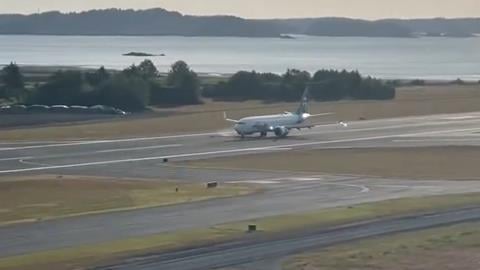
A Jet2 Boeing 737 carrying holiday passengers from Liverpool to Palma de Mallorca declared a general emergency and was diverted to Manchester Airport on August 6, 2026, after a suspected bird strike disrupted the flight 11 minutes after takeoff.
Flight LS3251 departed at 8:00 AM BST with approximately 186 passengers and crew aboard. The aircraft climbed normally to 15,000 feet when the flight crew detected a problem. They stopped climbing immediately and transmitted squawk code 7700—aviation’s international distress signal—to air traffic control. This single code tells controllers across the world that an aircraft faces a general emergency requiring immediate assistance.
Within minutes, the aircraft made a sharp turn back toward its departure point. Flight tracking data showed the Boeing 737-800, registered as G-JZHX, executing a U-turn near Shrewsbury. The flight was initially heading back to Liverpool but was subsequently diverted to Manchester Airport, where it landed safely at 09:01 BST on runway 23L.
The emergency landing occurred safely. No injuries were reported among passengers or crew. All systems functioned as designed—the crew detected an anomaly, followed emergency procedures, communicated with air traffic control, and landed successfully.
Initial reports indicated a bird strike during takeoff as the likely cause. Bird strikes are documented aviation hazards. They occur when aircraft encounter birds during takeoff or landing phases when flying slowly and low. Engines are particularly vulnerable. A bird ingested into an engine can damage internal components, reducing thrust or causing compressor issues. Modern engines have safeguards, but damage can still occur.
Alternative possibilities include hydraulic issues, electrical problems, or other mechanical failures. Without official investigation conclusions, confirming the exact cause remains speculative. Jet2 and aviation authorities will conduct detailed technical analysis, examining aircraft systems, engine condition, and maintenance records.
The emergency highlighted how aviation safety systems work in practice. Pilots detected something wrong early. They had procedures for every possible scenario. Air traffic control coordinated ground services. The aircraft landed safely. No emergency evacuation was necessary. Everyone went home.
This represents exactly how aviation is supposed to work when problems occur. Compare this to the worst outcomes—aircraft that don’t land safely, where detection fails or procedures break down. Modern commercial aviation has made such outcomes extraordinarily rare, but vigilance remains essential.
Jet2 arranged rebooking for passengers affected by the delay. The aircraft underwent standard post-incident inspections. The flight crew faced debriefing and evaluation. These are normal procedures designed to identify any learning opportunities or systemic issues.
For passengers aboard LS3251, the day didn’t go as planned. Holiday plans got delayed. But they’re alive, safe, and on ground. In aviation emergencies, that’s the definition of success.
—