 Karmactive Staff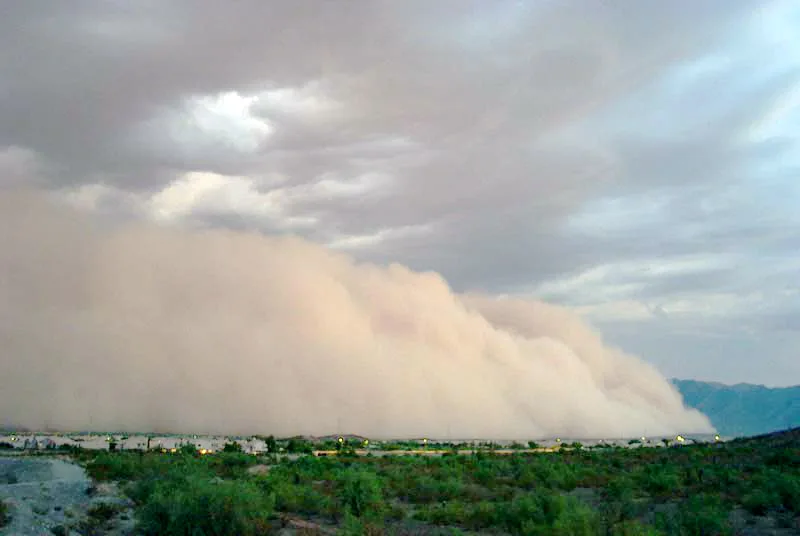
Estimated reading time: 2 minutes
A rare Category 5 dust storm swept across the Phoenix Valley on the night of August 3, 2026, marking only the fifth time in 15 years that forecasters recorded the highest rating on Arizona’s dust storm severity scale. The storm blanketed the region with extreme particulate matter, creating hazardous air quality that persisted well into Tuesday.
Officials rated the event Category 5 on the PHX Dust Storm Scale—the highest level on the 1-to-5 classification system. This scale was created by Arizona State University researchers, including Dr. Ryan Heintzman from ASU’s School of Geographical Sciences and Urban Planning, to measure dust storm severity in the Phoenix metropolitan area.
The scale evaluates storms using multiple indicators including PM10 particulate matter concentrations, wind speed, duration, and geographic extent. Category 5 represents extreme conditions—air quality readings across the Phoenix metro exceeded 200 micrograms per cubic meter, with some monitors recording over 500 and one exceeding 700. For context, a normal reading is below 50 micrograms per cubic meter.
Dr. Heintzman explained the scale’s measurement approach: “A Category 1 event can mean about 250,000 pieces of dust inhaled during an hour outside, while a Category 5 event can mean over a million pieces of dust inhaled during that same hour.” This quantification helps residents understand exposure risk.
The dust storm formed when thunderstorm outflows intersected with hot, dry desert surface conditions. Strong winds picked up massive quantities of dust particles that coalesced into a massive wall known as a haboob. These walls can travel across the region in minutes, with visibility dropping to near-zero.
Health officials issued warnings for vulnerable populations. Children, older adults, and people with heart or lung conditions face the highest risk. People with asthma should follow doctors’ instructions regarding medications and asthma management plans.
Meteorologists noted that the atmospheric conditions generating the Category 5 storm remained in place, suggesting another blowing-dust event was possible. The monsoon season, which runs through September, means Phoenix residents face months of additional haboob potential.
ASU created a new dust storm dashboard that displays real-time and historical storm data, allowing residents and emergency managers to assess storm severity and neighborhood-level impacts. This dashboard will prove increasingly valuable as monsoon season progresses and additional dust events occur.