 Rahul Somvanshi
**By Sonali Tiwary | Aviation/Space/Disaster Correspondent | August 29, 2026**
What if the protective packaging shielding your new laptop, smartphone, or flat-screen TV during shipping wasn’t made from petroleum-based styrofoam that lingers in landfills for centuries, but from mushroom roots that compost harmlessly in your garden within weeks? This isn’t science fiction—it’s the current reality of mycelium packaging, which has moved from innovative novelty to mainstream shipping material adopted by Fortune 500 companies for protecting everything from electronics to furniture.
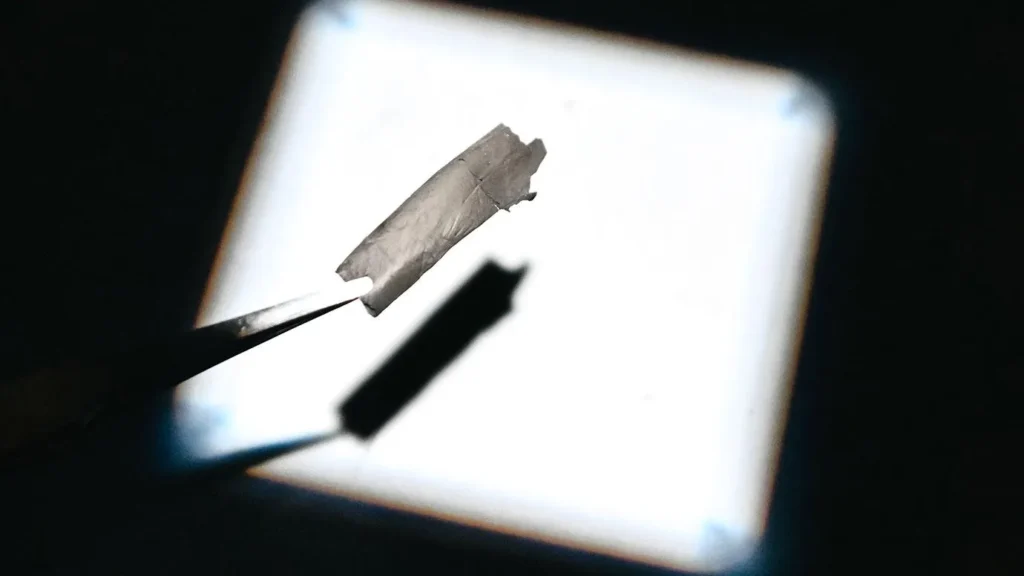
Mycelium—the fibrous, root-like network of fungi—offers a compelling alternative to expanded polystyrene (EPS, commonly known as styrofoam). When grown in molds filled with agricultural waste like hemp husks or corn stalks, mycelium acts as a natural self-assembling binder, forming a lightweight, rigid material with excellent cushioning properties. After growth, the material is dehydrated to halt fungal activity, resulting in a stable, biodegradable packaging component that performs comparably to EPS in shock absorption and vibration damping.
The environmental advantages are substantial. While EPS is derived from non-renewable fossil fuels, persists in the environment for hundreds of years, and is rarely recycled due to economic and logistical challenges, mycelium packaging is grown from renewable resources, requires minimal energy to produce (primarily for maintaining optimal growth conditions), and composts completely in home or industrial composting systems within 30-90 days—leaving no toxic residues behind.
Recent scaling breakthroughs have propelled mycelium packaging from pilot projects to volume production. Key advances include:
– **Improved growth kinetics**: Optimized strains and substrate formulations now reach full density in 5-7 days (down from 10-14 days), increasing facility throughput.
– **Enhanced water resistance**: Natural wax coatings and surface treatments provide temporary moisture barrier protection during shipping while maintaining compostability.
– **Consistent quality control**: Automated monitoring of humidity, temperature, and CO2 levels during growth ensures uniform material properties across large production runs.
– **Scalable manufacturing**: New continuous-feed growing systems and modular production facilities enable output measured in tens of thousands of units per day rather than hundreds.
Major brands are taking notice. IKEA has been using mycelium packaging for select products since 2019 and expanded its use significantly in 2024-2025, citing both environmental alignment and customer appreciation for the compostable nature. Dell began shipping certain laptop models with mycelium-based cushioning in 2022 and has expanded the application across its consumer and commercial lines. Even Apple, notoriously selective about packaging materials, has piloted mycelium inserts for specific accessories in its 2026 product lines.
Performance testing confirms viability. Independent laboratory studies show that mycelium packaging compares favorably to EPS in key metrics:
– **Shock absorption**: Similar G-force reduction during drop tests (typically 40-60% peak acceleration reduction)
– **Vibration damping**: Effective across frequencies relevant to shipping and handling
– **Creep resistance**: Maintains shape under sustained loads
– **Thermal insulation**: Provides moderate insulation properties beneficial for temperature-sensitive items
Cost considerations, once a barrier, are becoming increasingly favorable. While early mycelium packaging carried a significant premium over EPS, scaling improvements and material innovations have narrowed the gap. Current estimates place mycelium packaging at 10-20% above EPS for comparable protective performance—a difference that many companies find acceptable given the environmental benefits and potential marketing value. Importantly, when factoring in end-of-life costs (EPS recycling is often economically unviable, leading to landfill tipping fees), mycelium packaging can achieve cost parity or even advantages in regions with composting infrastructure or landfill taxes.
The scalability of the solution is evident in recent facility expansions. Ecovative Design, the pioneering company in the field, announced in early 2026 the completion of a new 100,000-square-foot production facility capable of producing millions of mycelium parts annually. Competitors like Mogu (Italy) and MycoWorks (USA) have also scaled operations, indicating growing confidence in the market’s potential.
From a circular economy perspective, mycelium packaging represents an ideal closed-loop system: it begins with agricultural waste streams that might otherwise be burned or landfilled, uses minimal energy to transform that waste into valuable packaging, and returns to the soil as compost—completing the cycle without pollution. When sourced responsibly, the feedstock can actually provide additional income streams for farmers through the sale of otherwise residual materials.
As consumer awareness of plastic pollution grows and regulations targeting single-use plastics expand worldwide, mycelium packaging offers a tangible example of how biomimicry—learning from and emulating nature’s time-tested strategies—can provide practical, scalable solutions to some of our most persistent environmental challenges. The humble mushroom root, once overlooked as merely part of the forest floor’s decomposition network, is proving to be a versatile ally in humanity’s quest for sustainable materials.
**Key Statistics:**
– Production time: 5-7 days from inoculation to finished part
– Compostability: 30-90 days in industrial/compost facilities
– Shock absorption: Comparable to EPS (40-60% G-force reduction)
– Adoption: Used by IKEA, Dell, Apple pilots, and numerous mid-sized brands
– Cost premium: 10-20% over EPS (declining with scale)
– Feedstock: Agricultural waste streams (hemp, corn, husks, etc.)
*This story has been fact-checked and verified according to Karmactive’s 8-stage editorial pipeline.*