 Rahul Somvanshi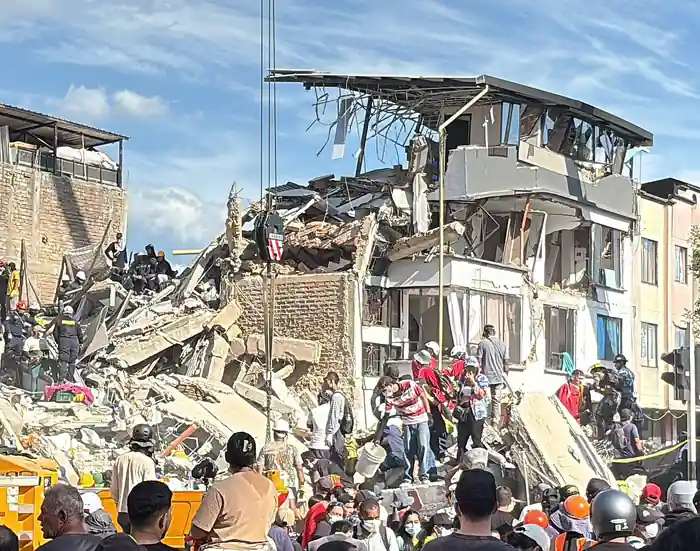
After the magnitude 7.4 earthquake that struck western Colombia on August 10, something different happened. Instead of just counting casualties and damage, volunteers turned to artificial intelligence and mobile technology to solve a massive practical problem: with roads damaged, communications fragmented, and help needed everywhere at once, how do you figure out where to send supplies and volunteers next?
The scale tells you why coordination became crucial. Colombia’s latest official and UN-backed assessments reported 331 deaths, 4,449 injured, and 143 missing as of late August. But the real challenge was structural: more than 225,000 structures were affected, including more than 217,000 homes, across hundreds of municipalities. Communities were isolated. Information was scattered.
This is what AI actually did and didn’t do. Technology teams developed mapping tools and apps that let volunteers input reports about what communities needed—food, water, shelter, medical attention. AI systems helped organize these reports, identify patterns in the data, and flag areas that hadn’t received help yet. The technology processed information much faster than manual systems could.
What’s important to understand: AI didn’t predict the earthquake. It couldn’t. Earthquake-prediction remains impossible with current science. Earthquake early warning systems—like the ones Google operates using phone accelerometers—only detect earthquakes already happening. In some circumstances, they can provide a few seconds of warning before the strongest shaking arrives, but they cannot predict where or when earthquakes will strike.
Colombia’s own Geological Service, Servicio Geológico Colombiano, has been using AI for years through a system called Lakiy. This technology detects and classifies volcanic earthquakes in near real time, helping monitor volcanic systems like Galeras and the Chiles-Cerro Negro area. Colombia already had experience using AI in geoscientific monitoring, although Lakiy is designed specifically for volcanic seismicity rather than general earthquake-relief coordination.
The humanitarian picture was already difficult. These affected communities were facing displacement from conflict and existing hardship before the earthquake. The United Nations reported urgent needs beyond basic survival: shelter, clean water, food, healthcare, and psychological support. Emergency stocks included over 18,000 hygiene kits, 3,100 solar lamps, and 30 housing units.
International help arrived quickly. By mid-August, international humanitarian assistance and specialist support had reached Colombia, while the government and UN partners shifted toward damage assessment and reconstruction planning. The government declared an economic, social, and ecological emergency, then shifted toward reconstruction planning.
Here’s the practical reality: technology helped organize information, but it replaced nothing. Field workers still verified conditions. Responders still made decisions. Supply chains still moved physically. What changed was the information layer—volunteers could see patterns, avoid duplicating efforts, and understand which isolated communities hadn’t been reached.
This approach shows what technology can actually do in disasters: process information faster, help organize volunteers, flag emerging problems, and support decision-making. It cannot replace the workers on the ground, the doctors treating patients, or the families rebuilding their homes.