Sunita Somvanshi

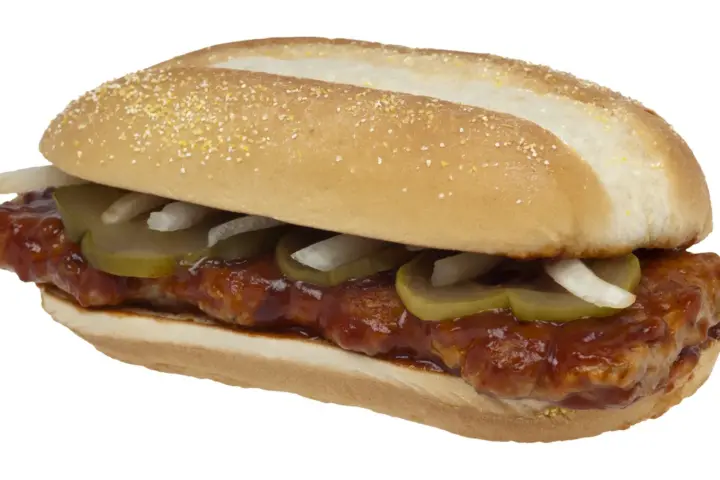
Paying nearly seven dollars for a seasonal McRib comes with an expectation of rib meat — and a federal judge just agreed that expectation is reasonable.
The McDonald’s McRib class action lawsuit cleared a critical hurdle on October 30, 2026, when U.S. District Judge April Perry in Chicago refused to dismiss key claims. The ruling in Le v. McDonald’s Corp. (Case No. 1:25-cv-15609) means the case proceeds to evidence discovery. The docket is available via the U.S. District Court for the Northern District of Illinois.
What the Judge Actually Ruled
Judge Perry compared the “McRib” name to “McChicken” and “Egg McMuffin” — menu items where the name plainly describes the main ingredient. She wrote that diners should not have to research ingredients before buying a seven-dollar fast-food sandwich.
The plaintiffs — Peter Le, Charles Lynch, Dorien Baker, and Derrick Wilson — allege the rib-shaped patty and “McRib” branding mislead buyers into believing the sandwich contains pork rib meat. McDonald’s argues it uses 100 percent boneless pork and denies using heart, tripe, or scalded stomach. Judge Perry’s order makes clear that her ruling does not establish as fact that the patty contains organ meat — only that the fraud and deceptive-marketing claims survive to discovery.
No Payout Yet — and No Claim Form Exists
If you bought a McRib recently, do not fall for viral websites asking for personal details to “claim your McDonald’s settlement.” There is no settlement fund, no claim form, and no payout today. Judge Perry’s October 30 ruling merely rejects McDonald’s bid to throw the lawsuit out early. Keeping digital receipts from the McDonald’s app will protect your eligibility if the case settles later.
The $152 vs. $85 Pork Price Gap Behind the Lawsuit
The financial motive sits in a USDA wholesale spreadsheet cited on page two of the complaint. Wholesale pork rib meat commands $152.32 per hundred pounds. Pork butt (shoulder) sells at $108.84. Pork loin sells at $85.90. That means rib meat costs 77 percent more than loin. Data sourced from the USDA Agricultural Marketing Service National Daily Pork Report.
Plaintiffs only need to prove in discovery that the McRib uses standard shoulder or loin instead of rib meat to establish measurable financial overcharge — even if McDonald’s proves the patty contains zero organ meat. You can read more about how commodity pricing drives fast-food formulation in our piece on USDA meat pricing and fast-food supply chains.
Why the Organ Meat Allegation Is Not the Whole Case
Viral headlines focus on allegations of heart, tripe, and stomach. But the legal survival of this case rests on a mundane USDA wholesale spreadsheet. The price gap between rib meat and loin creates a measurable damages floor that does not require proving organ meat content. For more on federal food-safety enforcement, see our coverage of FSIS meat recalls and labeling rules.
What Readers Are Asking
Is there a McDonald’s McRib class action settlement claim form?
No. As of November 2026, there is no settlement, payout fund, or claim form in Le v. McDonald’s Corp. (Case No. 1:25-cv-15609). Judge April Perry’s October 30 ruling merely allows the lawsuit to enter the evidence discovery phase. Avoid third-party websites claiming to distribute McRib settlement checks.
Next Steps in Chicago Federal Court
The case now moves into discovery and a future class certification motion. The Northern District of Illinois will set deadlines for McDonald’s to disclose its exact pork cut formulation. That disclosure will determine whether the price-premium theory holds up at trial.