 Rahul Somvanshi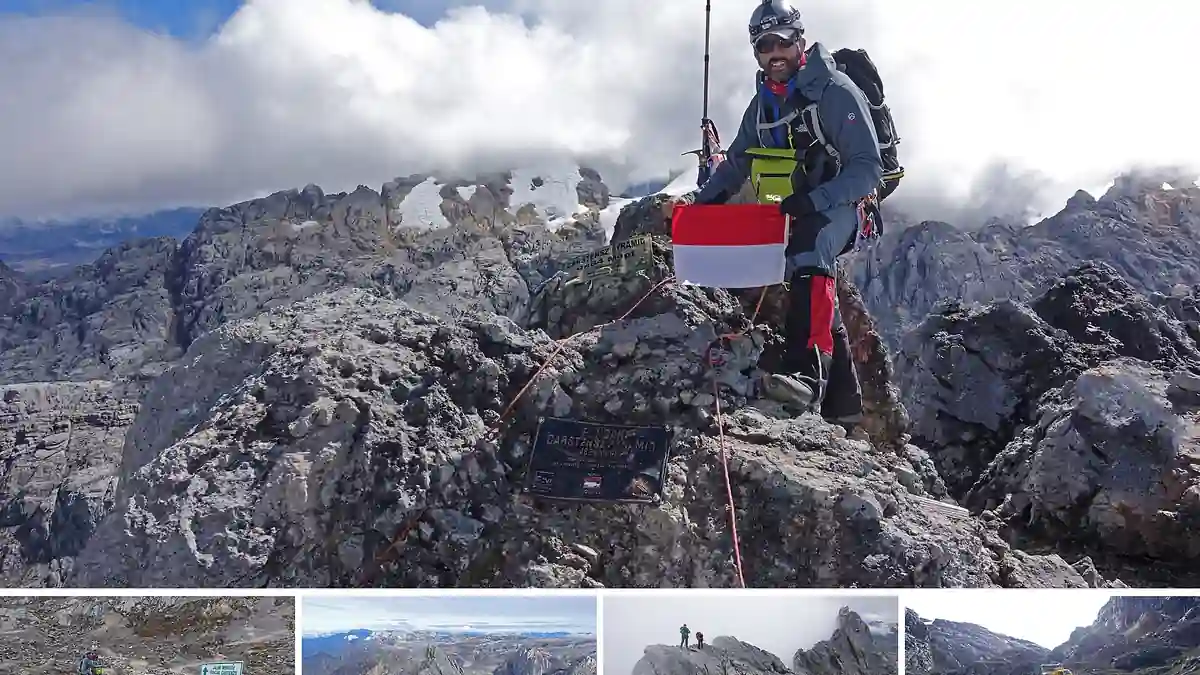
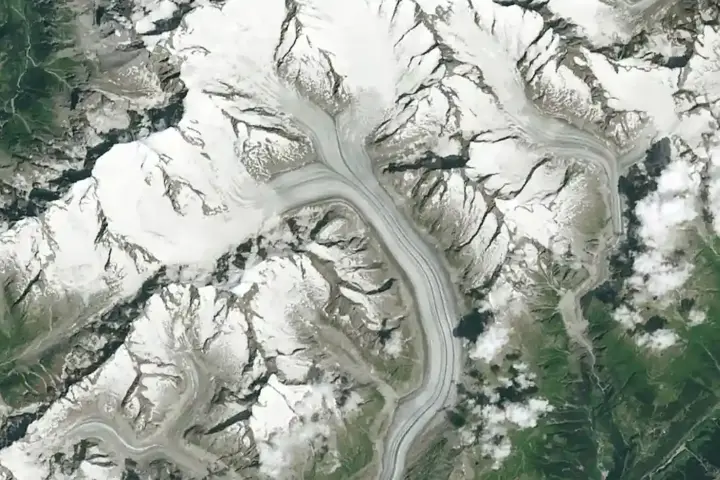
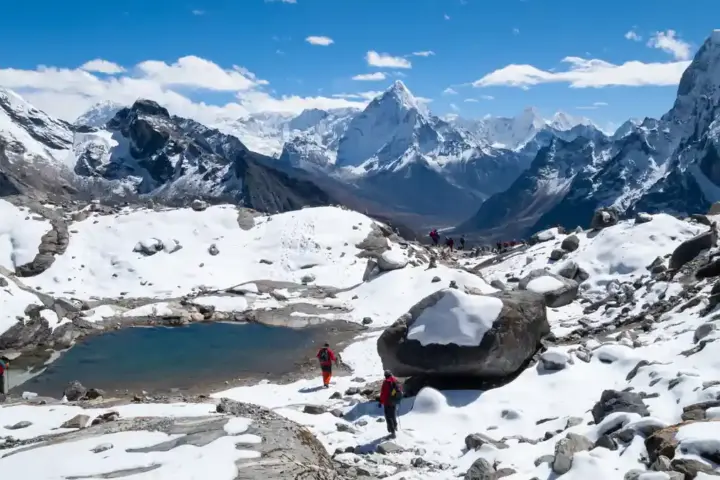
Scientists from Indonesia’s Meteorology, Climatology, and Geophysics Agency (BMKG) and glaciologists from Ohio State University’s Byrd Polar and Climate Research Center are warning that the Puncak Jaya glaciers in West Papua are in accelerating decline. The ice sheet that existed here has been shrinking for decades. What is happening now is not gradual decline — it is a contraction that researchers project will eliminate the last remnants within the next few years. When it goes, Southeast Asia will have lost its last tropical ice field and science will lose an irreplaceable climate archive.
The Numbers
- 2010: A reference stake was installed at a depth of approximately 32 metres into the ice accumulation — reflecting conditions at the time of installation
- 2026: Ice thickness under 4 metres at monitored sites
- Surface area: contracted to under 0.2 square kilometres
- Projected disappearance: East Northwall Firn glacier by approximately 2028–29; Carstensz glacier by approximately 2029–30 (per 2026 BMKG study projections)
The rate of loss has not been linear — it has been accelerating.
Why Tropical Glaciers Melt Differently
Polar ice loses mass primarily from its surface: warm air melts the top down. Tropical glaciers at altitude — Puncak Jaya sits at 4,884 metres — face a different and more destructive process.
At those elevations, temperatures have historically been cold enough that precipitation falls as snow, which lands on the glacier and replenishes what is lost to melt and sublimation. As global temperatures have risen, the altitude at which precipitation changes from rain to snow — the snow line — has moved higher. Puncak Jaya is now below that threshold during much of the year. Tropical rainstorms that once delivered snowfall now deliver liquid water, which runs off the glacier rather than accumulating on it.
The second mechanism is rock-albedo feedback, documented by BMKG. As the dark underlying limestone becomes exposed — because the ice covering it has thinned — it absorbs far more solar radiation than white ice does. That absorbed heat transfers into the remaining ice, accelerating surface melt. Specialist glaciological literature documents this dynamic in tropical high-altitude glaciers.
What Is Being Lost Beyond Ice
Ice cores extracted from the Puncak Jaya glaciers contain centuries of atmospheric data — trapped air bubbles, isotopic signatures, and particulate layers that tell climate scientists what the Pacific tropical atmosphere looked like long before modern instrumentation. This archive is irreplaceable. Once the glacier goes, researchers cannot reconstruct what those bubbles contained. Scientists from Ohio State have extracted and preserved some core samples, but the in-situ record — the ability to extract future cores as new analytical technologies develop — will be gone.
The BBC and The Business Standard both reported on the BMKG warnings in October 2026, noting the significance as a Pacific-wide climate benchmark. Read our overview of equatorial glacier decline globally for context on how tropical ice loss compares between Papua, the Andes, and East Africa.
What This Means for the Indigenous Communities Here
For the Damal and Amungme peoples of the West Papua highlands, the glaciers carry spiritual significance that extends beyond the physical — the ice is considered the sacred presence of ancestral deities in the landscape. Their disappearance is not only an ecological event but a cultural and cosmological loss with no restoration path.
That dimension of this story has been absent from most of the scientific reporting. It is worth naming directly: when the last tropical ice field in the Pacific disappears, it will leave behind a grief that is not quantified in any climate model.
What the Global Picture Shows
Tropical glaciers in the Andes — Peru’s Quelccaya ice cap, Ecuador’s Chimborazo — are on similar trajectories. East Africa’s Kilimanjaro ice fields have lost over 85% of their coverage since 1900. Read our analysis of how paleoclimatologists read ice cores to understand what is being permanently lost to science. Puncak Jaya is the leading edge of a global process, not an isolated one.
Related Karmactive coverage: WMO Warns on Climate-Driven Floods provide additional context for this story.