Canada’s Indigenous Microgrid Funding Isn’t One $150M Fund — Here’s What’s Actually Committed
Smaller, more specific, split across several federal programs — with real money already committed.
Funding Committed in 2026
If you’re a clean-energy contractor chasing Indigenous microgrid work in Canada, forget the idea of one giant $150 million fund waiting to be bypassed around utilities. What’s actually happening is smaller, more specific, and split across several federal programs, with real money already committed in Manitoba and Nunavut this year. Here’s where the funding is and how the projects are actually structured.
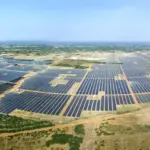
On June 22, 2026, Natural Resources Canada announced $21.6 million for the first phase of a First Nation-led renewable microgrid in Sayisi Dene First Nation, Tadoule Lake, Manitoba, combining bifacial solar panels, battery storage, and a microgrid controller. The project, expected to be commissioned in fall 2026, is projected to cut the community’s diesel use by up to 26% annually and reduce emissions by roughly 500 tonnes of carbon dioxide a year. The same day, Natural Resources Canada announced $17.2 million across four separate renewable energy projects in Nunavut, covering feasibility studies, a solar-and-heat-pump system for a hotel and conference centre, and a solar-battery demonstration project able to run both grid-connected and independently.
Clean Energy for Rural and Remote Communities
Supports renewable energy projects in remote and diesel-dependent communities. Application-based.
Indigenous Community Infrastructure Fund
Direct federal funding for Indigenous-led infrastructure projects, including clean energy.
Smart Renewables and Electrification Pathways
Supports grid modernization and renewable energy integration across Canada.
For contractors and hardware suppliers, the funding isn’t one program you bid into once — it’s spread across federal mechanisms including the Clean Energy for Rural and Remote Communities program, the Indigenous Community Infrastructure Fund, and the Smart Renewables and Electrification Pathways Program, each with its own application process and eligibility rules. If you’re structuring a bid around Indigenous ownership or partnership, you need to match your proposal to the specific program funding that project, not assume a single national fund covers all of them.
Where the confirmed money is going
The Nunavut funding splits precisely across four recipients, confirmed by Natural Resources Canada: Nunavut Nukkiksautiit Corporation received over $4.8 million for feasibility and engineering design studies of a solar, wind and battery microgrid project in Sanirajak, Kinngait and Qausuittuq, plus close to $8.5 million to build a clean energy system for the new Aqsarniit Hotel and Conference Centre. Qulliq Energy Corporation, Nunavut’s government-owned electricity provider, received over $1.3 million to accelerate renewable energy projects across 25 diesel-dependent communities. Sakku Investments Corporation received $2.5 million to demonstrate Nunavut’s first solar-and-battery project able to run both connected to the local microgrid and independently. A month later, on July 29, 2026, the federal government announced nearly $7 million more for eight additional clean energy projects across Yukon, the Northwest Territories, and Nunavut, funded mainly through the Clean Energy for Rural and Remote Communities program, with one project supported by the Smart Renewables and Electrification Pathways Program.
Project Locations
What Indigenous ownership actually looks like here
These aren’t utility-run projects with First Nations as customers. The Sayisi Dene project is explicitly First Nation-led, meaning the community itself is developing the microgrid rather than contracting a utility to build one for it. The Nunavut projects follow a similar pattern: Nunavut Nukkiksautiit Corporation, owned by the Qikiqtani Inuit Association, and Sakku Investments Corporation, the business arm of the Kivalliq Inuit Association, are Inuit-owned organizations directly receiving and managing federal funds. That ownership structure is the detail that matters for how contractors get involved: you’re typically partnering with or being hired by the Indigenous-led entity managing the project.
Karmactive has reported on how remote Canadian communities are moving away from diesel dependence more broadly, and this funding round shows that shift happening through direct project ownership. For related context, see our coverage of Canada’s clean-energy and climate-resilience strategy. The official announcements reviewed here identify several project-specific contributions rather than a single nationally announced $150 million microgrid fund.
The Manitoba project is described by Natural Resources Canada as developing “Manitoba’s first integrated renewable energy microgrid,” a first-of-its-kind claim for the province specifically, not for Canada as a whole. That distinction matters if you’re assessing how mature this market is: Manitoba is just getting its first project of this kind, while Nunavut already has several underway.
How are Indigenous microgrids funded in Canada?
Canada’s Indigenous microgrid funding in 2026 runs through several federal programs, not one $150 million fund, with $21.6 million committed to Manitoba’s first integrated renewable microgrid and $17.2 million spread across four Nunavut projects in June alone. Contractors should track program-specific announcements rather than a single funding pool.
Primary source: Natural Resources Canada grant records, June–July 2026