 Govind Tekale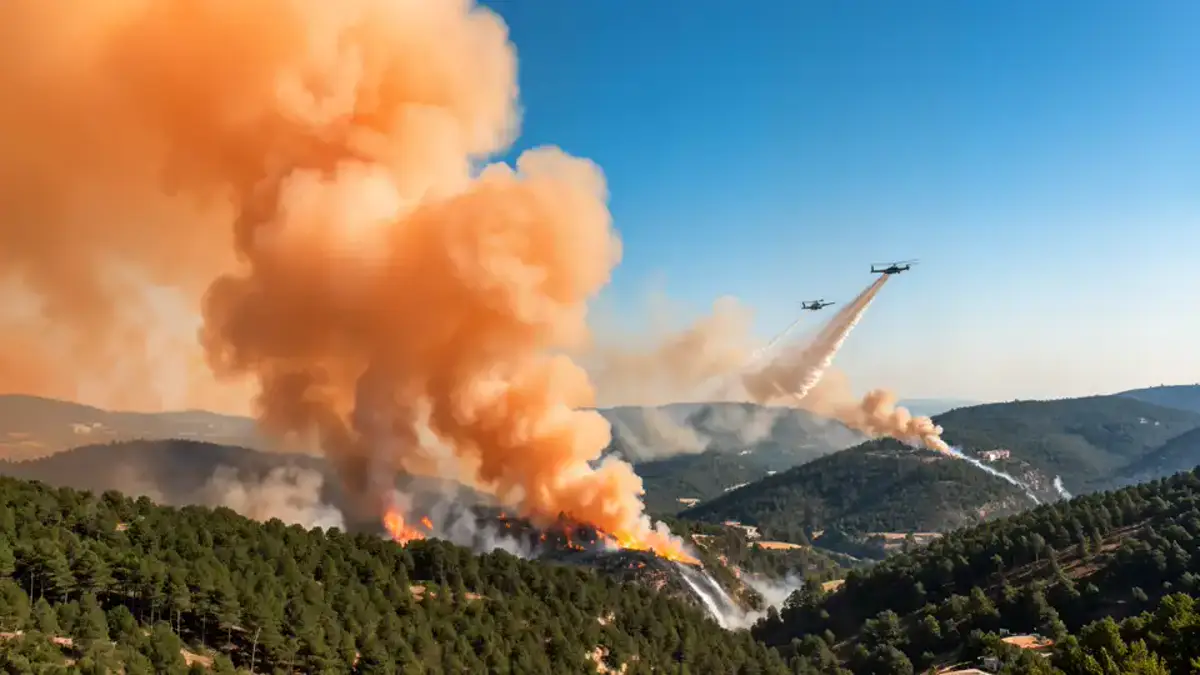
A rapidly spreading wildfire in British Columbia’s wine country has forced the evacuation of approximately 18,000 to 20,000 residents and claimed at least one life as the province’s fire crisis intensifies in mid-August 2026. The Bald Range fire, which erupted near Summerland in early August 2026, grew to 156 square kilometers, driving the provincial government to declare a state of emergency on August 8.
The fire’s speed has been devastating. What began as a single detected point of ignition near the western shore of Okanagan Lake exploded overnight into an uncontrollable blaze affecting Summerland, Peachland, and surrounding communities. Emergency services ordered immediate evacuation of residents from the region, with approximately 18,000 to 20,000 people fleeing their homes. In one tragic incident, authorities confirmed the death of an 80-year-old woman who died while attempting to evacuate from the fire zone.
According to Canadian Interagency Forest Fire Centre data, Canada has burned more than 4 million hectares this year, surpassing many previous seasonal totals by mid-August. As karmactive reported on August 9, thousands were already being forced to flee homes across British Columbia’s Okanagan Valley. Climate scientists attribute the accelerated fire season to a persistent “heat dome” weather pattern—a high-pressure ridge that blocks precipitation and amplifies surface temperatures across western North America.
The economic implications extend far beyond immediate evacuations. The Okanagan Valley’s agricultural economy, particularly its vineyards, now faces significant damage from smoke taint and direct fire impact. Previous wildfire events in the region have already strained emergency resources and local infrastructure. As Statistics Canada notes, British Columbia’s 2026 wildfire season has already cost the provincial economy over C$2 billion in direct suppression costs and economic disruption.
The 2026 wildfire season marks a troubling escalation from previous years. Where Canada’s notable 2023 fire season drew international attention, this year’s fires have come earlier, hotter, and closer to population centers. The scale of the Bald Range fire—growing from detection to 156 square kilometers in roughly 24 hours—demonstrates the accelerating danger posed by climate-driven fire behavior.
As British Columbia continues to manage the Bald Range fire and dozens of other active fires across the province, the emergency underscores a fundamental challenge facing Canada: adapting to more frequent, more intense, and increasingly unpredictable wildfire seasons. The human cost—measured in lives lost, families displaced, and livelihoods threatened—combined with the economic vulnerability of critical agricultural zones, suggests that wildfire management and climate adaptation must become central priorities for the nation’s immediate future.
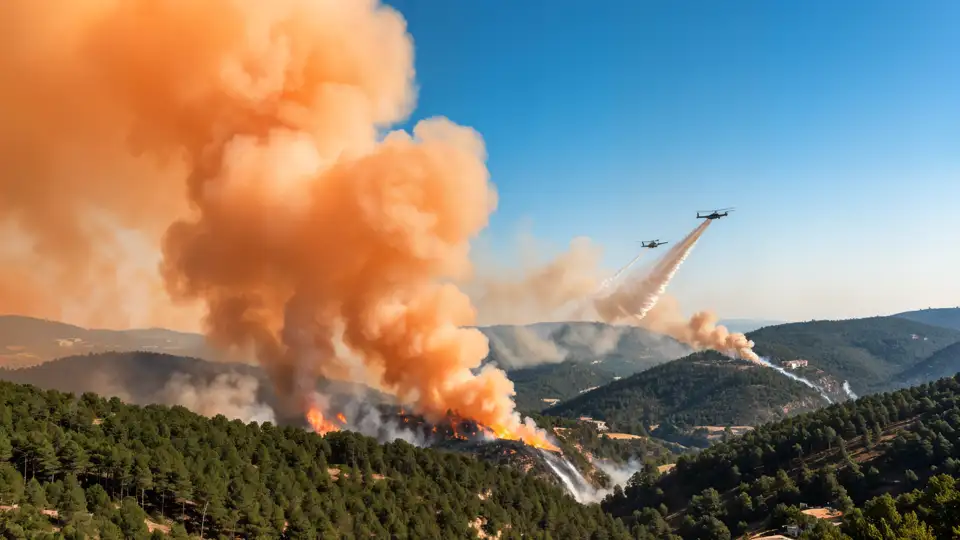
The Bald Range wildfire near Summerland, British Columbia on August 8, 2026. The fire has destroyed homes and forced 20,000 evacuations. [Feature image: Karmactive]
Alt text: Wildfire smoke rising near Summerland, British Columbia during the August 2026 BC wildfire crisis