Punch the Abandoned Macaque and His Plush: What the Zoo Is Actually Doing
Born in July 2025 and rejected by his mother, a baby Japanese macaque at Ichikawa City Zoo was handed an IKEA stuffed orangutan for comfort. Here is the full story — from the keepers, the science and the streets outside the zoo.
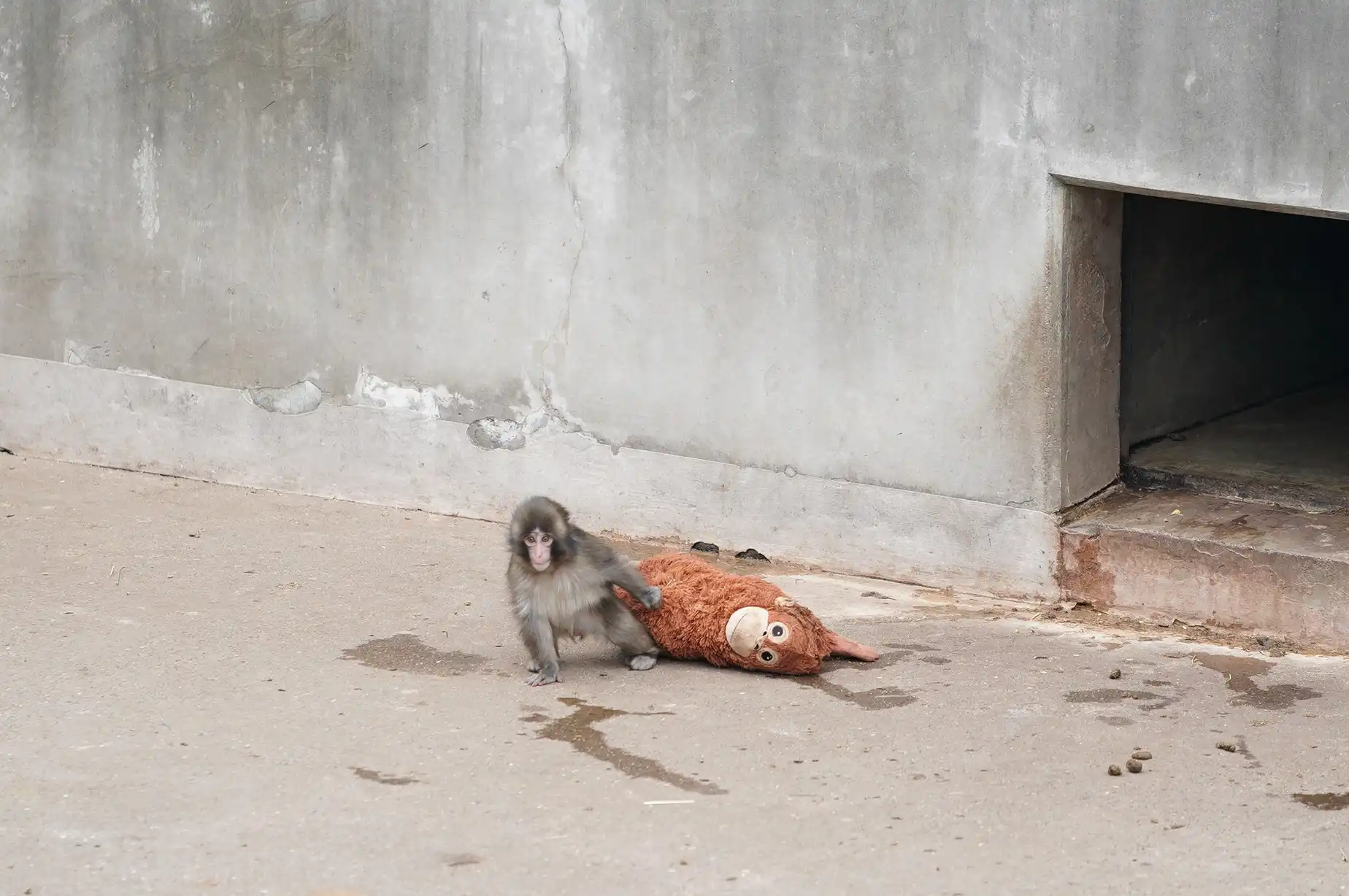
A baby Japanese macaque named Punch was born at Ichikawa City Zoological and Botanical Gardens in Chiba Prefecture in July 2025. His mother — a first-time parent — abandoned him shortly after birth, and keepers began round-the-clock bottle feeding. They eventually gave him an IKEA DJUNGELSKOG stuffed orangutan after rolled towels of varying thickness failed as grip substitutes. He has not let go since.
Videos of Punch clutching the toy — and being chased and harried by older troop members — began circulating in early 2026 and drew global attention. A single video posted by a visitor from Pakistan garnered over 4.5 million views. The Ichikawa City Zoo’s official X account has been actively posting updates and asking visitors to follow behavioural guidelines at the enclosure.
This piece covers what keepers have said, what the primatology research shows, what IKEA Japan did, and what the science of primate attachment — including Harry Harlow’s foundational 1958 experiments — actually tells us about Punch’s situation.
Seven Months That Moved the World
Tap any dot to reveal what happened at each stage
↑ Tap any circle to see what happened
Why Do Macaque Mothers Abandon Their Infants?
Maternal abandonment in wild and captive primates is uncommon but documented. Alison Behie, a primatology researcher at Australian National University, said three factors likely converged in Punch’s case: his mother was a first-time parent, he was born during a summer heatwave, and his early health was uncertain. She noted that in high-stress environments, mothers can prioritise their own health and future reproductive capacity over an infant whose survival is already in question.
“In environments where survival is threatened from outside stress, mothers may prioritise their own health and future reproduction rather than continue to care for an infant whose health may be compromised by those environmental conditions.”— Alison Behie, Primatologist, Australian National University
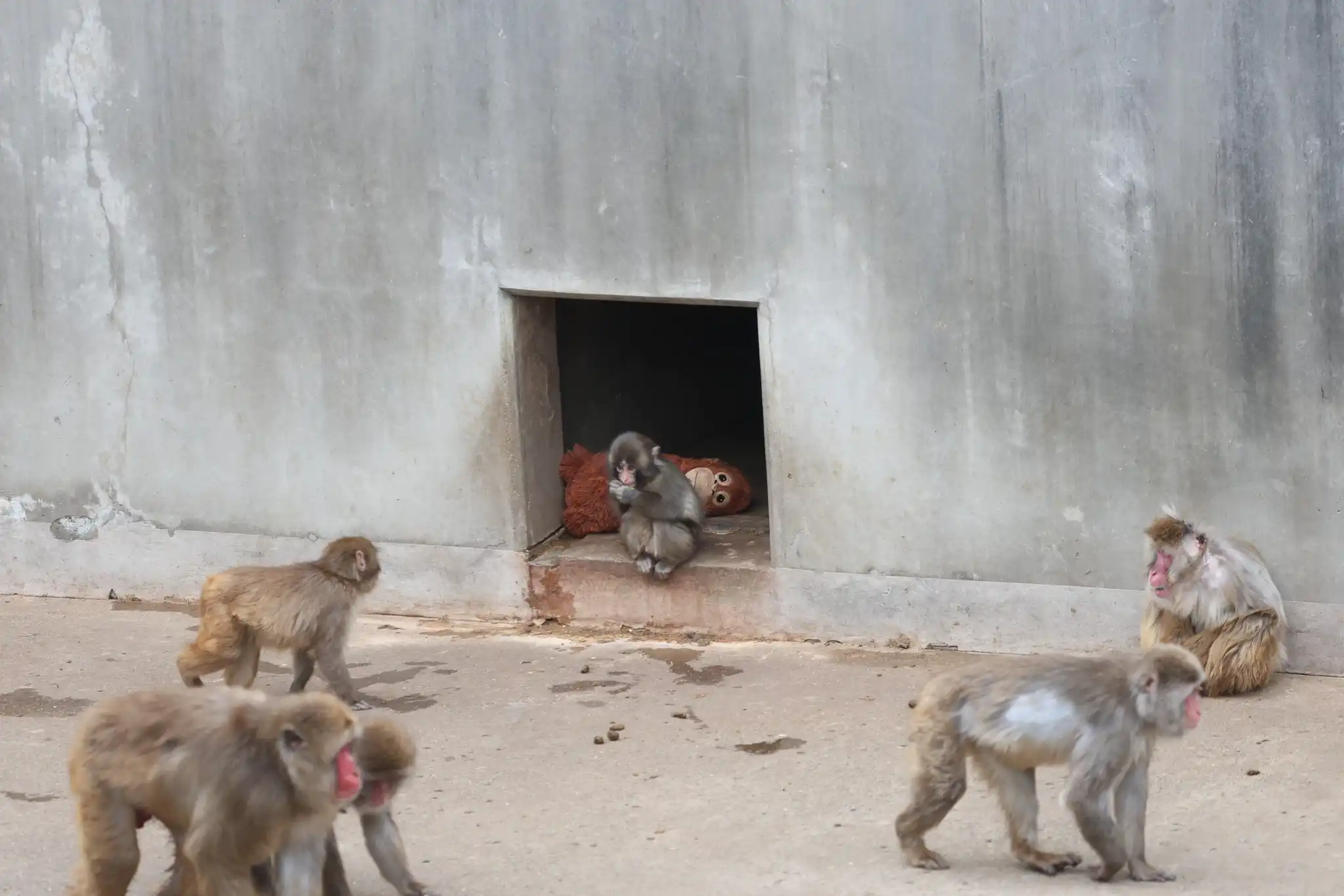
Without his mother to guide him through the troop’s strict matrilineal hierarchy, Punch cannot yet read — or perform — the subordinate signals that lower-ranking Japanese macaques display toward higher-ranking individuals. According to Behie, this could affect how he is accepted into the group as an adult. The interactions caught on video — being dragged, chased, or pushed — are consistent with how Japanese macaques assert dominance over lower-ranking animals. This is documented troop behaviour, not aberrant bullying.
Carla Litchfield, a conservation psychologist at the University of Adelaide, added: “This story about Punch highlights the impacts of habitat loss, climate change, zoo animal welfare, and the power of social media to connect people to animals.” She also warned that viral baby animal content can inadvertently encourage the illegal trade in infant monkeys. Japanese macaques are social animals that require their own species to develop properly — mentally and physically.
How Keepers Are Managing Reintegration
Keepers at Ichikawa have followed a staged approach: round-the-clock bottle feeding after abandonment, gradual supervised exposures to the troop with multiple keepers present, rotation and cleaning of the plush comfort objects, and ongoing monitoring of Punch’s weight and behaviour. Zookeeper Kosuke Shikano explained that the DJUNGELSKOG toy was chosen specifically because its monkey-like appearance might help Punch eventually integrate back into the troop.
⚠ Zoo Visitor Notice — Ichikawa City Zoo
- Remain quiet near the monkey enclosure
- Do not use stepladders or camera tripods
- Limit extended viewing to reduce stress on the animals
- Do not attempt to pass food or objects to the monkeys
- Stricter barriers are now enforced around the enclosure
Under Japan’s Act on Welfare and Management of Animals, keepers and owners carry specific duties of care. Local zoo standards are implemented under that framework by municipalities and individual institutions. As of the zoo’s February 20, 2026 statement, Punch “has been scolded by other monkeys many times in the past and has learned how to socialise with them.”
Punch & Harlow’s 1958 Experiment:
Comfort Over Food
What infant rhesus monkeys chose — and why it matters for understanding Punch
The Wire Surrogate
Fed, but Cold
Average daily contact time by infants
A wire-framed “mother” shape fitted with a feeding bottle. Provided all the food and water the infant needed — but was hard, cold and offered no physical warmth.
The Cloth Surrogate
Soft, but No Food
Average daily contact time by infants
A terry-towelling covered figure. Provided no food or water — only softness and warmth. Infants spent the majority of the day clinging to this figure.
What Punch’s Situation Reflects — and What It Doesn’t
The zoo was not running an experiment, but Punch’s behaviour closely mirrors what Harlow documented in 1958. Given an option, infant primates seek emotional comfort over physical nourishment. The cloth surrogate — soft, warm, climbable — won out over the wire feeder by a large margin.
Primatologists caution against full anthropomorphism, however. Punch is a wild animal navigating a specific social environment. His IKEA plush provides a behavioural anchor during a stressful developmental phase — it is not a relationship in the human sense. The Primate Research Institute at Kyoto University is one of Japan’s primary authorities on macaque behaviour and social structure.
Source: H.F. Harlow, “The Nature of Love,” American Psychologist, 1958 · Primate Research Institute, Kyoto University
IKEA Japan Donates 33 DJUNGELSKOG Toys to Ichikawa Zoo
IKEA Japan delivered a confirmed batch of 33 DJUNGELSKOG orangutan plush toys to the zoo in mid-February 2026, ensuring keepers have rotation and replacement stock as part of Punch’s ongoing care routine. Ichikawa Mayor Koh Tanaka shared photos of the handover publicly on X.
The DJUNGELSKOG collection is part of IKEA’s awareness programme for wildlife endangered due to human activity. The line was conceived after IKEA’s sustainability team documented orangutan habitat loss in Borneo in 2016. Both Punch and his plush companion are, in different ways, affected by the same broader crisis of primate pressure from human activity — including habitat destruction and the ongoing threats to Bornean orangutans.
The original toy sold out across Japanese IKEA stores. On eBay Australia, listings of the DJUNGELSKOG spiked 650% between January and February 2026, with prices reaching as high as AU$175. IKEA Australia confirmed a more than 200% increase in sales of the product in the same period.
Japanese Macaque: Facts Behind the Viral Footage
Select a category — each tab reveals key facts about this species and Punch’s specific situation
Native Range
Found across Honshu, Shikoku and Kyushu. The world’s most northerly non-human primate species — adapted to snow and cold climates.
Adult Weight
9–18 kgAdult weight range. At seven months, Punch weighs a fraction of this and is still entirely dependent on keepers for nutrition.
Lifespan
~27 yrsAverage lifespan in captivity. Wild macaques typically live 15–25 years depending on habitat quality and health conditions.
Cognition
Known to wash food before eating and pass learned behaviours across generations — cultural transmission documented by the Kyoto University Primate Research Institute.
Matrilineal Hierarchy
Rank is inherited through the mother. Higher-ranking families assert dominance over lower-ranking ones. Without his mother, Punch has no inherited rank to protect him.
Grooming
Social grooming is the primary bonding activity — it reinforces alliances and is how lower-ranking individuals express submission to higher-ranking troop members.
Troop Size
20–100Typical wild troop size. Captive groups are smaller but maintain the same social structure and hierarchy dynamics documented in the wild.
Maternal Bond
Infants cling continuously to their mothers for the first several months, building muscle and learning social cues. Punch has had to develop both without that guidance.
Biomedical Research
Macaques are widely used in global lab experiments — often as the penultimate stage before human clinical trials. This is a documented pressure on wild populations across their range.
Human Conflict
Macaques raid crops in rural Japan and are legally culled under agricultural management programmes. This human-wildlife conflict is separate from zoo welfare questions.
Japan’s Animal Law
The Act on Welfare and Management of Animals sets keeper duties of care. Local implementation is managed by municipalities and individual institutions.
Exotic Pet Risk
Conservation psychologist Litchfield warned that viral baby primate content can inadvertently fuel the illegal infant monkey trade. Adult macaques are not manageable as pets.
Born
July 2025At Ichikawa City Zoological and Botanical Gardens, Chiba Prefecture. Abandoned by his first-time mother shortly after birth.
Care Approach
Round-the-clock bottle feeding by keepers, then rolled towels as grip substitutes, then the IKEA DJUNGELSKOG orangutan plush after the towels failed.
Why the Plush?
Keeper Kosuke Shikano explained: its monkey-like appearance was chosen to help Punch eventually integrate back into the troop. It also provides muscle-building grip exercise during development.
Troop Progress
As of the zoo’s February 20, 2026 statement: Punch “has been scolded by other monkeys many times and has learned how to socialise with them.” Keepers continue monitoring closely.
First-hand footage from Ichikawa City Zoo — Punch and his troop, filmed by a local visitor
Punch was born in July 2025, was hand-reared by keepers at Ichikawa City Zoological and Botanical Gardens, and was given an IKEA DJUNGELSKOG orangutan plush after maternal abandonment. His gradual reintroduction to the troop has been managed under close keeper supervision and was formally addressed in the zoo’s February 20, 2026 statement.
IKEA Japan donated 33 DJUNGELSKOG plush toys to support his ongoing care. The donation and handover were documented publicly by the zoo and Ichikawa’s mayor. The Harlow (1958) attachment research, macaque social hierarchy, Japan’s animal welfare framework, and the risks of the exotic pet trade driven by viral primate content were all covered in this piece. For updates, the Ichikawa City Zoo’s X account continues to post keeper diary updates. Related stories on endangered macaque births and captive primate habitat enrichment are covered separately.