Blood Moon March 2026 — Total Lunar Eclipse Australia
🔴 Total Lunar Eclipse · March 2026 · Australia

Australia’s Sky Turns
Blood Red on March 2

The first total lunar eclipse of 2026 arrives on the night of March 2 — and it is the last one visible over Australia until January 1, 2029.
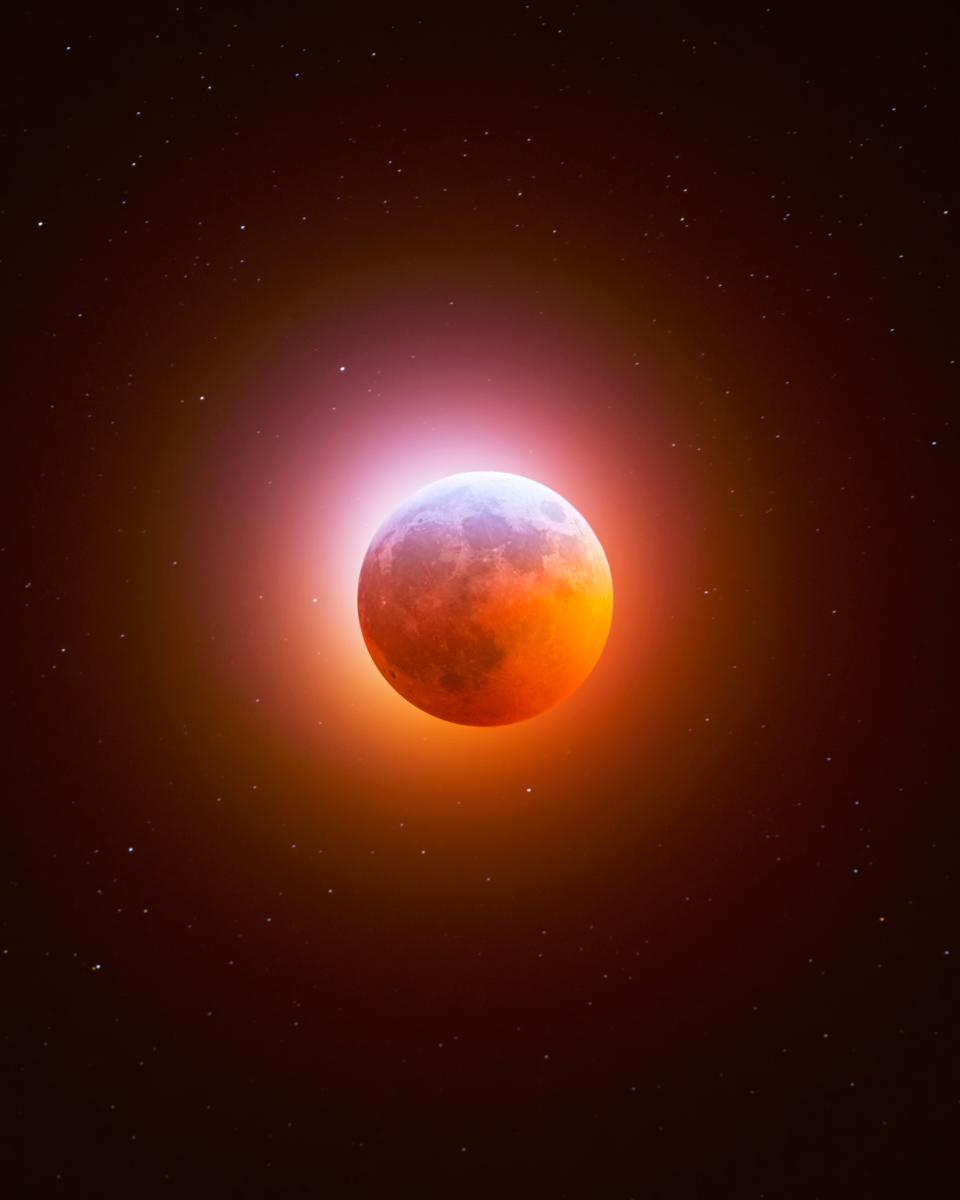
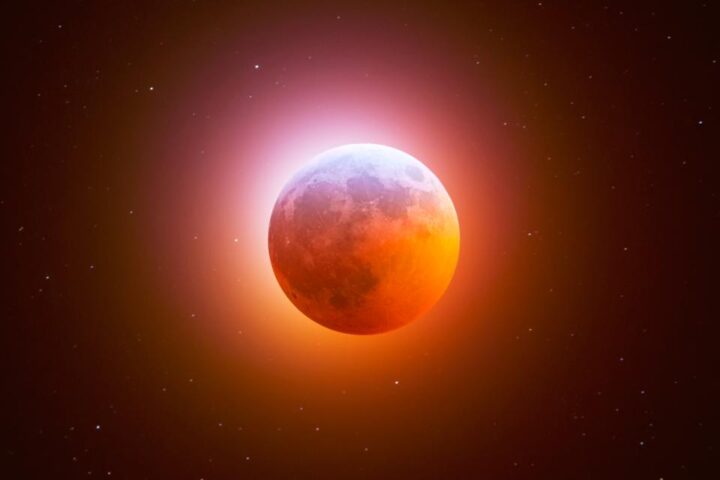
Total lunar eclipse — the Moon glowing deep crimson red inside Earth's shadow, a Blood Moon
A total lunar eclipse — Earth’s shadow falls entirely over the Moon, which turns a vivid deep red due to Rayleigh Scattering in Earth’s atmosphere. Photo by: Autodials ( CC BY 4.0)

On the evening of Monday, March 2, 2026, the Moon slides fully into Earth’s shadow, turning a deep burnished red in a total lunar eclipse — commonly called a Blood Moon. The event extends into the early hours of Tuesday, March 3. According to NASA, it will be visible across western North America, Australia, New Zealand, and much of Asia — placing more than 3 billion people on the viewing side of the planet.

Australia’s east coast captures the complete arc from first shadow to final glow. Western Australia and parts of central Australia will see the Moon rise already in partial eclipse, so a clear eastern horizon is essential from the start. The totality phase — when the Moon takes on its deepest red — lasts approximately 58 minutes and 19 seconds. The full eclipse sequence spans roughly 5 hours and 39 minutes. No equipment is needed. A blood moon is entirely safe to view with the naked eye.

🌑
Countdown to Totality — Sydney · Melbourne · Canberra (10:04 PM AEDT, March 2)
Days
:
Hours
:
Mins
:
Secs

Watch the Eclipse Happen

Drag the slider to simulate the shadow creeping across the Moon — from full white to deep blood red and back. Press Play to watch it animate step by step.

Full Moon
Before the Eclipse
The Moon shines at full brightness. No shadow has touched the lunar surface yet. In a total lunar eclipse, this is where the 5 hour 39 minute sequence begins.
← Full Moon Blood Red Full Moon →
🔴

When to Watch — Every Australian Capital

These are the totality start and end times — when the Moon is fully red. Tap or click any city for location-specific viewing notes.

Perth has the most unusual viewing angle: the Moon rises with partial eclipse already in progress on the evening of March 2. Anyone facing east at sunset will watch a partially shadowed Moon lift above the horizon — the red deepening as the sky darkens. Darwin enters totality first among Australian capitals, at 8:34 PM ACST, while eastern cities wait until 10:04 PM AEDT. Unlike a supermoon or harvest moon, where distance and lighting conditions change the Moon’s appearance in subtle ways, a blood moon is a full colour transformation driven by physics — Earth’s atmosphere acting as a red lens.

This eclipse falls within an eclipse season — a roughly 34-day window when Earth, Moon, and Sun align close enough for eclipses to occur. A solar eclipse preceded this event by approximately two weeks. Looking further ahead, a landmark total solar eclipse in 2027 will cross Spain, Egypt, and Saudi Arabia in what will be the longest land-based totality of the century.

🔬

Why the Moon Turns Red

It is not a filter. It is not a trick. It is sunlight bending through Earth’s own atmosphere and landing on the Moon — the same physics as every sunrise and sunset, projected onto the lunar surface all at once.

Earth’s atmosphere scatters shorter blue wavelengths outward while bending longer red wavelengths inward — a process called Rayleigh Scattering. During totality, the Moon receives the combined red glow of every sunrise and sunset happening simultaneously around the planet. Full technical geometry and shadow maps are at NASA’s Scientific Visualization Studio.

58m 19s
Totality Duration (precise)
1.1526
Umbral Magnitude (eclipse depth)
5h 39m
Total Eclipse Sequence
3B+
People on the viewing side of Earth

How Dark Will It Get?

Astronomers rate lunar eclipse darkness on the Danjon Scale (L0–L4). The 2026 eclipse is forecast at L=2 or L=3 — a deep red to brick-red Moon, based on current atmospheric aerosol levels.

The outcome depends on the amount of dust, aerosol, and high-altitude cloud in Earth’s atmosphere at eclipse time. A major volcanic eruption beforehand can push the Moon toward L=0 — near invisible. With no major eruptions anticipated, the current forecast of L=2/L=3 means a dark brick-red to rust-red Moon. Atmospheric data is tracked via the NASA Eclipse Portal.

🪱
The Worm Moon & Saros Cycle 133: The March 2026 eclipse falls on the first full moon of March — traditionally called the Worm Moon in the Northern Hemisphere, linked to earthworms surfacing as spring soil thaws. In Australia it aligns with early autumn. Technically, this eclipse belongs to Saros Series 133, occurs at the Moon’s descending orbital node, and falls 6.5 days after lunar perigee. Bonus for telescope users: the Moon will occult (pass in front of) the spiral galaxy NGC 3423 during the eclipse — a rare simultaneous event for astrophotographers.

How to Get the Best View

No telescope, no training, no special gear — just the right spot and the right timing.

👁️
No Equipment Needed
A blood moon is 100% safe to view with the naked eye. No glasses, no filters. Binoculars or a backyard telescope will show surface detail and craters, but are entirely optional.
🌄
Face East — Especially in WA
Perth and western regions: the Moon rises already in partial eclipse. Get to an elevated spot with a clear eastern horizon before sunset on March 2. Timing is tight.
🏙️
Escape City Light Pollution
Dark skies away from urban centres show the red Moon far more dramatically. Allow 20 minutes for your eyes to adapt after leaving lit environments.
Arrive 60–75 Minutes Early
Watching Earth’s shadow creep across the Moon before totality is one of the most striking parts of the event. Don’t skip the build-up to the main red phase.
📸
Photography Tips
Use a tripod. Capture the Moon low on the horizon for the “moon illusion” effect — it appears largest against buildings or trees. Consult NASA’s telescopic preview for expected visual appearance.
🌤️
Check the Weather First
High-altitude cloud cover can soften the red hue significantly. Check the Bureau of Meteorology forecast the evening of March 2. Clear skies are the difference between a muted pink and a vivid blood red.
🌍

Unlike a solar eclipse — visible only along a narrow path — a total lunar eclipse is visible simultaneously to everyone on the night side of Earth. The Moon’s distance from Earth affects its apparent size in the sky but does not change when a lunar eclipse happens or how long it lasts. Throughout history, lunar eclipses were used for navigation calibration, calendar systems, and astronomical record-keeping by civilisations across every continent. The lunar calendar that underpins many cultural traditions globally has tracked these events for thousands of years.

The Blood Moon Through Different Eyes

From ancient fear to orbital mechanics — how the crimson Moon has been understood across cultures. Select a perspective below.

The Moon holds deep cultural significance across Aboriginal and Torres Strait Islander knowledge systems. Lunar cycles are connected to tidal patterns, seasonal calendars, and ceremonial timing in many First Nations traditions across Australia. While interpretations vary greatly across different language groups and Country, a reddened Moon is viewed in a number of traditions as a period of heightened spiritual awareness or transformation. Aboriginal astronomical knowledge — including careful observations of celestial events — forms one of the oldest continuous astronomical traditions on Earth, spanning tens of thousands of years.
The Inca interpreted a blood moon as a jaguar attacking and consuming the Moon. Communities responded by making as much noise as possible — shaking spears, beating drums, shouting, and sometimes striking dogs to make them howl — to frighten the jaguar away. The return of the Moon’s white glow was taken as confirmation the jaguar had retreated. This tradition has been documented by historians of Andean civilisation across numerous primary sources covering Inca cosmology and ritual practice.
In Vedic and Hindu tradition, a lunar eclipse is known as Chandra Grahan. The 2026 eclipse coincides with Holi. Communities observing Vedic customs note a Sutak Kaal — an observance period — beginning approximately 9 hours before the eclipse, during which some households refrain from cooking, eating, or beginning new activities. The end of totality is observed with bathing and prayer, marking a return to auspiciousness. Practices vary across communities in Australia and globally.
For astronomers, the 2026 Blood Moon is fully characterised. It belongs to Saros Cycle 133, occurs at the Moon’s descending orbital node, and falls 6.5 days after lunar perigee. The umbral magnitude of 1.1526 places the Moon well inside Earth’s darkest shadow. Telescope users will observe the Moon occulting the spiral galaxy NGC 3423 during the eclipse — a simultaneous event of interest to astrophotographers. Detailed timing geometry is published in the NASA Goddard Eclipse PDF for March 3, 2026.

What Was Covered Here

This piece covered the March 2–3, 2026 total lunar eclipse — timings across all Australian capital cities, the physics of the red colouring, the phase-by-phase progression, the Danjon Scale forecast, the Worm Moon and Saros Cycle 133 context, viewing guidance, and cultural perspectives from several traditions. The eclipse takes place on the evening of Monday, March 2, with totality lasting 58 minutes and 19 seconds. All of Australia can observe it without any equipment, and the complete arc from beginning to end is visible from the east coast.

After this event, the next total lunar eclipse visible from Australia falls on January 1, 2029. For more events across the astronomy calendar, including rare moon phases and black moons, and the latest from the space category, those pages are updated regularly. Primary timing data and eclipse calculations are published by the US Naval Observatory.

🔴 Previous: September 7, 2025 Blood Moon (82 minutes) · Next visible from Australia: January 1, 2029
Karmactive Whatsapp group - https://www.whatsapp.com/channel/0029Vb2BWGn77qVMKpqBxg3D

Leave a Reply

Your email address will not be published.

Close-up of a Muslim woman's hands holding a smartphone displaying no connection, symbolizing Afghanistan's internet shutdown.
Previous Story

How Can Shopping for Books Online Open Up a World of Possibilities?

Workers installing solar panels on a commercial rooftop with mountains visible in the background.
Next Story

US Hits Indian Solar Imports with 126% Duties — “Investments Cannot Succeed” If Asian Panels Keep Flooding the Market

Latest from Astronomy

Don't Miss