 Rahul Somvanshi
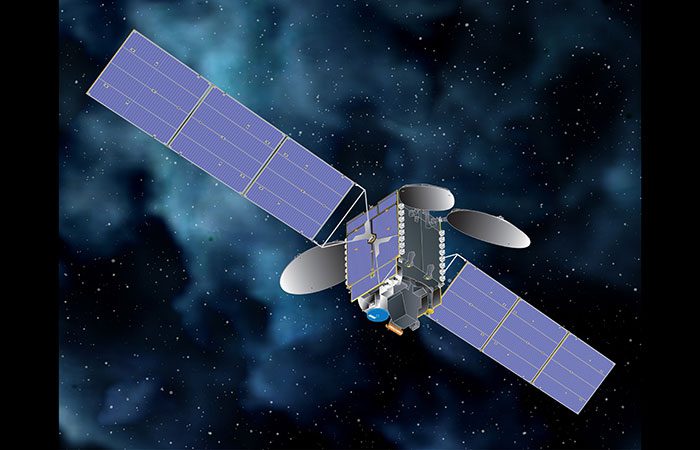
SpaceX is scheduled to launch the Intelsat 40E satellite into geostationary transfer orbit on April 7. It will be carrying out Nasa’s tropospheric emissions monitoring of pollution (TEMPO). The Falcon 9 rocket is scheduled to blast off from Cape Canaveral Space Force Station at 12:29 a.m. EDT (0429 GMT).
The launch could be viewed live on SpaceX’s YouTube channel and on Space.com and as usual, the webcast would begin 15 minutes before liftoff. The rocket has an almost two-hour window to launch the mission. Intelsat 40e is an advanced geostationary satellite that will provide high-throughput connectivity to all the required parties across North and Central America.
The Falcon 9 rocket booster on this flight is performing its fourth launch and is expected to land on the company’s drone ship A Shortfall Of Gravitas in the Atlantic Ocean about 8 minutes after liftoff. TEMPO will enable hourly snapshots of air pollution over North America. TEMPO will be measuring ultraviolet, visible, and near-infrared light spectra to detect levels of key pollutants, including ozone in the lower troposphere, formaldehyde, and nitrogen dioxide.
TEMPO’s geostationary position allows for a unique perspective of the atmosphere, providing much higher resolution data than other missions. The instrument was developed by Ball Aerospace. The hosted payload approach allows unused load capacity on Intelsat 40e to be leveraged for government missions, reducing the cost of access to space for the government and for Intelsat’s customers. The primary mission of TEMPO is supposed to last for 20 months, but it could continue working beyond that.
- NASA AI Maps Hidden Arctic Freeze Stage That Could Unlock Vast Carbon
- India Adds Record 26 GW Solar in H1 2026, Surpassing US Install Rate
- Canada Hits Back with 50% Retaliatory Tariffs as US Trade War Escalates
- Delhi H1N1 Alert: Seasonal Influenza Cases Rise, Health Department Urges Vaccination for At-Risk Populations
- EPFO Enrolment Campaign 2026: Employers Get July 1 Start, October 31 Deadline to Regularize Missing Workers, ₹100 Damages