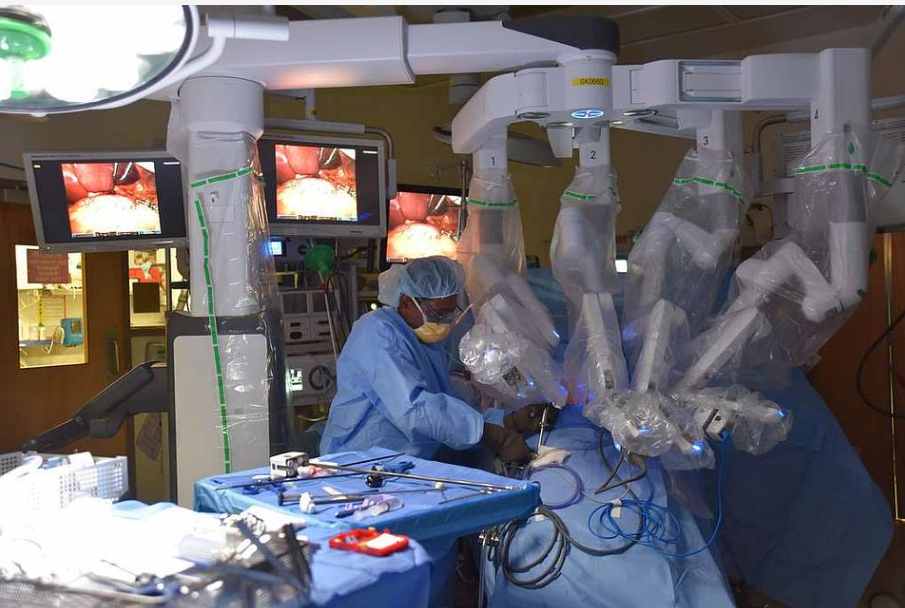
The NHS in England plans to dramatically increase its use of robot-assisted surgeries over the next decade, aiming to cut waiting times and speed up patient recovery. NHS projections show robotic procedures will increase sevenfold by 2035, reaching 500,000 yearly operations compared to the 70,000 performed in 2023/24.
NHS officials project that 90% of keyhole surgeries will use robotic assistance within ten years, compared to just 20% today. These operations include cancer removals, hernia repairs, and joint replacements.
“The NHS has pledged to return to shorter waiting times by 2029 and we are using every tool at our disposal,” said Sir Jim Mackey, NHS Chief Executive. “Expanding robotic surgery will play a huge part in this.”
Health Secretary Wes Streeting, who underwent robot-assisted surgery for kidney cancer, added: “I know myself how important this is, when the NHS saved my life with an operation led by a world-class surgeon being helped by a robot.”
How does it work?
In robot-assisted surgery, doctors control instruments using a console with a 3D camera. The robotic arms provide greater precision than human hands alone and can move in ways surgeons cannot.
For orthopedic procedures like knee replacements, robots are programmed to perform specific parts of the operation.
Patient benefits
Patients typically experience:
Quicker recovery times
Shorter hospital stays
Less pain after surgery
Reduced scarring
Nichola Collins, who had a robotic hysterectomy at Chorley and South Ribble Hospital, was home within 24 hours. “I only knew about the old way of doing a hysterectomy, which often meant 2 to 4 days in hospital – sometimes even a week,” she said. “My recovery has been significantly quicker than I would have thought.”
According to the source material, a four-month-old boy from Manchester became the youngest patient in the world to undergo surgery with the Versius Surgical System. His mother reported that he was able to return home just three days after the kidney procedure.
While the NHS announcement doesn’t detail costs for patients, robotic systems are expensive, ranging from £500,000 to £1.5 million per unit. The initial high investment and ongoing maintenance expenses are significant challenges for widespread adoption.
The National Institute for Health and Care Excellence (NICE) has approved 11 robotic surgery systems on a conditional basis, meaning they’ll collect more evidence over the next three years to confirm their cost-effectiveness.
Safety concerns
A study published in October 2024 showed that while awareness of robotic surgery is relatively high (68.4%), there are misconceptions. Sixteen percent of people incorrectly believed robots operate completely on their own.
John McGrath, chair of the NHS England Steering Committee for Robotic Assisted Surgery, emphasized: “Robot-assisted surgery is a perfect example of innovation improving patients’ care. As keyhole surgery continues to develop in the NHS, many procedures will include robot assistance in the future.”
The NHS has published its first national guidance on delivering robotic surgery programs, which should help ensure safe implementation across different regions.
FAQ Section
Frequently Asked Questions
How will NHS robot surgery affect patient waiting times?
NHS England projects that robot-assisted surgeries will significantly reduce waiting times by allowing more procedures to be performed in less time. The NHS aims to return to shorter elective waiting times by 2029, with robotic surgery playing a key role in this plan. Patients typically experience faster recovery and shorter hospital stays with robotic procedures, which helps free up hospital beds more quickly and allows more patients to be treated.
Will patients have to pay extra for robot-assisted surgery?
No, patients will not have to pay extra for robot-assisted surgery within the NHS. These procedures will be available as part of standard NHS care, despite the high cost of the technology. The NHS is investing in these systems (which cost between £500,000 and £1.5 million each) as part of its strategy to improve care and efficiency. The National Institute for Health and Care Excellence (NICE) is currently evaluating the cost-effectiveness of these systems over a three-year period.
Are robot-assisted surgeries safe and who controls them?
Robot-assisted surgeries are controlled entirely by skilled surgeons, not by autonomous robots. The surgeon operates the robotic arms through a console with a 3D camera, maintaining complete control throughout the procedure. A common misconception (held by 16% of people according to a 2024 study) is that robots operate independently, which is not true. The NHS has published its first national guidance on delivering robotic surgery programs to ensure safe implementation, and surgeons receive specialized training before performing these procedures.
What types of surgeries can be performed with robotic assistance?
The range of robot-assisted surgeries has expanded significantly in recent years. Initially popular for urological procedures like prostate cancer surgery, robotic assistance now extends to colorectal, gynecological, ear/nose/throat, and orthopedic procedures including knee and hip replacements. By 2023/24, non-urological robotic surgeries accounted for 49% of all robotic procedures, up from just 20% in 2011/12. The NHS projects that 90% of all keyhole surgeries will use robotic assistance by 2035, covering a wide variety of operations.
What are the main benefits for patients having robot-assisted surgery?
Patients who undergo robot-assisted surgery typically experience several significant benefits: quicker recovery times, shorter hospital stays (some patients going home within 24 hours instead of staying 2-7 days), less post-operative pain, reduced scarring, and lower risk of complications. For example, some bladder cancer patients are now able to leave hospital in just 5 days – half the expected time with traditional open surgery. These benefits improve patient comfort and satisfaction while also increasing hospital efficiency.
Will robotic surgery be available at all NHS hospitals?
The NHS aims to expand access to robotic surgery across England, but due to the high cost of these systems (£500,000 to £1.5 million each), they may not be immediately available at every hospital. The NHS is developing a networked approach where robotic systems are strategically placed to serve multiple hospitals in a region, with staff potentially working across different sites. This approach aims to ensure patients can access this technology regardless of their location, though implementation will likely be phased over the coming decade as the NHS works toward its goal of 500,000 robot-assisted surgeries annually by 2035.
Meet Tejal Somvanshi, a soulful wanderer and a staunch wellness advocate, who elegantly navigates through the enchanting domains of Fashion and Beauty with a natural panache. Her journey, vividly painted with hues from a vibrant past in the media production world, empowers her to carve out stories that slice through the cacophony, where brands morph into characters and marketing gimmicks evolve into intriguing plot twists. To Tejal, travel is not merely an activity; it unfolds as a chapter brimming with adventures and serendipitous tales, while health is not just a regimen but a steadfast companion in her everyday epic. In the realms of fashion and beauty, she discovers her muse, weaving a narrative where each style narrates a story, and every beauty trend sparks a dialogue. Tejal seamlessly melds the spontaneous spirit of the media industry with the eloquent prose of a storyteller, crafting tales as vibrant and dynamic as the industry she thrives in.
Leave a Reply
Previous Story
Tesla Hides Robotaxi Records as June 22 Launch Relies on Remote Operators
Next Story
Botulism Risk: P. East Trading Corp Recalls Uneviscerated Herring Sold in NY, NJ, CT Markets
A tap turns on in a tribal village in Balaghat, Madhya Pradesh. Brown, murky water flows out. A camera captures it. Someone asks: would the ministers and MLAs make their own children
If you have seen headlines claiming fentanyl killed Hayden Panettiere, here is the important clarification: as of September 14, 2026, her official cause and manner of death have not been announced. Investigators
Pennsylvania is dealing with its worst measles outbreak in decades. As of September 11, 2026, health officials counted 676 confirmed measles cases across 37 counties throughout the state. That number includes 124
Solidcore built its name around one hard, slow, resistance-based class. Ascend changes that pitch. The company is now moving into heated strength training, betting that customers no longer want one studio identity
At this year’s Toronto International Film Festival, a new biopic explores the life of disability rights pioneer Judith Heumann. “Being Heumann,” directed by Siân Heder—known for writing and directing the film CODA—premiered
President Donald Trump said the federal government would issue $500 Obamacare refunds to about 1 million people starting in October, according to CNBC. This should be treated as a follow-up topic because
Marcy Borders is often remembered through one image: a young woman covered in dust after escaping the World Trade Center on September 11, 2001. The photo resurfaced around the 25th anniversary, but
Leaping Bear Farm in Reading, Vermont, is recalling eggs dated between June 1 and September 5, 2026, after Salmonella was found in eggs and environmental samples. Local reports from MyNBC5 and WCAX
Residential aged care in Australia has faced regulatory scrutiny over improper ancillary charges that providers have attempted to bundle into basic care packages without clear opt-out avenues. The Aged Care Quality and
For decades, fitness advice centered on reaching 10,000 steps daily target that actually originated from a 1965 marketing campaign for the Manpo-kei pedometer in Japan rather than clinical science. New research from
Experts explain anticipatory grief—the emotional weight of loss that begins before death. Understanding what to expect can help adult children preparing for and navigating parent loss.
The CDC says the record U.S. cyclospora outbreak is over. The lettuce-linked cluster sickened thousands, while total confirmed cases and the food-safety investigation remain distinct.
Dermatologists warn that social media's filtered images fuel 'cosmeticorexia'—unhealthy preoccupation with flawless skin. Experts advise refocusing on skin health rather than anti-aging.
A quarter century after the September 11 attacks, the health consequences continue to shape the lives of over 125,000 registered responders and survivors enrolled in federal health tracking programs. First responders, rescue
The CDC issued a health alert on September 10 after multiple states reported increased encounters with rabid or potentially rabid animals and higher use of rabies treatment. Since July 2026, at least

 Tejal Somvanshi