 Karmactive Staff

The recent report by Euromonitor International has shed light on the evolving trends in sustainable travel. The findings reveal that nearly 80% of travelers are willing to pay at least 10% more for sustainable travel features, even amidst the ongoing cost of living crisis. This commitment to sustainability is further emphasized by the fact that 41% of travelers are prepared to pay over 30% extra for adventure and eco-tourism experiences.
The Sustainable Travel Index 2023, also conducted by Euromonitor, has ranked Europe as the leading region in sustainable travel. The continent has secured the top 17 positions, with Sweden, Finland, and Austria leading the chart. The index, which is based on 56 indicators across seven distinct pillars, provides a comprehensive overview of countries and cities in terms of their sustainability efforts. It covers a range of parameters, including environmental, social, economic, and tourism-specific factors. The emphasis on digitalizing the traveler journey and the adoption of green technology are seen as crucial steps towards achieving a net-zero future.
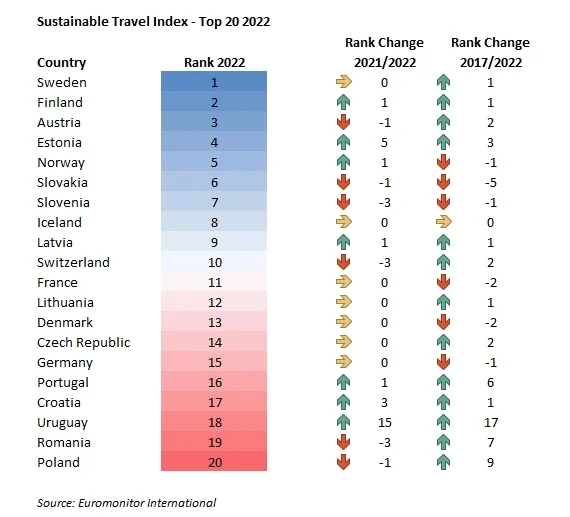
Uruguay has made a notable entry into the top 20, jumping 15 ranks. Over the past five years, countries like Egypt and the Maldives have shown significant improvement. Egypt’s tourism industry has flourished, with increased expenditure per arrival benefiting local communities. The Maldives, on the other hand, attributes its rise to consistent efforts in promoting sustainable tourism. Countries like Australia, Iceland, and New Zealand are leading the sustainable tourism front, primarily due to longer visitor stays. New Zealand’s regenerative tourism initiatives and Iceland’s campaign promoting longer stays to combat mass tourism are worth mentioning.
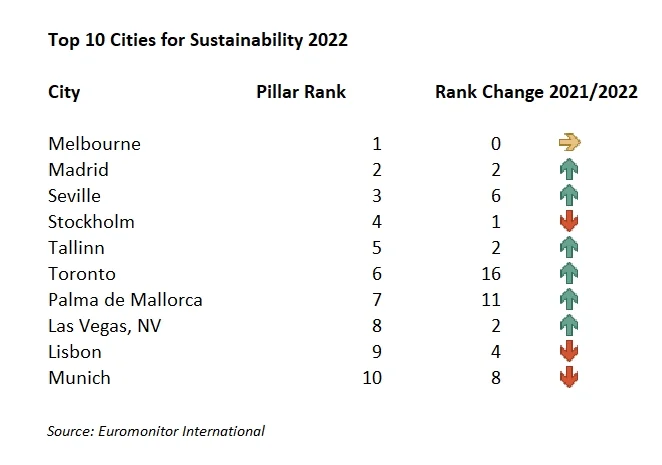
In terms of city destinations, Melbourne has been recognized as the top sustainable city. The city’s commitment to sustainability is evident in its initiatives, such as transitioning to renewable energy, hosting carbon-neutral events, and green urban planning. Following Melbourne, Madrid and Seville have also been recognized for their dedication to sustainability.
Similar Post
Caroline Bremner, Head of Travel at Euromonitor International, provided insights into the methodology behind the Index. She stated, “Our Sustainable Travel Index uses 56 indicators across seven pillars – Environmental, Social, Economic, Risk, Demand, Transport and Lodgings – determining the comparative performance of sustainable travel and tourism for 99 countries through scores and weightings to produce an overall ranking.” She further emphasized the importance of happiness, equality, and infrastructure among other factors in determining the health of a destination. Bremner also highlighted the potential of green technology and digitalizing the traveler journey as pivotal steps towards a sustainable travel future.
In conclusion, the global travel industry is witnessing a shift towards sustainability. With travelers willing to invest more in eco-friendly experiences and countries and cities ramping up their sustainability efforts, the future of travel looks green and promising.