Rahul Somvanshi
ITBP Chief Says Face-Offs Continue in Arunachal: What Is Confirmed
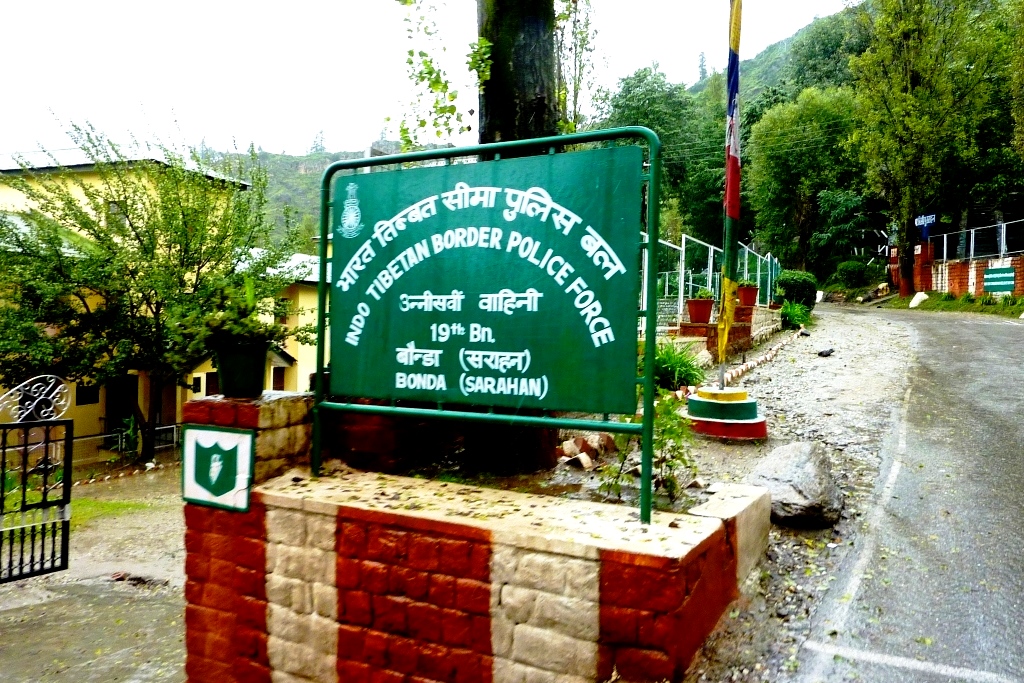
The Director General of the Indo-Tibetan Border Police (ITBP), Shatrujeet Kapur, has said that face-offs between Indian and Chinese troops have occurred at several locations along the Arunachal Pradesh border in recent days and that these face-offs were continuing. The statement, reported by NDTV on October 22, 2026, has drawn attention because it comes from the head of the force that guards large stretches of India’s border with Tibet, and because it follows an earlier assessment from the Chief of Defence Staff describing the overall situation as stable.
This report sets out what has actually been said, by whom, and what remains unverified, rather than treating every detail circulating around the statement as established fact.
What the ITBP chief said
According to NDTV’s reporting, DG Kapur told reporters that face-offs had taken place at multiple points along the Arunachal Pradesh border over the preceding days and that the situation was ongoing. The report notes that unnamed sources framed these remarks as consistent with routine deployment and preparedness activity along the frontier, rather than as a description of a single, specific new incident. NDTV’s account is independently corroborated by the Economic Times, which separately reported the same statement attributed to the ITBP chief, lending the core claim — that face-offs occurred and persisted at several locations — a degree of independent confirmation across two outlets.
It is important to be precise about what this amounts to. The reporting confirms that a senior official made these remarks and that a second publication independently carried the same statement. It does not, on its own, constitute independent, on-the-ground verification of troop movements, the exact locations involved, or the scale of any individual encounter. The distinction matters: a confirmed statement by an official is a fact about what was said; it is not automatically a confirmed fact about what happened on the ground, beyond what the official described in general terms.
What is not confirmed here
Various accounts circulating around this story have included specific details, such as a reported incursion of six to seven kilometres and the presence of tents at a particular site. No independently retrieved evidence available for this report supports or verifies either of these specific claims. They are not repeated here as established fact, and readers should treat such figures and details as unverified pending documentation from official or independently corroborated sources. This report is confined to what the ITBP chief is reported to have said and to the general historical and institutional context around India-China border management, as described below.
Context: the CDS’s earlier assessment
NDTV’s report also notes that the Chief of Defence Staff had, in September, described the broader situation along the border as stable. The juxtaposition of that earlier assessment with the ITBP chief’s more recent remarks about ongoing face-offs reflects two statements made at different times by different officials, addressing the situation from different vantage points — one a broader strategic assessment, the other a more immediate operational description. Neither statement supersedes or invalidates the other on its own; both are simply data points from different moments.
LAC versus a settled border
A recurring point of confusion in reporting on this stretch of the frontier concerns the nature of the boundary itself. The India-China border in this sector is governed by the Line of Actual Control (LAC), a de facto demarcation that reflects where each side’s forces are currently positioned and patrol, rather than a boundary that has been formally surveyed, demarcated on the ground, and mutually agreed upon by both governments. This is a materially different situation from a settled international border, where the line is fixed by treaty or agreement and is not subject to differing on-ground interpretation.
Because the LAC is not mutually delineated in many sectors, including parts of Arunachal Pradesh, patrols from either side can and do approach or cross what one side considers its own perception of the line, leading to face-offs of varying intensity. This structural feature of the LAC helps explain why face-offs can recur periodically without necessarily indicating an escalation beyond patrolling and posturing activity, though it does not by itself indicate the nature, cause, or seriousness of any specific encounter referenced in current reporting.
Established mechanisms for managing such incidents
India and China have long-standing institutional channels for addressing friction along the border. A Government of India reply in the Rajya Sabha, which also recounts a 2017 incident in which three civilians crossed into Chinese territory in the Upper Siang area, lists the mechanisms both sides rely on: Border Personnel Meetings, Flag Meetings, the Working Mechanism for Consultation and Coordination (WMCC), and regular diplomatic channels. These mechanisms are described in that reply as the established framework for resolving border-related incidents and are not evidence bearing on the current reports; they are cited here only to explain the institutional context within which face-offs such as those described by the ITBP chief are typically managed and de-escalated.
Summary
What can be said with confidence, based on the available reporting, is that the ITBP’s Director General stated that face-offs occurred at several locations in Arunachal Pradesh in recent days and that they were continuing, and that this statement has been independently reported by more than one outlet. Specific claims about a six-to-seven-kilometre incursion or the presence of tents are not independently confirmed in this reporting and are not treated as established fact. The underlying complexity of the LAC, as distinct from a settled border, provides context for why such face-offs occur, without indicating the scale or outcome of this particular episode.
Sources: NDTV, Press Information Bureau (Rajya Sabha reply).