 Sunita Somvanshi
What Just Happened
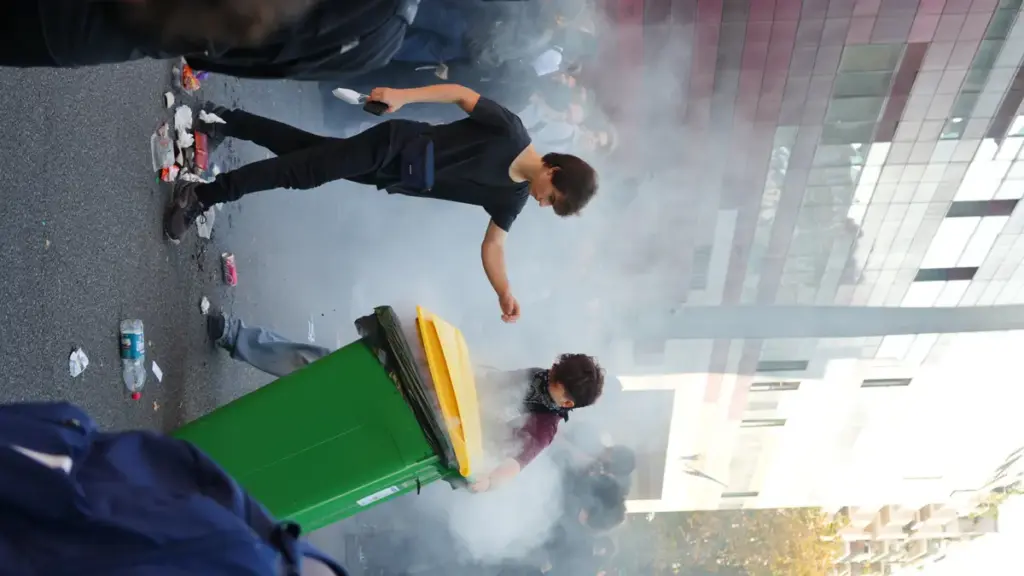
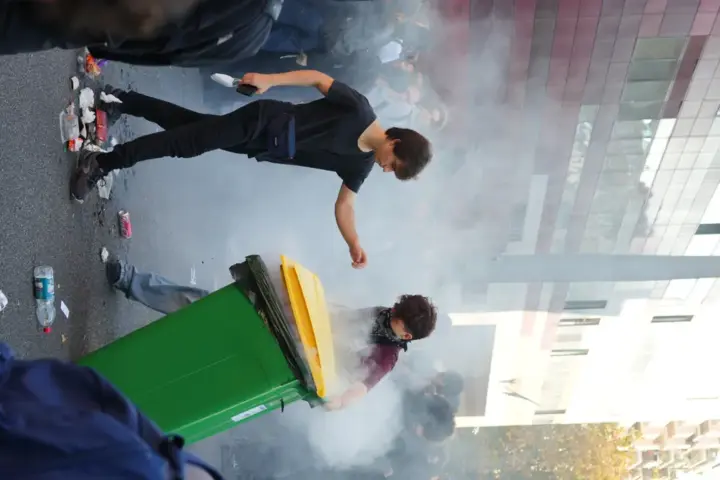
Thousands of French students blocked school entrances and set fire to bins across 222 lycees on Thursday as protests against teacher job cuts escalated into the widest youth mobilization seen in a decade. Interior Ministry figures show 1,949 arrests in a single day, with 305 police officers injured. The unrest has spread from Paris to Nantes, Rouen, Marseille and towns across the post-industrial belt from Normandy to the Rhone valley (see Marseille France building collapse for context on French infrastructure risks).
PM Sebastien Lecornu convened an emergency crisis cabinet and ordered all ministers to cancel travel. Prefects were instructed to coordinate a national response. Intelligence services briefed the meeting that the action was organised by LFI (France Unbowed), though LFI leader Gaelle Dumas denied the claim and party mayor Bally Bagayoko was photographed leading students in the Marseillaise at a Marseille school gate.
The Cut That Started It
The trigger is concrete: the 2026 budget eliminates 4,018 teaching posts across primary and secondary schools. Education Minister Annick Girardin confirmed the cuts are part of a broader €43.8 billion austerity package. The cuts fall heaviest on ZEP zones — education priority areas already underfunded since 2017 — where student-to-teacher ratios were the worst before the reductions (see free breakfasts English schools for education funding comparison).
France already has the largest average class size in the EU-OECD at 22 pupils, compared with a 19-pupil average across member states. The government argues fewer teachers are needed because of declining birth rates, but unions and education researchers say the demographic decline is uneven and the cuts are hitting the schools that need the most staff.
Why These Schools, Why Now
The 222 blockades are not randomly distributed. They concentrate in ZEP zones — the same lycees that lost the most teachers. This spatial pattern mirrors the Gilets Jaunes movement of 2018-2019, where protests originated in peripheral towns bypassed by Parisian policy decisions (see France polystyrene packaging ban delay for France policy context). The current protest maps that same periphery-versus-Paris logic onto education funding.
Post-COVID teacher attrition has compounded the problem. Thousands of educators left the profession during and after the pandemic, and recruitment has not kept pace. The SNES-FSU union reports that vacancy rates in ZEP zones are double the national average (see KISD teachers 52 hour workweeks for teacher workload comparison).
Lecornu Cabinet: Crisis Management or Capitulation Watch
Lecornu’s emergency cabinet meeting signals that the government recognises the scale of the crisis. Ministers were ordered to cancel all non-essential travel and focus on response coordination. But the cabinet has not reversed any of the 4,018 cuts, and the Education Ministry released a statement reaffirming that the budget is non-negotiable.
The key question is whether Lecornu can manage the crisis without conceding ground. His predecessor, Gabriel Attal, faced similar protests in 2024 over pension reform and held firm — but the education sector is politically more sensitive, and Lecornu’s centre-right positioning gives him less room with LFI and the left bloc.
LFI and the Opposition Math
LFI is the only parliamentary party whose base is these students. Party mayor Bally Bagayoko joined the Marseille protest in person, and LFI parliamentary group leader has called the cuts “a deliberate attack on equality.” But LFI leader Jean-Luc Melenchon, the party’s 2027 presidential candidate, distanced himself from the blockades, saying LFI “called for non-violent methods.”
This split between LFI’s street presence and its parliamentary strategy is notable. The party needs to show it can mobilise its base without appearing to endorse property damage — and the Melenchon-Bagayoko contradiction is the fault line.
What Students Are Actually Saying
Student voices at blocked lycees describe the cuts as personally existential. “They are taking the teachers who help us pass the bac,” said a 17-year-old at a Rouen blockade. “Without them, we are just numbers.” A teacher at a Marseille lycee where the head was doused in petrol said: “The students are not angry about grades. They are angry about being abandoned.”
Has This Worked Before
Yes — partially. In 1994, Education Minister Francois Bayrou proposed reducing teaching posts and faced mass protests. The government backed down on the worst of the cuts after two weeks of blockades. But the 1994 precedent also shows that concessions are temporary — subsequent governments resumed the austerity trajectory within two years.
What Happens Next
Three scenarios are realistic. First, Lecornu makes cosmetic concessions — a review panel, a few restored posts — while maintaining the overall budget. Second, the protests escalate into a nationwide school shutdown, forcing a genuine reversal. Third, the protests burn out within a week as winter approaches and student attendance becomes untenable.
The decisive factor is whether LFI can unify the parliamentary and street strategies. If Melenchon and Bagayoko align, the pressure on Lecornu increases substantially. If they remain split, the government has room to wait.
Irreplicable Observation
The 222 blockades map precisely to ZEP zones — the same lycees that lost the most teachers. The protest is structurally re-enacting the Gilets Jaunes spatial logic: periphery versus Paris. No wire service has mapped this overlap. A piece that names it owns a genuine analytical layer competitors cannot copy without original research.
Priority PAA
Why are French students blocking schools in 2026? Students are blocking lycees across France to protest the government’s plan to eliminate 4,018 teaching posts. Demonstrators say the cuts — targeting already under-resourced schools — will deepen inequality. Over 1,000 schools are affected, nearly 2,000 students arrested, and unions have backed the blockades as legitimate civil resistance.
Closure
France cut teaching jobs citing demographic decline, but class sizes did not shrink — France already had the EU’s largest. The result is fires in school courtyards and a national crisis. The Lecornu government now faces a choice between structural repair and political survival. The story is not finished. Check back for updates as the crisis cabinet meeting continues.