 Karmactive Staff
Milad un-Nabi celebrates not just the Prophet’s birth but his legacy of service to others. During this holiday, Muslim communities organize events that feed, clothe, and support those in need. These acts of khidmat—community service—lie at the heart of Islamic practice. Yet many charitable events during festivals create as much waste as the suffering they aim to relieve. You can organize community service for Milad un-Nabi that leaves both people and the environment better off.
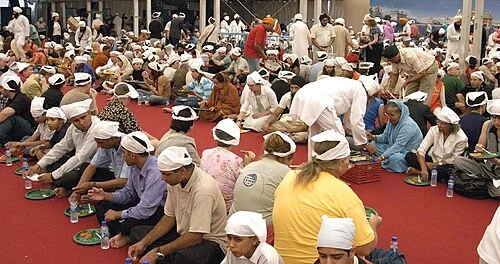
The Prophet Muhammad embodied service. He cared for orphans, protected the vulnerable, and built community through action, not just words. Milad un-Nabi falls around August 28th, and it’s a moment when millions of Muslims reflect on his example and ask how they can serve others. Community service during this holiday takes many forms. Some organizations run langar. Others organize clean-up drives, tree-planting events, or donation distribution. The diversity of approaches reflects how central service is to Islamic identity. See Mawlid.
After reading this article, you’ll know how to organize zero-waste community service events during Milad. You’ll understand which activities have the lowest environmental impact. You’ll learn how to coordinate tree planting, clean-up drives, and charity distribution without generating the single-use waste that typically accompanies these events. This knowledge lets you serve your community in a way that strengthens rather than weakens the natural world.
Charity events often assume that convenience requires disposable supplies. Volunteers receive single-use plastic bags to collect donations. Organizers hand out bottled water in plastic bottles. Snacks come wrapped in individual packets. A single large community service event can generate enough plastic waste to fill a van. This contradiction—cleaning the environment while trashing it—undermines the spiritual purpose of service.
The zero-waste alternative requires planning but not perfection. Start by identifying what your community service event actually needs. If you’re organizing a clean-up drive, volunteers need gloves, bags, and water. If you’re distributing donations, you need containers and transportation. If you’re planting trees, you need seedlings and tools. For every need, a waste-free option exists.
What does sustainable community service look like?
Tree-planting events during Milad create lasting environmental benefit. Native trees planted in October establish roots before winter and spring growth. One large tree absorbs carbon dioxide equivalent to what a car emits over several months. A community that plants 100 trees during Milad removes the emissions of two cars per year—and the environmental benefit compounds over decades. Many cities have community forestry programs that provide seedlings at cost and guidance on species selection and planting technique. See Volunteerism.
Clean-up drives targeting local waterways or parks directly reverse environmental harm caused by waste. Muslim environmental organizations have begun organizing Milad clean-ups that remove plastic and microplastics from rivers and green spaces. These events create visible change. Volunteers see the results of their work instantly. They often become long-term environmental advocates after experiencing how much waste a single clean-up can recover.
Supplying volunteers without creating waste requires thought. Bring reusable water bottles and fill them from a central source rather than distributing bottled water. Provide cloth gloves that can be washed and reused or ask volunteers to bring their own work gloves. Use large cloth bags for collecting donations, which can be laundered between events. Provide meals on real plates if you’re hosting volunteers for hours. Pack waste-free snacks like fresh fruit, nuts, or homemade baked goods.
Donation distribution during Milad often generates packaging waste. People donate clothes, books, and household items wrapped in plastic bags or boxes. Organizers rebag these items for distribution, often using new plastic bags in the process. An alternative approach involves sorting donations into reusable containers at the distribution site. Train volunteers to assess donations, remove packaging, and place items directly into the hands of recipients or into their own bags that they bring.
Can community service address poverty and environment at once? Yes. Job training programs that teach waste management, composting, or environmental restoration create employment while improving the environment. Some Muslim organizations in India now offer composting training through their Milad initiatives. Participants learn to turn food waste into fertilizer, then use it in community gardens. This creates jobs, reduces waste, and builds food security—addressing multiple needs simultaneously. See Khidmat.
Partnership with existing environmental organizations multiplies impact. Most cities have nonprofit groups focused on clean-up, tree-planting, or conservation. Connecting your mosque or community organization with these partners means you get expert guidance, access to specialized equipment, and coordination with other groups doing similar work. Your Milad event becomes part of a larger movement rather than a one-off effort.
An irreplicable observation: Community service infrastructure varies dramatically by region. Rural areas often have municipal forestry programs that welcome volunteers but lack human capacity. Urban areas have more organized environmental nonprofits but often face limits on where and when volunteers can work. There’s no single national standard for how religious communities should engage in environmental service, so you’ll need to research your local landscape and find partners who work within it.
How do you organize zero-waste community service for Milad un-Nabi? Choose an activity aligned with local environmental needs. Partner with established organizations if possible. Eliminate disposable supplies from your volunteer support. Use reusable containers, cloth bags, and real dishes. Focus on activities that create lasting benefits—tree planting, water restoration, soil improvement. Measure and share results so your community sees the impact of their service.
Community service during Milad stands out from other holiday charity work because of its spiritual grounding. The Prophet’s example of service wasn’t transactional—it emerged from his character and his commitment to justice. A zero-waste approach honors that legacy more faithfully than a wasteful one. When your community sees service to people paired with service to the environment, it deepens commitment to both.
The financial case for zero-waste community service is compelling. Reusable supplies cost less per event after the initial investment. Partnerships with nonprofits often bring donated supplies and reduced costs. A tree-planting event costs less than a waste-generating charity distribution. Organizations that shift to zero-waste practices find that their budgets stretch further and their impact grows.
Pillar mosques and community centers across Muslim-majority cities now host sustainable Milad events annually. What started as small experiments—one mosque planting trees, another organizing a clean-up—has grown into coordinated networks. Your community can join this movement. Service during Milad, when done sustainably, becomes a model for how religious practice and environmental care strengthen each other.
Priority PAA: How to celebrate Milad un-Nabi with community service? Choose zero-waste activities like tree planting, clean-up drives, or donation distribution. Eliminate disposable supplies. Partner with existing environmental organizations. Measure and share results.
—