 Rahul Somvanshi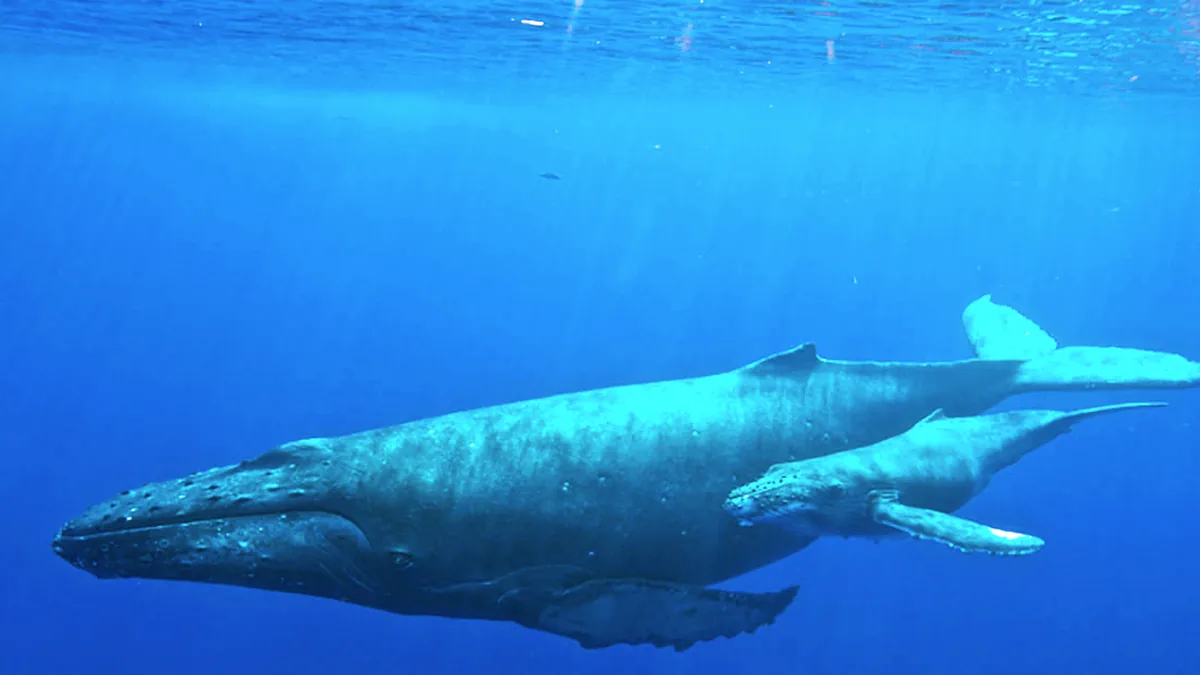
Off Australia’s Gold Coast, a female humpback whale stayed close to her stillborn calf for hours after it died. Scientists have now documented the behaviour in a peer-reviewed study—and their conclusions are more careful than the word “grief” suggests.
The event was recorded on July 17, 2025, at Palm Beach reef near the Gold Coast. Researchers observed the female humpback from a private vessel and captured footage of the encounter. The study, published September 16, 2026 in the journal Discover Animals, is the first detailed documentation of this kind of behaviour in a baleen whale.
The calf was stillborn. The mother did not attempt to carry or surface the calf. She remained in close proximity to the body for an extended period—hours, and possibly longer, based on the researchers’ observations.
The footage is scientifically valuable because it gives marine biologists a comparable record. Post-mortem behaviour has been documented in dolphins, orcas, and other toothed whales—sometimes called odontocetes. But baleen whales, the group that includes humpbacks, are rarely observed in this context. The Gold Coast case adds a baleen-whale data point to a small and growing body of evidence about how cetaceans respond to death. For researchers studying animal cognition and social behaviour, the rarity of the observation makes it worth examining closely, even from a single event.
What the science actually found
The paper’s authors describe the behaviour as “post-mortem attentive behaviour.” That phrase is deliberate. Grief is a subjective internal state, and scientists cannot measure it directly in a wild animal without access to physiological or neurological data. The researchers say the footage documents sustained proximity and apparent attention to the dead calf—but they explicitly stop short of claiming the whale was grieving in the way humans understand the term.
One detail the paper highlights is particularly telling. The mother did not attempt to bring the calf to the surface. In documented cases involving dolphins, mothers have sometimes tried to push dead calves above the waterline, seemingly attempting to get them to breathe. The humpback mother’s behaviour was different. The researchers suggest this may indicate that she recognised the calf was dead shortly after birth, rather than persisting in a response driven by the expectation of a live animal. The observation raises the possibility that the whale responded differently because the calf was non-responsive, but the study cannot establish what the whale understood.
The distinction between documented behaviour and interpreted emotion matters for how this study gets reported. The paper records what the whale did. It does not record what she felt. Saying a humpback “grieves” borrows emotional vocabulary that the evidence does not fully support. What the evidence does support is that a humpback whale showed sustained post-mortem attention to her dead calf—behaviour the researchers describe as the first detailed documented occurrence in a baleen species.
Do whales grieve?
Evidence suggests some cetaceans show behaviours consistent with grief-like or post-mortem attention, but scientists cannot directly establish subjective grief in wild whales without physiological or neurological measurements. The Gold Coast case is notable because it documents prolonged attention by a humpback whale to a stillborn calf—behaviour documented as the first detailed occurrence in a baleen whale—and gives researchers a new point of comparison with post-mortem behaviour already documented in dolphins and orcas.
The Gold Coast footage now sits in the scientific record as a documented case. Whether more observations follow, and whether they show similar patterns, will shape how researchers interpret this one. The study is available through Discover Animals for those who want to read the researchers’ language directly rather than through media summaries.