Tesla’s AI Queue System Is Changing How Drivers Wait at Superchargers
A new machine learning model — trained on 9 million miles of data — and a virtual queue pilot are taking the guesswork out of congested charging stops.
By the Numbers
What Tesla’s Data Actually Shows
Step by Step
How the Virtual Queue & AI Forecasting Work Together
Tap each step to expand.
Estimate only. Actual wait depends on vehicle model, battery state, and real-time site conditions.
What’s in the Update
Everything the New System Brings
💰 How Congestion Fees Keep Stalls Moving
Tesla manages dwell time through a congestion fee applied at busy Supercharger sites. The fee applies to vehicles occupying stalls at high-demand locations — and can kick in even when some stalls are still available, if the overall site is under load. This pushes drivers to unplug and move on once charging is done, keeping throughput high for those waiting in the virtual queue.
Q1 2026 Network Snapshot
Where the Network Stands Today
Context
A Network Built Around the Charging Experience
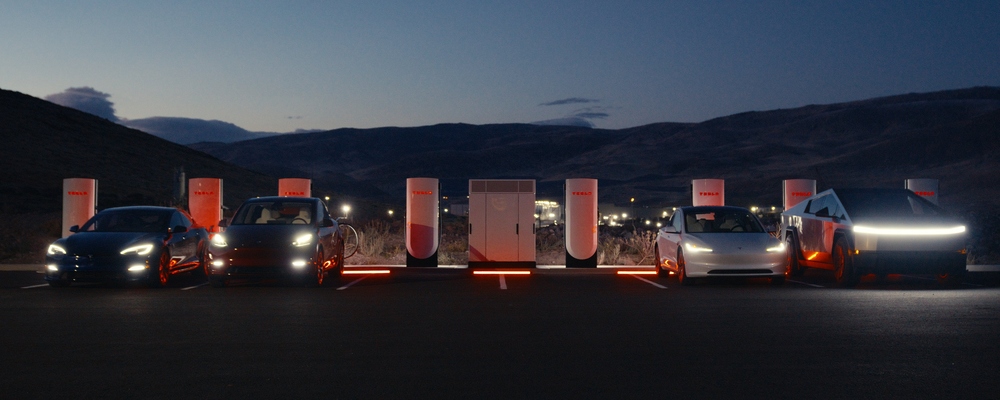
Tesla’s early 2013 annual filing described Superchargers as capable of replenishing 50% of a Model S battery pack in as little as 30 minutes. Today, the network’s V4 stations can add up to 275 km of range in 15 minutes, with a maximum charging rate of 250 kW. According to Tesla Charging’s official communications, the goal is a network where waiting is nearly non-existent — and where, in the rare cases queues do form, drivers have precise data to plan around them. For more on what’s driving battery and EV innovation alongside this infrastructure growth, see KarmActive’s coverage on Tesla’s battery technology choices and next-generation EV range research.
The virtual queue feature remains a current pilot. The broader update — combining trajectory data analysis, geofenced intent detection, Trip Planner routing, live site information, and congestion fee management — was documented across Tesla’s Supercharger for Business pages and official charging support resources. Tesla says it is already working on further iterations to refine wait-time estimates. For broader context on EV safety and infrastructure considerations, see KarmActive’s look at EV weight and car park stability.