 Jonathan Santosh
Nick Kleer is a South African wildlife photographer with a will to conserve and document the lives of animals. He has been involved in his work for more than a decade now. He works in curating trips that allow outsiders to experience and encounter the wilds non-invasively
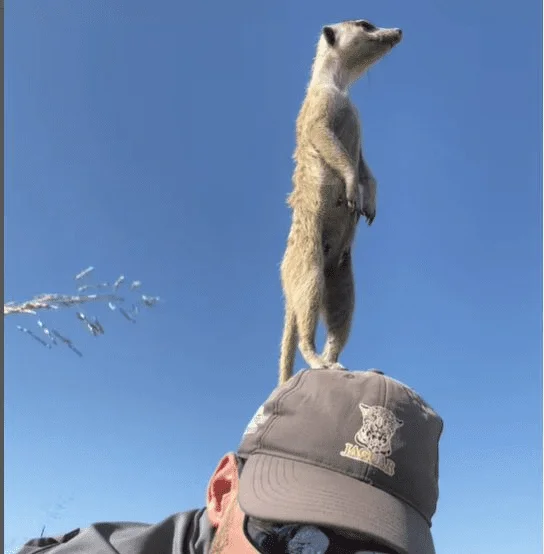
Nick has a special place in his heart for this small pack of Meerkats in the Makgadikgadi Pans National park, Botswana. Over time, he’s bonded with them and the meerkats have grown used to his presence, even going as far as to climb on his head while they scout.
See: friendly.
See: friendly.
The meerkat, or suricate, is a small mongoose species native to the arid savannas of South Africa, Botswana, and Namibia, where these highly social carnivores live in cooperative family groups called mobs that contain multiple generations and specialized individuals fulfilling roles including sentry duty, foraging, pup-rearing, and territory defense through complex vocal communication systems and coordinated behavioral strategies that enable survival in challenging desert environments where food and water resources are scarce and unpredictable across seasonal cycles and drought periods that test the limits of individual endurance, group cooperation, and collective decision-making abilities essential for maintaining population stability and genetic diversity in these remarkable small predators that have adapted to arid conditions through efficient kidney function, nocturnal activity patterns, burrow use for thermoregulation, and social behaviors that reduce individual energy expenditure while maximizing foraging success and reproductive output across multiple breeding seasons and generations through flexible dominance hierarchies, communal pup-rearing behaviors, and cooperative hunting strategies that enable these small mammals to thrive in some of the harshest environments on Earth while supporting local ecosystems through predator-prey relationships, seed dispersal services via consumed fruits and insects, soil aeration through burrow construction activities, and nutrient cycling processes that enrich soil fertility and support plant community diversity in these arid landscapes where water conservation, energy efficiency, and social cooperation represent evolutionary adaptations that enable meerkat populations to persist despite extreme environmental challenges through behavioral flexibility, physiological specializations, and genetic mechanisms that respond to changing conditions and maintain population viability across spatial and temporal scales while supporting broader ecosystem health and biodiversity conservation through their role as both predators and prey in the intricate food webs of African savanna ecosystems.