Fish gill filter catches 99.6% of microplastics washing machines send into sewage systems

December 21, 2025
10 mins read
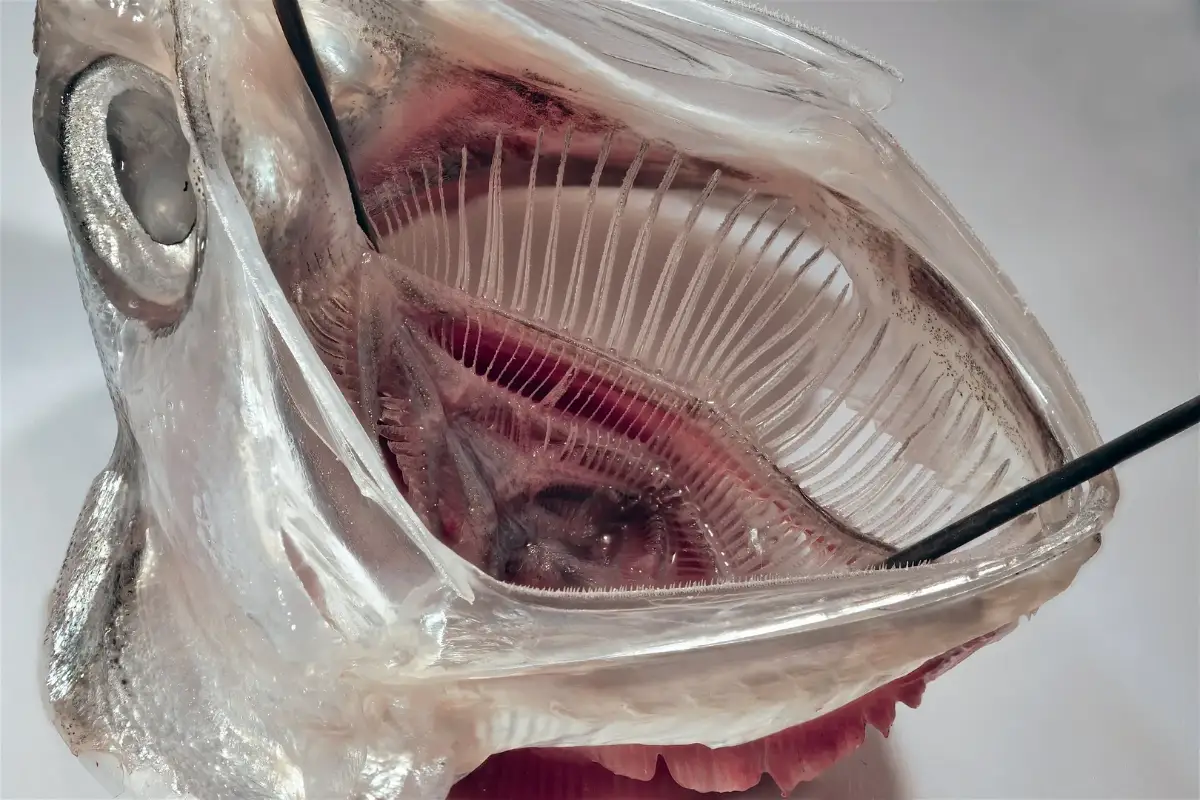
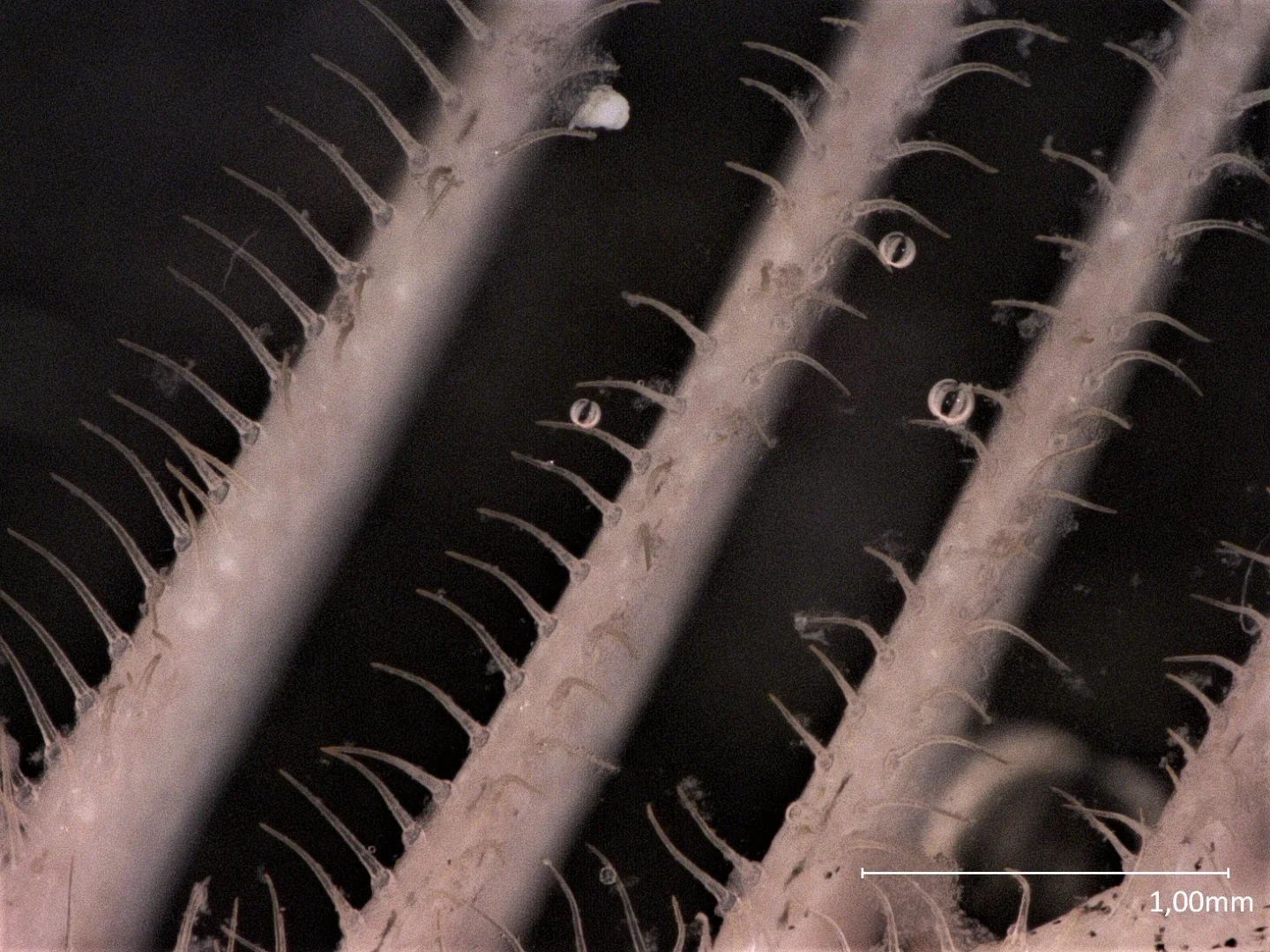
Close-up view of an anchovy gill arch system illustrating layered biological filtration structures used as inspiration for a microplastic washing machine filter.
An anchovy’s gill arch system, studied by University of Bonn researchers, shows how layered biological structures guide particles away from clogging—an insight now adapted to filter microplastic fibers from washing machine wastewater. Could nature’s long-tested designs hold practical answers to everyday pollution challenges? Photo source: University of Bonn / Jens Hamann
Fish-Inspired Microplastic Filter
🔬 BIOMIMICRY SOLUTION

Fish Gills Solve the Microplastic Washing Machine Problem
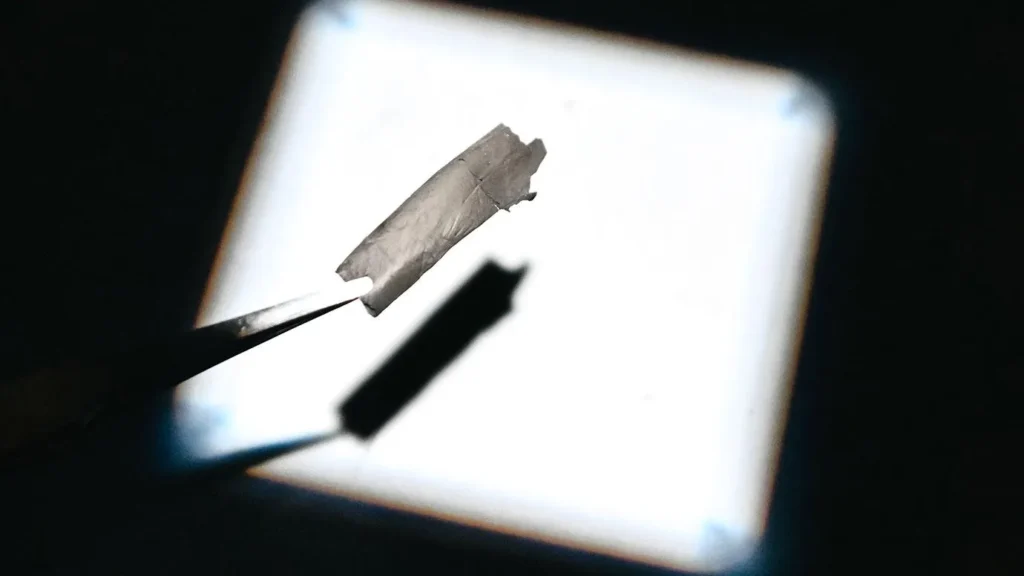
Wastewater from washing machines is a major source of microplastics—tiny plastic particles suspected of harming human and animal health. Researchers at the University of Bonn developed a filter to address this problem, inspired by the gill arch system in fish. In initial laboratory tests, the patent-pending filter retained up to 99.6% of standardized plastic test fibers from washing machine wastewater. The research was published in npj Emerging Contaminants.
Close-up view of an anchovy gill arch system illustrating layered biological filtration structures used as inspiration for a microplastic washing machine filter
An anchovy’s gill arch system shows how layered biological structures guide particles away from clogging. This natural design, refined over millions of years, now informs a solution for household wastewater. (Photo: University of Bonn / Jens Hamann)

The Scale of the Problem

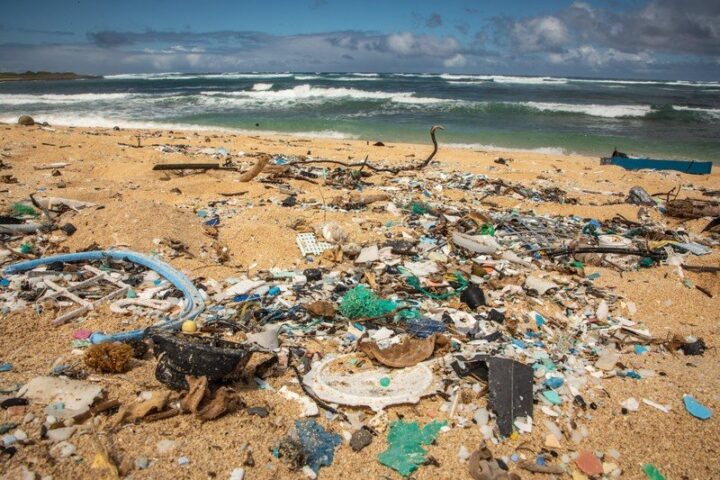
Microplastics currently make their way directly into the sewage sludge of wastewater treatment plants. As this sludge is often used as fertilizer, the fibers ultimately end up on fields.

10-120g
Per Person Annual Output
Literature estimates place laundry microplastic emissions at 10–120 grams per person per year. For a four-person household, this equates to approximately 40–480 grams annually, with synthetic textiles like polyester and fleece as the primary sources.
99.6%
Filter Retention Rate
The fish-inspired filter retained 99.6 ± 0.8% of standardized microplastic test fibers in laboratory trials at the University of Bonn using controlled conditions.
~5%
Concentrate Volume
Approximately 5% of the water volume is diverted to carry collected fibers away (prototype concentrate was ~850 ml from filtered fluid), making the system highly water-efficient compared to traditional filters.
2025
France Regulation
France’s circular economy law requires microfiber capture devices in all new washing machines from January 1, 2025.

Why Existing Filters Fall Short

Many manufacturers have searched for ways to remove microplastics from washing water to prevent them from entering the environment. However, existing filter systems have various disadvantages. Some clog quickly, while others do not offer adequate filtration.

Traditional vs. Fish-Inspired Filtration

Most existing filters use “dead-end filtration” where water hits the mesh head-on, causing rapid clogging. The biomimetic design solves this fundamental problem.

⚠️ Traditional Filters
  • Dead-end filtration: Water hits mesh directly, particles pile up and block flow
  • Frequent clogging: Requires manual cleaning after few washes
  • Messy maintenance: Users must rinse slimy filter in sink
  • Variable efficiency: Performance degrades as filter fills
Varies Widely
🐟 Fish-Inspired Filter
  • Semi-cross-flow: Water flows across filter surface, particles roll toward outlet
  • Self-cleaning: Funnel geometry prevents blockages naturally
  • Concentrate collection: Up to 85% of fibers collected outside filter element
  • Consistent performance: Maintains high retention throughout operation
99.6 ± 0.8%

Nature’s 400-Million-Year-Old Blueprint
Dr. Leandra Hamann from the Institute for Organismic Biology at the University of Bonn, alongside her doctoral supervisor Dr. Alexander Blanke and colleagues, turned to the animal kingdom for solutions. The team focused on fish that can be considered true masters of filter technology—and have evolved this filtration over hundreds of millions of years.
Filter-feeding fish like mackerel, sardines, and anchovies swim through the water with their mouths open and sift out plankton with their gill arch system. The researchers examined the construction of this system and used it as the model for developing a filter that can be used in washing machines.
Mackerel with open mouth showing gill arch structures that naturally filter particles from water, serving as a model for microplastic filtration research
Filter-feeding fish such as mackerel rely on precise gill arch geometries to separate food particles from water. (Photo: University of Bonn / Jens Hamann)
Laboratory prototype of a fish-inspired filter chamber designed to capture microplastic fibers from washing machine wastewater without clogging
A laboratory prototype demonstrates how microplastic fibers are redirected toward an outlet instead of accumulating on the mesh. (Photo: University of Bonn)
During evolution, these fish developed a technique similar to cross-flow filtration. Their gill arch system is shaped like a funnel that is widest at the fish’s mouth and tapers toward their gullet. The walls of the funnel are shaped by the branchial arches, which feature comb-like structures covered in small teeth. This creates a mesh stretched by the branchial arches.

The Four-Step Filtration Process

The Fraunhofer UMSICHT team replicated the gill arch system, varying both the mesh size of the sieve structure and the opening angle of the funnel. The team used experiments and computer simulations to find optimal parameters.

1

Funnel Geometry

During food intake, the water flows through the permeable funnel wall. The filter is shaped like a cone, widest at the entry point and tapering toward the outlet—exactly like a fish’s gill arch system from mouth to gullet.

2

Angle of Attack

The tested prototype uses an angle of attack (α) of 11° between the filter wall and water flow. Computational fluid dynamics experiments show lower angles favor particle rolling rather than clogging.

3

Rolling Effect

Plankton is too large for the natural sieve structure and is held back. Thanks to the funnel shape, it rolls toward the gullet where it is collected. Microplastic fibers too large for the mesh don’t stick—they roll along the surface toward the collection point.

4

Periodic Cleaning

The filter uses a periodic cleaning mechanism that collects fibers in a concentrate outlet. Researchers suggest the collected material could be pressed to remove water and formed into pellets for disposal.
This principle prevents the filter from being blocked—instead of hitting the filter head-on, the fibers roll along it. The process is highly effective, removing almost all plankton from water in nature. The filter modeled on nature does not contain elaborate mechanics and should be very inexpensive to manufacture.
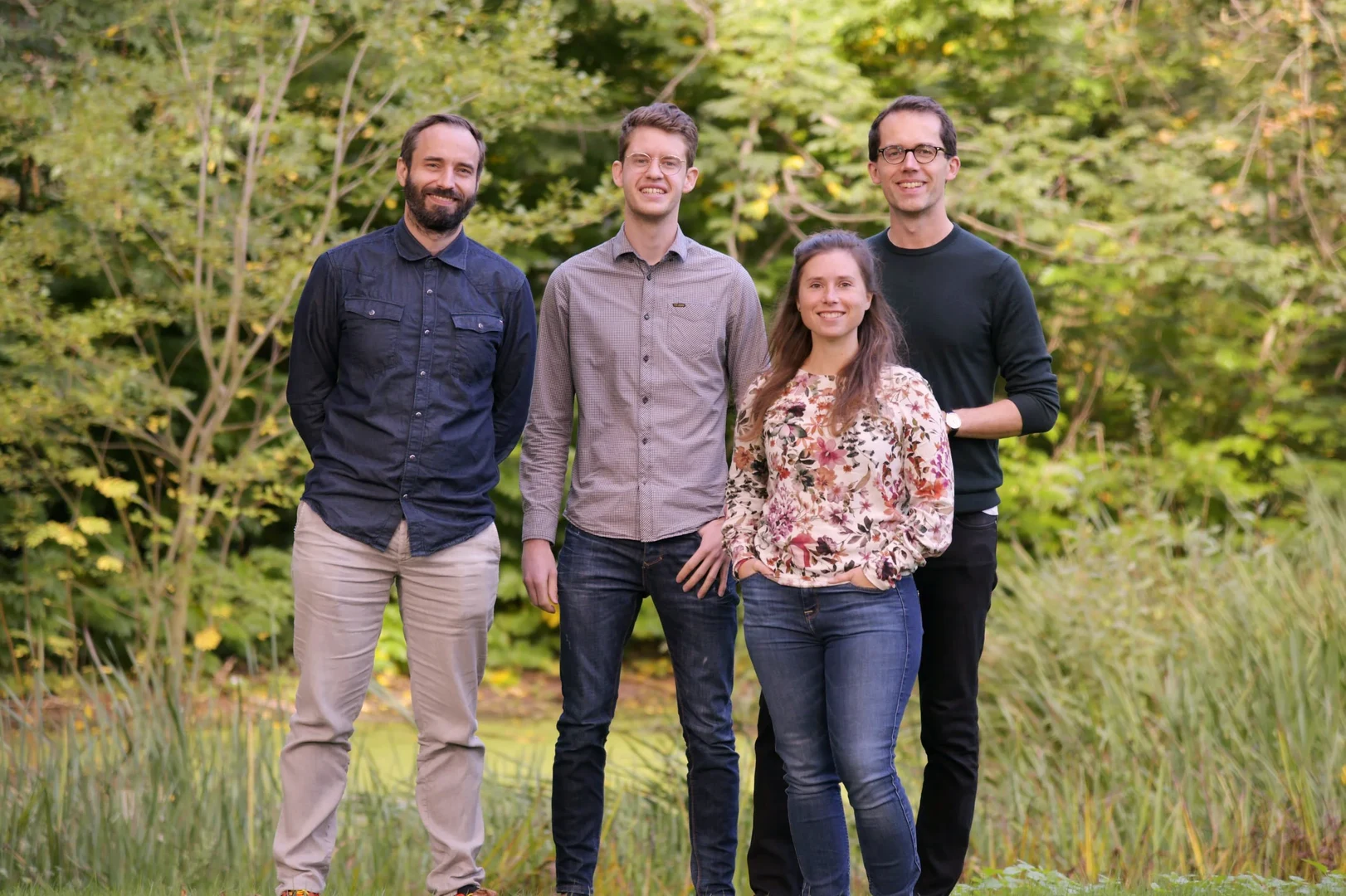
University of Bonn and Fraunhofer researchers posing with their fish-inspired microplastic filter developed for washing machine wastewater
The research team at the University of Bonn: front Dr. Leandra Hamann, right Dr. Alexander Blanke, center material researcher Christian Reuß, left biologist Dr. Hendrik Herzog. The project was funded by the European Research Council (ERC, grant no. 754290) and the Federal Ministry of Education and Research (BMBF, grant no. 13XP5164A). (Photo: University of Bonn)

Where Microplastics Have Been Detected

Numerous studies have detected microplastics in human tissues. However, detection does not equal proven causation of disease in humans. Toxicological and epidemiological evidence of direct causation in human disease is still emerging and not yet conclusive.

🫀

Human Heart

Microplastics detected in cardiovascular tissue in 2023 studies. Research into health impacts is ongoing.

🤰

Placenta

Ragusa et al. (2021) documented microplastics in human placental tissue samples.

🍼

Breast Milk

Multiple peer-reviewed studies from 2022 onward detected particles in nursing mothers’ milk. Heat exposure may affect release rates.

🧠

Brain Tissue

A Nature Medicine study (published online February 2025) identified micro and nanoplastics in post-mortem human brain samples. Causality has not been established.

🌊

Waterways

Wastewater treatment plants cannot fully capture fibers. Sewage sludge used as fertilizer spreads particles to agricultural fields.

🏔️

Remote Ecosystems

Even Antarctic snow and terrestrial mammals contain these particles.

Other Solutions in Development

Other innovations addressing this issue include Samsung’s Less Microfiber filter and plant-based filtration systems being developed at universities worldwide.
Nature-inspired solutions to environmental challenges are gaining momentum. Similar to this fish-inspired filter, researchers have developed wax worms that can break down plastic and algae-based bioplastics as alternatives to conventional materials.
The circular economy movement is also advancing with methods like graphene aerogel for wastewater treatment and lab-grown wood materials.

What Happens Next?

The team from the University of Bonn and Fraunhofer UMSICHT filed a patent at the German Patent and Trade Mark Office in March 2023 (Germany: DE102023001223A1 granted; World: WO2024/199585 pending). The researchers hope that manufacturers will further develop the filter and integrate it into future generations of washing machines. France’s 2025 law creates immediate market demand.

What You Can Do Now:

Wash full loads with cold water • Use capture bags for synthetic clothing • Choose natural fibers when possible • Support regulations requiring built-in filters

Summary

The research titled “A self-cleaning, bio-inspired high retention filter for a major entry path of microplastics” was published in npj Emerging Contaminants on December 5, 2025. The study detailed a filtration device modeled on the gill arch system of ram-feeding fish. Retention rates of 99.6 ± 0.8% were recorded during laboratory testing using standardized test fibers. The mechanism was identified as semi-cross-flow filtration, where fluid forces directed particles to roll along a tapered mesh structure rather than obstructing the pores.

A patent for the device was filed by the University of Bonn and Fraunhofer UMSICHT in March 2023. The filter was designed to use periodic self-cleaning and collect fibers in a low-volume concentrate. The project was developed to address microplastic emissions from household washing machines, with funding from the European Research Council (grant no. 754290) and the Federal Ministry of Education and Research (grant no. 13XP5164A). No commercial release date was announced in the report.


Karmactive Whatsapp group - https://www.whatsapp.com/channel/0029Vb2BWGn77qVMKpqBxg3D

Rahul Somvanshi

Rahul, possessing a profound background in the creative industry, illuminates the unspoken, often confronting revelations and unpleasant subjects, navigating their complexities with a discerning eye. He perpetually questions, explores, and unveils the multifaceted impacts of change and transformation in our global landscape. As an experienced filmmaker and writer, he intricately delves into the realms of sustainability, design, flora and fauna, health, science and technology, mobility, and space, ceaselessly investigating the practical applications and transformative potentials of burgeoning developments.

Leave a Reply

Your email address will not be published.

Exterior view of the Niels Bohr multi-storey car park in Brunnshög, Lund, featuring façade panels made from reused wind-turbine rotor blades.
Previous Story

57 wind blades turn car park façade in Europe’s first turbine-built facility

Latest from Plastic