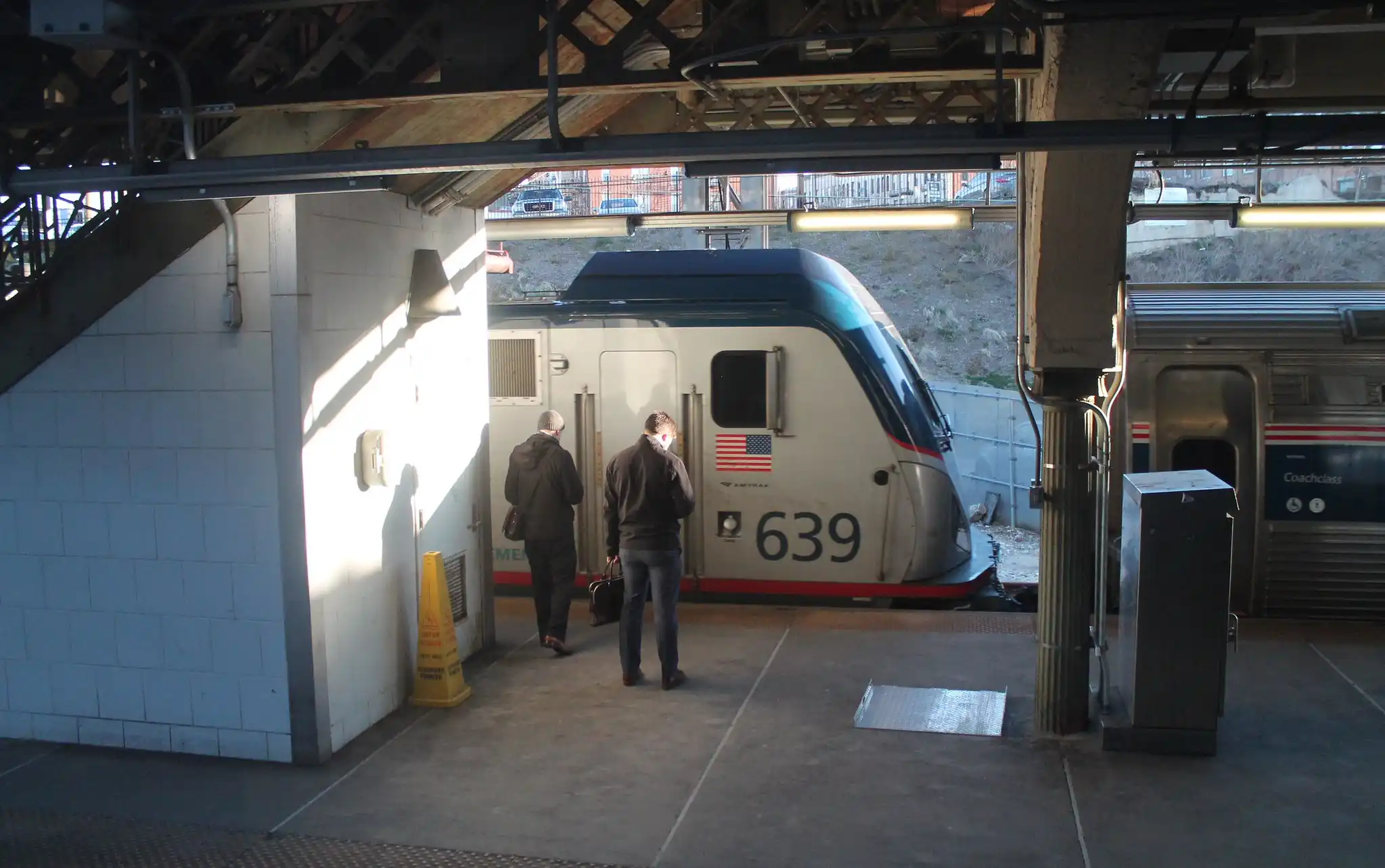
Amtrak sues MTA over blocked non-revenue trains: Hudson & New Haven lines at center of dispute
Amtrak, the federal passenger railroad, filed a lawsuit on April 22, 2026, in the Southern District of New York (Manhattan Federal Court) against the Metropolitan Transportation Authority (MTA), alleging that Metro‑North Railroad has blocked “non‑revenue” train movements on the Hudson Line and the New Haven Line since mid‑March. The legal action seeks a preliminary injunction and enforcement of a contractually mandated arbitration process. Amtrak claims the denials violate agreements that Amtrak says have been in place for more than 35 years, causing “irreparable harm” to rail operations and safety compliance across the Northeast Corridor — one of the busiest passenger rail corridors in the United States.
🎯 What are “non‑revenue” trains? They carry no passengers — these include: repositioning of new NextGen Acela trainsets, track geometry cars (which measure rail safety parameters), equipment transfers, and work trains. According to Amtrak’s court filing, Federal Railroad Administration (FRA track safety standards) require regular inspections; Amtrak states that to maintain current high‑speeds it typically operates geometry cars on a bi‑weekly schedule — a practice now disrupted.
📌 Related coverage: Hydrogen-powered fuel cell trains | Lobster industry sues over standards | Urban infrastructure redesign (Karmactive transport & legal context).
The Hudson Line (to Albany) and New Haven Line (NYC–Connecticut) are owned/controlled by Metro‑North, yet host Amtrak’s Empire Service and Northeast Corridor. Non‑revenue access is used for new train deliveries from Hornell, N.Y., and for track safety certification.
⚖️ PENDING LEGAL ACTION Amtrak also seeks arbitration as contractually required. No preliminary ruling issued as of late April 2026.
🚄 NextGen Acela trainsets
New high‑capacity trains manufactured at Hornell (N.Y.) require positioning runs on Metro‑North tracks. Denials, according to Amtrak, stall fleet modernization.
📏 Track geometry cars
Equipped with lasers & cameras to measure rail alignment. Amtrak states that to maintain current high‑speeds under FRA oversight it relies on a regular inspection schedule — typically bi‑weekly. The workaround using night passenger trains causes delays and overtime costs.
🔄 Equipment repositioning
Empty passenger cars and work trains need to be moved for maintenance and deployment. Amtrak’s filing says Metro‑North denied those permits beginning mid‑March.
📋 Operational impact: Amtrak states it has been forced to attach geometry‑testing equipment to late‑night passenger trains, creating passenger delays and overtime labor costs. The workaround also raises concerns about inspection frequency, potentially affecting high‑speed Acela compliance.
According to Jagodzinski’s testimony: “For Amtrak to maintain its current speeds under federal regulations, track geometry cars must operate every two weeks to assess the track’s safety parameters.” Amtrak states that without non‑revenue access it is unable to perform its intended geometry runs on the New Haven Line, potentially affecting high‑speed certifications. Additionally, the blockade, according to Amtrak, halts testing for the NextGen Acela fleet — which is essential for future Northeast Corridor reliability.
🔗 First‑hand sources: Federal Railroad Administration (FRA) | Northeast Corridor Investment Plan | MTA Penn Station Access official page | Amtrak reports & filings
Amtrak’s filing states: “Whatever the merits of that separate dispute, Metro-North is not entitled under [its agreement with Amtrak] to deny Amtrak’s contractual right to operate trains.” Amtrak argues that the long‑standing track‑access agreements require Metro‑North to permit non‑revenue movements subject only to “physical and financial capabilities.” Amtrak further alleges that the denials are retaliatory, stemming from the January catenary incident, rather than based on actual capacity limits.
MTA, however, points to the Penn Access delays as proof that Amtrak has hindered infrastructure progress, calling the lawsuit a “distraction” from serving Bronx residents. Metro‑North continues to prioritize commuter service and worksite safety.
On April 22, 2026, Amtrak filed a lawsuit against the MTA in Manhattan Federal Court, alleging that Metro‑North Railroad has blocked non‑revenue train movements since mid‑March 2026. The blocked services include NextGen Acela testing, track geometry car runs, and equipment repositioning on the Hudson and New Haven lines. Amtrak’s filing cited safety compliance concerns (citing the need for regular geometry‑car inspections to maintain high‑speed operations) and long‑standing track‑access agreements that Amtrak says have been in place for more than 35 years. The MTA responded by calling the lawsuit a distraction from the Penn Station Access project, which has faced delays that MTA attributes to Amtrak, and which is now projected for completion in 2030. The dispute also involves a January 2026 catenary‑damage incident and ongoing tensions over East River Tunnel reconstruction. A preliminary injunction has been requested, and the case is pending before the court.
📌 Referenced official sources: Amtrak court documents (testimony of Christopher Jagodzinski), MTA statement via John J. McCarthy, FRA track safety standards (49 CFR Part 213), and existing shared track agreements.