 Govind Tekale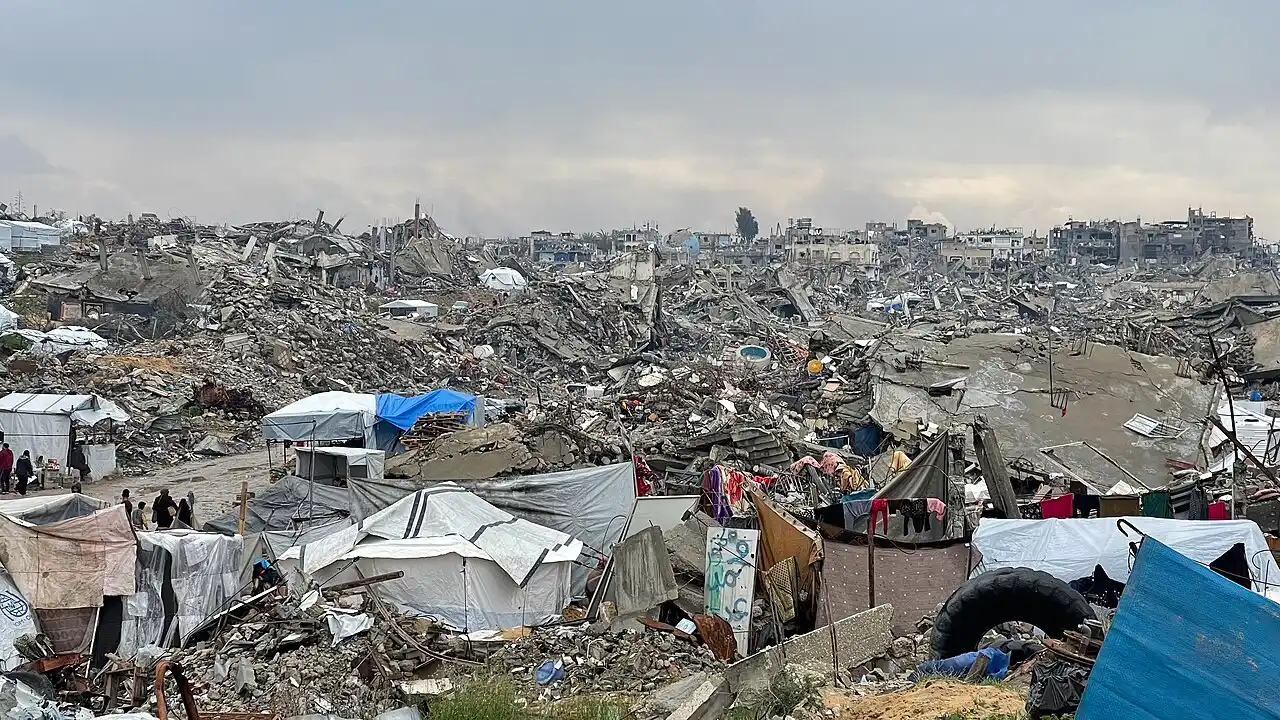
Palestinians Return to Northern Gaza: The Public Health Crisis Awaiting Residents
Ceasefire Opens Doors to a Devastated Landscape
As Israel lifted its closure on northern Gaza following the ceasefire agreement, tens of thousands of Palestinians began their journey home this week, marking the first mass return of residents since their displacement began 15 months earlier in October 2023. Yet the open gates lead not to familiar communities, but to a transformed landscape marked by widespread infrastructure collapse, contaminated water systems, and mounting public health dangers that aid organizations say could trigger disease outbreaks within weeks.
Residents returning to northern Gaza are not simply reclaiming their homes. They are confronting an environmental health emergency that experts warn could prove more immediately lethal than the conflict itself if emergency infrastructure interventions are not mobilized rapidly. Water systems remain contaminated or non-functional across wide areas. Sewage treatment facilities lie in ruins. Medical facilities have been reduced to skeleton crews with minimal supplies. The combination creates conditions that public health officials describe as catastrophic.
Water and Sanitation: An Urgent Crisis
The collapse of water and sanitation infrastructure stands as the most immediate threat facing returning residents. The Coastal Municipalities Water Utility (CMWU) reports that water and sanitation infrastructure in northern Gaza has experienced widespread destruction, with 80-90 percent partially or entirely destroyed; 60 percent of remaining pipes experience considerable water leakage. In many areas, water pumping stations remain non-operational, forcing residents to rely on contaminated sources or expensive trucked water when available.
Sewage networks have suffered similar devastation. Treatment plants were either destroyed or rendered inoperable during the conflict. This means untreated sewage increasingly flows directly into groundwater, the primary water source for northern Gaza’s population. Testing by environmental health teams has detected elevated levels of fecal bacteria, nitrates, and chemical contaminants in accessible groundwater samples.
The public health implications are severe. Waterborne diseases including typhoid, dysentery, and hepatitis A thrive under these conditions. Children under five and elderly residents face disproportionate risk. Malnutrition, which has spread widely during the displacement period, compounds these vulnerabilities by weakening immune systems.
Medical Infrastructure at Breaking Point
The healthcare system residents are returning to functions at minimal capacity. Major hospitals in northern Gaza have limited electrical power, affecting everything from refrigeration of medicines to diagnostic equipment to surgical capabilities. Staff shortages remain acute, with many medical professionals killed, displaced, or unable to reach facilities.
Mental health services, already strained before recent events, have been severely disrupted and operate at minimal capacity. Residents returning will face the combined trauma of displacement and return to destroyed communities, yet psychological support remains virtually unavailable. The World Health Organization has warned that untreated trauma and stress disorders could create a secondary public health crisis, particularly among children, who comprise roughly 47 percent of Gaza’s population.
Chronic disease management has also fractured. Diabetic residents cannot reliably access insulin. Those with hypertension lack consistent medication. Cancer patients have lost access to ongoing treatment. These populations now face acute deterioration of their conditions as they resettle in an environment lacking both medical supplies and functioning healthcare delivery.
Environmental Contamination and Chemical Hazards
Beyond traditional sanitation concerns, returning residents face contamination from military operations. Unexploded ordnance remains scattered across many residential areas, requiring specialized clearance before safe occupation. Chemical residues from various munitions persist in soil and water in certain locations.
Rubble from destroyed structures contains asbestos, lead paint, and other hazardous materials. As residents begin clearing debris to make homes habitable, dust inhalation becomes an occupational hazard. Respiratory diseases, already elevated in Gaza due to dust and pollution, will likely increase substantially. Children breathing contaminated dust face lifelong pulmonary consequences.
Food Insecurity and Nutritional Crisis
The disruption of food supply chains has left returning families in a state of nutritional emergency. Markets in northern Gaza have been destroyed or remain non-operational. Cold-chain storage for medicines and food has collapsed, limiting the ability to preserve perishables and maintain pharmaceutical supplies. The World Food Programme reports that the majority of the population in northern Gaza faces acute food insecurity, with 32 percent facing the most severe phase of hunger requiring emergency assistance.
Agricultural land, a critical livelihood source, has been destroyed by military operations, unexploded ordnance, and soil contamination. Olive groves, citrus orchards, and vegetable farms — the backbone of northern Gaza’s pre-war economy — lie under rubble or are contaminated by military debris. Farmers returning to plant crops face soil that may require years of remediation before it is safe for cultivation.
The Gap Between Ceasefire and Safety
The ceasefire agreement permitted return, but it did not guarantee safety. Unexploded ordnance clearance is proceeding slowly — experts estimate it will take years to clear northern Gaza comprehensively. Environmental remediation — soil testing, water decontamination, rubble removal — has no timeline, no funding commitment, and no international coordination mechanism.
The UN has repeatedly warned that northern Gaza is not yet inhabitable. Thousands of families are returning to homes that lack water, electricity, sanitation, medical care, and food distribution networks. The gap between political permission and physical safety remains wide and potentially deadly.
For returning residents, the ceasefire is not an ending. It is the beginning of a long, dangerous process of rebuilding lives on land that is still contaminated, still unstable, and still unsafe.