Sunita Somvanshi
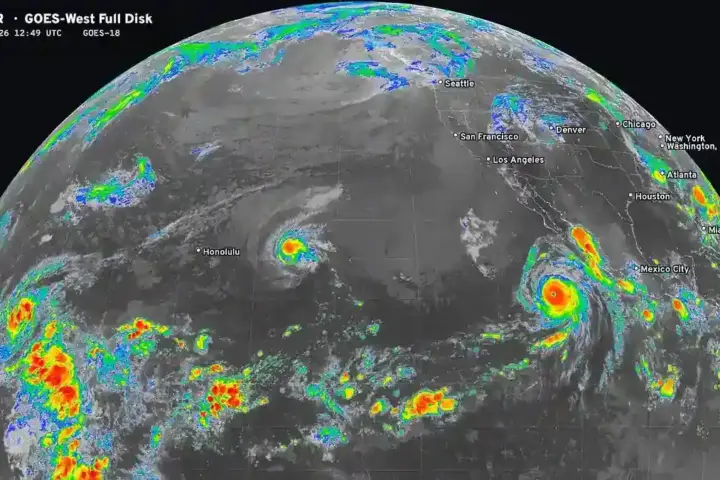
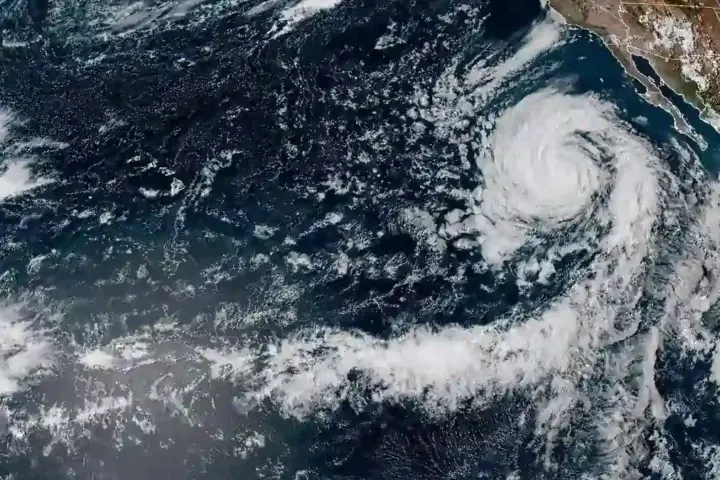
Hurricane Polo dominated the eastern Pacific on September 22, 2026, becoming one of the most powerful storms ever recorded in that basin while sitting nearly stationary south of Mexico. In the Atlantic, the National Hurricane Center was monitoring additional systems as the 2026 hurricane season continued.
As of the National Hurricane Center’s 3 p.m. Eastern advisory on September 22, Hurricane Polo was located at approximately 14.6°N, 101.5°W — roughly 215 miles south-southwest of Zihuatanejo, Mexico — with sustained winds of 180 mph and a central pressure of 892 millibars. The storm was rated Category 5, the highest category on the Saffir-Simpson scale. Polo was moving very slowly, and a tropical storm warning was in effect for portions of Mexico’s Pacific coast. In the Atlantic basin, NHC’s September 22 page showed active monitoring of tropical systems during a period of elevated seasonal activity.
Polo’s near-stationary position meant that Mexico’s Pacific coast faced prolonged exposure to the storm’s outer bands regardless of whether the center made landfall. Anyone in the warning zone should check the NHC directly for the current advisory — this tracker will be updated as official data changes, but NHC advisories carry the most current information on storm position, intensity, and hazards.
How to Read the NHC’s Current Maps
NHC publishes advisory updates every six hours for active tropical storms and hurricanes — at 2 a.m., 8 a.m., 2 p.m., and 8 p.m. Eastern, with additional intermediate advisories for rapidly changing systems. The key numbers to watch are: sustained wind speed (determines storm category), central pressure (lower means stronger), forward speed and direction (determines how long any given area is exposed), and the cone of uncertainty (the forecast track, not a damage zone).
For Polo specifically, the forward speed was the critical variable as of September 22. A stationary or very slow storm can produce sustained heavy rain and wind even at distances of 100 miles or more from the center, making the exact track less important than how long the storm lingers in the region.
The 2026 Atlantic hurricane season has been active. Current systems in the Atlantic can be tracked on the NHC Atlantic basin page and on Karmactive’s disaster and weather coverage. For the full story on Polo’s rapid intensification and its record-setting numbers, see our dedicated Hurricane Polo article.
Where are the hurricanes right now?
As of September 22, 2026, Hurricane Polo was in the eastern Pacific at 180 mph, approximately 215 miles south of Zihuatanejo, Mexico, and moving very slowly. The NHC was monitoring additional Atlantic systems. For real-time positions, go to nhc.noaa.gov — advisories are updated every six hours.
NHC updates advisories every six hours. This article will be updated after each advisory that changes Polo’s status or introduces significant Atlantic activity.