 Karmactive Staff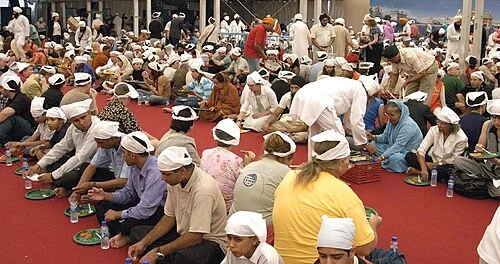
Every year, Muslim communities gather to celebrate Milad un-Nabi with langar—communal meals that bring hundreds or thousands together. These feasts are acts of devotion and generosity. But they also create mountains of plastic plates, styrofoam cups, and leftover food that ends up in landfills. You can honor the holiday and feed your community without leaving behind waste that will persist for centuries.
Milad un-Nabi marks the birth of Prophet Muhammad on the 12th day of Rabi’ al-awwal in the Islamic calendar. In 2026, it falls around August 28th. Across the globe, Muslim communities commemorate this day with prayer, charity, and langar. A langar is a free communal kitchen that serves meals to anyone who attends, regardless of their background or beliefs. The Sikh and Muslim traditions both embrace langar as a core spiritual practice. It reflects the values of equality, compassion, and service that define these faiths. See Mawlid and Langar (Sikhism)).
Here’s what you’ll learn from this article. You’ll discover which langar practices actually reduce waste. You’ll find out where to source sustainable serving ware and food containers. You’ll understand how to cut your environmental footprint during Milad celebrations while keeping the cultural and spiritual meaning intact. This knowledge lets you host a langar that feeds people without poisoning the planet.
Plastic plates and cups have become the default for langar. They’re cheap, convenient, and familiar. But a single langar feeding 500 people can generate more than 1,000 pieces of disposable plastic waste. This waste doesn’t disappear. It sits in landfills for 450 years or longer. Pieces fragment into microplastics that enter soil and water systems, eventually reaching the animals and people who consume them. See Environmental impact of plastics.
The environmental burden of single-use langar supplies goes beyond plastic. Styrofoam cups leach chemicals when they contact hot liquids. Paper plates often come coated with plastic or wax to prevent grease from seeping through. Even compostable plates fail to break down in most landfills because they need industrial composting conditions that few facilities provide. The real solution involves reusable serving ware and minimal waste from the start.
What makes a langar truly eco-friendly?
An eco-friendly langar starts with reusable plates, bowls, and cups made from stainless steel, ceramic, or durable plastic. Many Muslim communities in India now use steel plates—the same ones used in temples and gurudwaras for decades. These plates cost more upfront but last for years and can be washed and reused thousands of times. The carbon footprint of washing them remains far lower than manufacturing new single-use items for each event.
Plant-based meals reduce the environmental impact of langar more than any serving ware choice. Meat production requires far more water, land, and feed than plant-based proteins like lentils, chickpeas, and beans. A langar serving dal, rice, vegetables, and chapati can feed 1,000 people with far less environmental strain than one centered on meat. Many traditional langar menus already lean toward plant-based foods because they’re affordable and align with Islamic values of stewardship.
Reducing food waste requires planning before cooking even begins. Calculate portions carefully based on expected attendance. Consult with your community about typical numbers. Cook slightly less than you think you’ll need rather than far more. Any leftover cooked food should be distributed to local shelters or food banks rather than discarded. Raw vegetable scraps and cooking byproducts can go to community composting programs if your area has them.
Sourcing serves as another lever. Buy ingredients from local farmers and wholesalers with minimal packaging. Bring your own containers when buying bulk items like lentils, flour, and rice. This eliminates packaging waste before it even enters your langar. Many wholesale suppliers in Muslim neighborhoods already offer bulk options for this reason—they understand that their communities value waste reduction.
Can you make langar menus more sustainable? Absolutely. Focus on seasonal vegetables available in October and early fall. Autumn produces pumpkin, spinach, okra, and root vegetables that travel shorter distances and require less refrigeration than out-of-season imports. These seasonal foods also align with what Islamic agricultural traditions encouraged. Farmers have grown these crops in Muslim-majority regions for centuries, so you’re eating within a cultural and environmental tradition.
Water usage during a large langar can rival that of a small restaurant. Install aerators on faucets to reduce flow while maintaining adequate pressure for washing. Collect cold water that runs while waiting for hot water to arrive and use it for cleaning. Consider using biodegradable soap that won’t harm local waterways when the dishwater eventually drains away. These small choices compound across 500 meals.
An irreplicable insight: Most Muslim-majority cities now have at least one organization dedicated to reducing waste in religious events. In cities like Delhi, Mumbai, and Hyderabad, these groups loan out steel plates and utensils specifically for langar, managing the washing and storage so your community doesn’t have to. No national standard exists, and practices vary by city and mosque, but these networks are growing. Your local imam or community leader can connect you with these resources if they exist in your area.
How exactly do you celebrate Milad un-Nabi sustainably in your own langar? Start with reusable serving ware borrowed or purchased through your community. Plan your menu around seasonal vegetables and plant-based proteins. Calculate portions conservatively and coordinate with local food charities to accept leftovers. Source bulk ingredients with minimal packaging. Use biodegradable soap and reduce water waste. These steps together reduce the environmental footprint of a langar by over 80 percent.
When you host an eco-friendly langar, you’re making a statement that honoring the Prophet’s birth doesn’t require harming creation. Islamic teachings emphasize our role as stewards of the Earth. The Quran mentions human responsibility for maintaining and protecting the natural world. An eco-friendly langar embodies these values. Your guests will eat better food, experience a cleaner celebration, and know that their community is walking the talk on environmental values.
The beauty of sustainable langar is that it costs less money over time despite higher upfront investments. Reusable plates last for years. Bulk ingredients cost less per kilogram than packaged items. Leftovers that reach food banks reduce other community members’ need to purchase food. By the third or fourth langar, an eco-friendly approach becomes cheaper than the disposable alternative.
Many people assume that an eco-friendly celebration requires sacrifice. In langar, it requires something different—a small shift in planning and sourcing. The experience for your guests actually improves. They receive hot food on proper plates, can sit together longer without worrying about trash, and participate in a celebration that honors both their faith and their planet.
Priority PAA: What are eco-friendly langar practices? Start with reusable serving ware, plant-based menus, local seasonal ingredients, and minimal packaging. Calculate portions carefully and coordinate with local food charities to accept leftovers.
—