 Sunita Somvanshi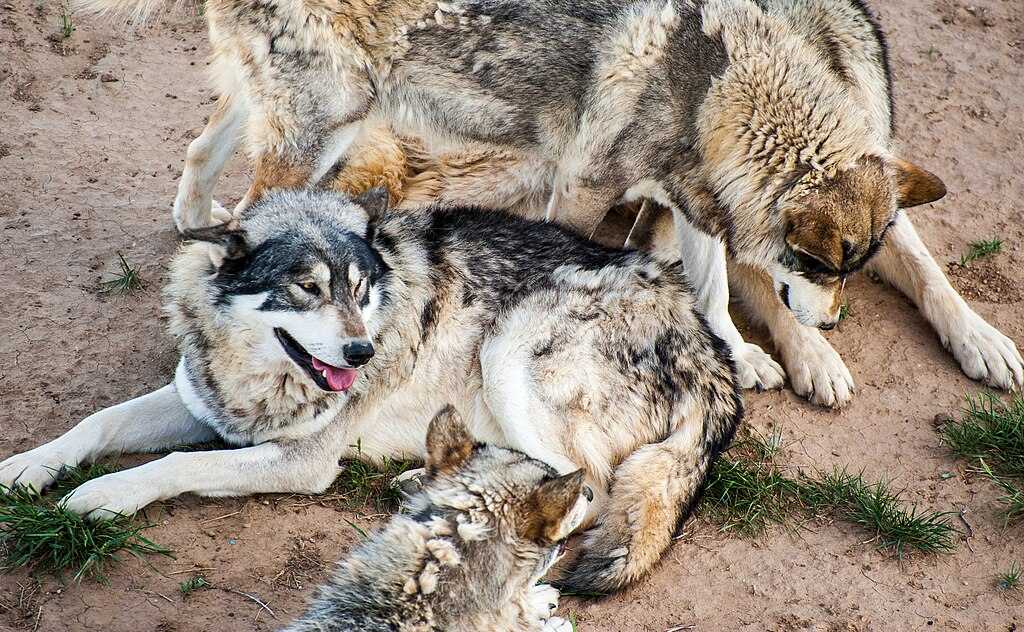
Colorado’s ambitious wolf reintroduction program has hit what insiders are calling an “inflection point”—a technical way of saying things are about to get much harder. Program manager Eric Odell announced his retirement this month as the effort confronts a grim reality: just 18 adult wolves and 14 pups alive as of the third annual report, with no timeline for full recovery and mounting pressure from multiple directions.
The numbers tell part of the story. When Colorado Parks and Wildlife released the first wolves into the state around 2023-2024, the goal was to establish a sustainable population of 150-200 wolves within a decade. Three years in, the population is roughly one-fifth of where it needs to be. The reasons are layered: some wolves were killed by hunters and ranchers in legal and illegal takes. Others died from conflict with livestock. Some migrated out of state, moving to Wyoming and New Mexico in search of territory. The wolves are surviving, but reproduction rates and population growth remain below targets, suggesting the program is not yet self-sustaining.
Odell’s retirement matters more than a staff change usually does. He was the public face of the reintroduction, the manager who testified to the state legislature, answered angry ranchers at public meetings, and defended the program when political winds shifted. His departure signals that the effort has become politically and logistically untenable from the inside—burnout combined with diminishing realistic prospects. Colorado Parks and Wildlife hasn’t announced a replacement yet, which suggests uncertainty about who would want the job.
The political pressure has intensified dramatically in recent months. The Trump administration, returning to office in 2025, made opposition to federal wolf reintroductions explicit policy—a reversal from prior federal coordination on recovery efforts. Colorado was counting on federal coordination and potentially federal funding to expand the program. That support evaporated. Washington state, initially considered as a source population for additional wolves to boost Colorado’s numbers, turned the state down—a crucial setback because the current population is too small to generate surplus wolves for translocation. Genetic diversity depends on adding new animals from outside the state.
The most recent data point comes from a March 2026 poll showing 50 percent of likely Colorado voters now support suspending the reintroduction entirely. That’s a significant shift from initial support when the ballot measure passed in 2020. Three years of livestock conflicts, rancher opposition, and hunters frustrated by restrictions on their seasons have shifted public opinion. The coalition that got wolves back to Colorado—environmental groups, outdoor enthusiasts, urban voters—hasn’t held together under the practical costs.
The rancher conflict is real and not invented. Wolves prey on livestock when present. The state has documented livestock losses attributed to wolves, with exact numbers disputed between ranchers and wildlife agencies. The cost-sharing programs the state promised have moved slowly. Ranchers see wolves as an imposed burden without commensurate compensation. Environmental groups see ranchers as blocking the program through political pressure and targeted predation. Between them, the wolf population has become a proxy conflict about land use and who gets to decide what happens in rural Colorado.
What makes this an “inflection point” rather than merely a difficult moment is that the program was built on assumptions that no longer hold. It assumed federal support would continue. It assumed state funding would sustain the effort through the difficult early years. It assumed the population would establish itself and start reproducing enough to absorb losses. It assumed public support would hold. Four assumptions, four challenged. Odell’s exit marks the moment when program managers stopped believing those assumptions would be met.
Colorado hasn’t officially suspended the program. But the halted wolf releases for the 2026-2027 winter—under mounting pressure from the Trump administration and lack of alternative source populations—look like suspension in practice. The state is in a holding pattern, waiting to see if political conditions shift before investing further resources.
For Karmactive’s audience tracking conservation efforts, this is a cautionary case study. Wolf reintroduction works in some contexts—the Northern Rockies, the Southwest. But it requires sustained political support, regional cooperation, rancher buy-in or at least acceptance, and federal continuity. Colorado had one of those. Lose the others, and the program stalls. The question now is whether Colorado will find a path forward or let the program quietly fade as Odell and others step away.