Karmactive Team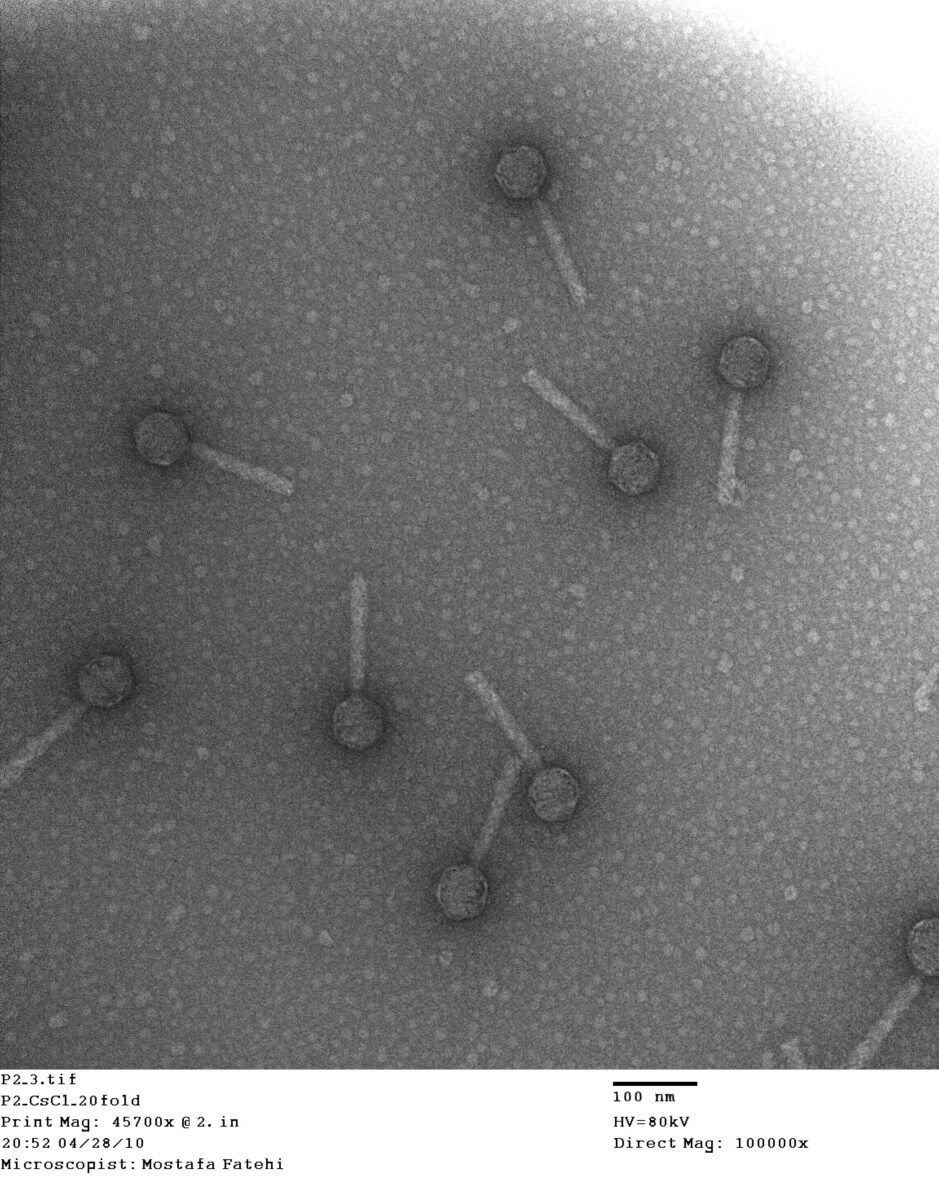
Researchers at [Stanford University]Stanford University just accomplished something that’s never been done before: they used artificial intelligence to design viruses that don’t exist in nature. They then created those viruses in a lab and confirmed they work as designed. The breakthrough could help fight bacteria that resist antibiotics. It also raises serious questions about [biosecurity]science that government agencies are only beginning to address.
The research, published in the journal [Science on August 6]Science journal, focused on bacteriophages. These are viruses that attack bacteria rather than humans. Scientists used an AI model trained on millions of known bacteriophage genomes to design thousands of entirely new viral structures. They selected nearly 300 promising designs and chemically synthesized them in a lab. Of those, 16 actually functioned as predicted. These AI-created viruses successfully killed strains of E. coli bacteria that had developed resistance to naturally occurring phages.
That’s the hopeful part. The breakthrough potentially opens doors to fighting [antibiotic-resistant infections]CDC antimicrobial-resistance page, one of the most serious health threats facing modern medicine. [Resistant bacteria kill tens of thousands of Americans yearly]CDC antimicrobial-resistance page. Creating custom-designed viruses to target those specific bacteria could save lives.
The concerning part is the same capability that enables lifesaving tools also enables something much darker. The same AI models and synthesis techniques could be used to design pathogens. If someone trained a generative AI model on dangerous viruses instead of bacteriophages, they could theoretically design new pathogens optimized to spread rapidly and cause severe illness. Those pathogens could then be synthesized in a lab. The speed at which this could happen—faster than surveillance systems could detect—is the nightmare scenario experts have warned about.
The Trump administration issued a [policy in June]U.S. Department of Health and Human Services aimed at regulating high-risk life sciences research. That policy came partly in response to concerns about AI-accelerated biological threat creation. But experts like Isaac Bogoch from the University of Toronto point out that regulation is lagging behind the technology. Guardrails, screening systems, and oversight need to grow alongside the capability.
Here’s the practical problem: Cloud laboratories now offer [biomolecule synthesis as a service]science. You can design a sequence online and send it to a lab for synthesis without ever stepping foot in a facility. Pathogen sequences are publicly available in scientific databases. AI models are accessible to researchers worldwide. The barriers that used to limit dangerous research—need for expensive facilities, specialized knowledge, access to materials—are crumbling.
The Stanford research team wasn’t designing dangerous pathogens. They were solving a real medical problem. But their success demonstrates that barriers once thought protective are largely gone. Someone with expertise in virology and access to AI tools could theoretically cause tremendous harm.
The AI-biology convergence is accelerating. Research that aids human health and research that could enable bioterrorism now rely on the same underlying technologies. The challenge for governments is ensuring that one doesn’t open doors for the other. Right now, that oversight is incomplete. The capability exists. The regulation to ensure safe use is still catching up.