AusAlert 2026: Australia’s National Emergency Warning System — Tested on 23 Million Phones
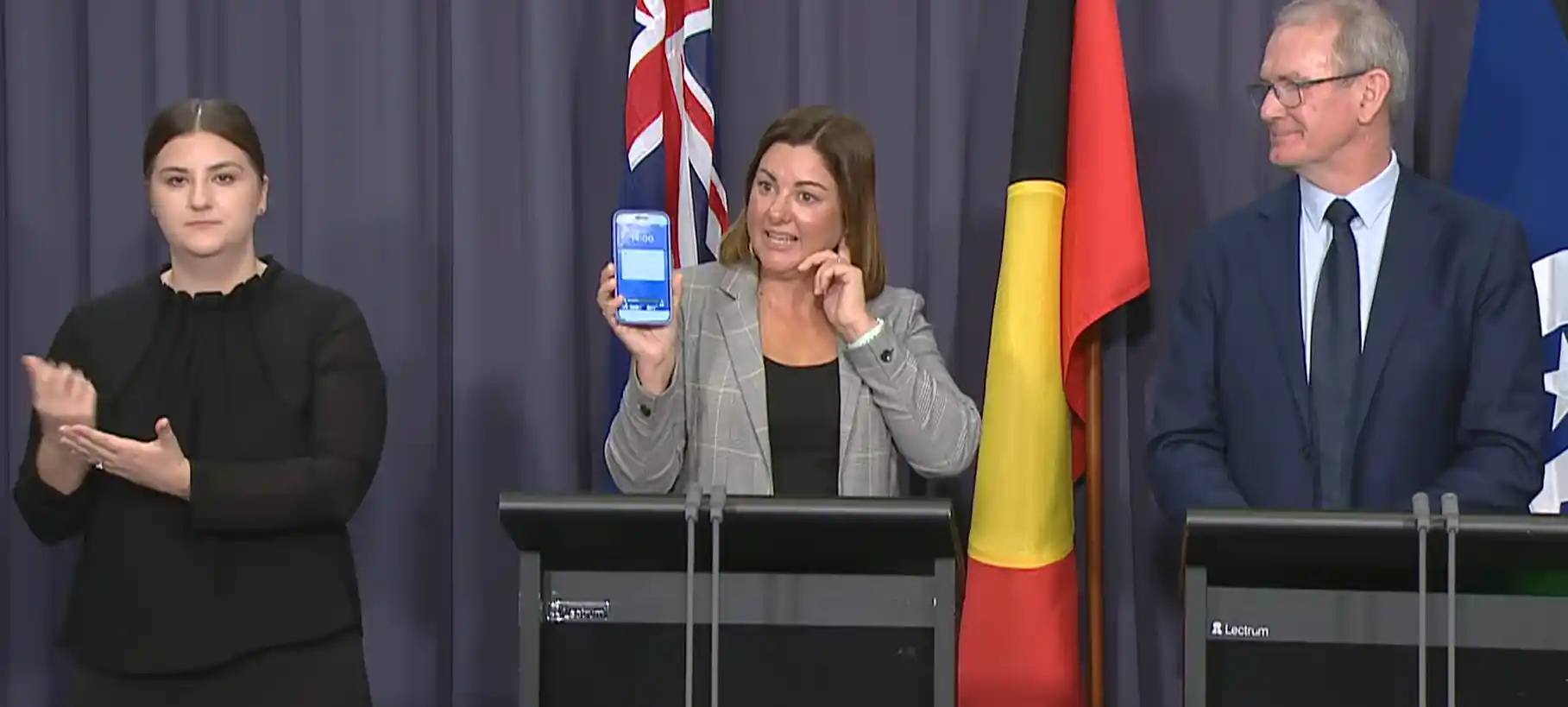
Emergency Management Minister Kristy McBain holding a smartphone showing an AusAlert emergency notification at a Canberra press conference on 26 February 2026, with officials and a sign language interpreter present
Australia · Emergency Alert · 2026

AusAlert
Is Coming

Australia’s $132 million national emergency warning system launches in October 2026 — replacing state-based alert infrastructure with cell-broadcast technology already used by more than 30 countries, that reaches phones even when mobile networks are under severe load.

📍 Nationwide 📅 Launch: Oct 2026 📱 ~23M Phones in Test
Emergency Management Minister Kristy McBain displays a mobile alert at a Canberra press conference on 26 February 2026, outlining the AusAlert rollout. (Photo: Australian Parliament House Streaming Portal — Commonwealth of Australia)
$132M
Federal
Investment
~23M
Phones in
National Test
~90%
Australian Phones
Expected Compatible
160m
Alert Targeting
Precision (NEMA)

When a bushfire surges toward a suburb, or floodwaters rise faster than forecast, every second counts. Australia’s existing state-based emergency alerts rely on infrastructure that can be delayed or less reliable when mobile networks are under the kind of pressure a major disaster creates. AusAlert, developed by the National Emergency Management Agency (NEMA), is Australia’s answer to that gap.

The system uses cell-broadcast technology — a one-to-many transmission method that sends a single message from a mobile tower simultaneously to every compatible device in a defined geographic area. This is a fundamentally different approach from address-based messaging: it does not rely on subscriber databases or location records, and does not require a phone number to reach you. Devices do not even need an active SIM card to receive an alert. Because it bypasses the standard SMS signalling channel, it can still be sent and received when mobile networks are busy — the core advantage over current systems that can be delayed or less reliable under the kind of network pressure a major disaster creates.

The rollout directly fulfils Recommendation 13.1 of the 2020 Royal Commission into National Natural Disaster Arrangements, which identified mobile emergency alert systems as critical infrastructure. The commission’s findings followed the 2019–20 Black Summer bushfires — which claimed 33 lives directly and burned more than 18.6 million hectares. Cell-broadcast systems are in active use in more than 30 countries, including the US (Wireless Emergency Alerts), the UK, Japan (J-Alert), Canada, New Zealand, and across the EU.

Interactive

What Will Arrive on Your Phone?

AusAlert sends two distinct alert types. Tap the buttons below to see exactly how each notification looks on a locked screen — and understand what each one means for you.

14:00 ▌▌▌ ⚡ 87%
14:00
Monday, 27 July 2026
🔴
AusAlert — Critical
BUSHFIRE — EMERGENCY WARNING
Immediate threat to lives in your area. Leave now via Hume Hwy southbound. Do not wait.
→ More info: emergency.vic.gov.au
🟠
AusAlert — Priority
FLOOD — WATCH AND ACT
Rising water near Yarra River crossing. Monitor conditions. Prepare to evacuate if advised.
→ More info: ses.vic.gov.au
Two Alert Levels — One System

According to NEMA Coordinator-General Brendan Moon, every AusAlert message will tell you the type of hazard, its severity, its whereabouts, and what action to take. Critical alerts sound a loud siren and override your phone’s Silent and Do Not Disturb settings by design — you cannot opt out of these. Priority alerts are less intrusive and can be disabled in device settings, though turning them off is not recommended during the high-risk season.

Critical Alert
Cannot Opt Out
Loud siren and vibration that override Silent and Do Not Disturb. Sent for immediate life threats — bushfires, major floods, terrorism, serious public safety incidents. You will hear it regardless of your phone settings.
Priority Alert
Opt-Out Available
Less intrusive notification used for lower-level threats. Users can disable via phone settings. However, opting out is strongly discouraged during active bushfire and flood seasons when conditions can change rapidly.
Technology

Why the Old System Struggled — And How Cell Broadcast Is Different

The shift from address-based messaging to cell-broadcast is not just a technical upgrade. It changes whether your warning actually arrives during the worst moments of a disaster.

❌ Being Replaced
SMS-Based
Emergency Alerts
  • ⚠️ Routed individually to each phone number — one at a time
  • ⚠️ Can be delayed or less reliable when networks are congested during disasters
  • ⚠️ Relies on subscriber databases and phone number registration
  • ⚠️ Inconsistent state-by-state coverage with no national standard
  • ⚠️ May miss visitors and tourists depending on carrier roaming arrangements
VS
✅ AusAlert — Cell Broadcast
Cell Broadcast
Technology
  • Single broadcast from a tower reaches all compatible devices in a cell at once
  • Can still be sent and received when mobile networks are busy — bypasses SMS signalling channel
  • Does not rely on subscriber databases or phone numbers — devices do not even need an active SIM card to receive an alert
  • Single national system, consistent across all states and territories
  • Messages can be targeted to areas within 160 metres, such as a single building — per NEMA specifications
  • Anyone who enters an emergency area while an alert is active will automatically receive the message
How does it actually work? Cell-broadcast sends a single tower-level message to every compatible device in a defined coverage area simultaneously — rather than addressing each handset individually. Because it does not require per-recipient routing or a subscriber list, and because devices do not need an active SIM card to receive it, alerts continue to reach people even when mobile networks are under severe load. This mechanism underpins emergency systems in the US (Wireless Emergency Alerts / WEA), the UK, Japan (J-Alert), New Zealand, Canada, and across the EU — more than 30 countries in total according to NEMA. Full cell-broadcast technical overview via CDEMA/ITU ↗
Where It’s Being Tested

Local Trial Locations — June 2026

Community-based tests begin from 10 June across eight states and territories. Click any map pin for location details and test dates.

Map Key

Local Trial (June)
Cross-border Trial
National Test (27 Jul)
Rollout Plan

The Road to October 2026

AusAlert’s phased rollout is designed to be fully operational before the 2026–27 high-risk weather season. Here is the confirmed schedule.

From 10 June 2026
Local Community Trials
Localised tests begin across Launceston (TAS), Liverpool (NSW), Geelong (VIC), Port Lincoln (SA), Majura (ACT), Port Douglas (QLD), Tennant Creek (NT), and Goomalling (WA). A cross-border trial is also scheduled in Queanbeyan (NSW), extending into the ACT. These are actual alerts delivered to phones in each specific location to test real-world delivery, device response, and cross-jurisdiction coordination. Testing also covers smartwatches and Apple CarPlay systems.
Monday, 27 July 2026 · 2pm AEST
National Test — ~23 Million Smartphones
A coordinated nationwide alert will reach approximately 23 million smartphones across all states and territories at 2pm AEST. Around 90% of phones in Australia are expected to receive it. The alert will appear on locked screens and sound an alert tone. No action is required when it arrives — treat it as a planned drill, and do not contact emergency services in response to the test. According to Minister Kristy McBain, a large public awareness campaign is planned ahead of this date.
October 2026
Official Launch — System Goes Live
AusAlert becomes fully operational across all Australian states and territories, ahead of the 2026–27 bushfire and flood season. Authorised senders include state and territory emergency management agencies and designated Australian Government agencies. Operating protocols determine when alerts are dispatched — the system is not automatically triggered. During the 2026–27 season, AusAlert and existing state-based systems will run in parallel. The Australian Communications and Media Authority (ACMA) governs the technical standards for transmission. Alert types covered include bushfires, floods, biosecurity threats, and serious public safety incidents.
By July 2027 (Reported Timeline)
Existing System Decommissioned, Phase 2 Begins
Following the parallel operational period, existing state-based alert infrastructure is expected to be decommissioned. NEMA has also confirmed that in the future, AusAlert will also send automated voice messages to landline phones — this is planned as part of a future phase, and is not part of the October 2026 launch. The July 2027 decommission timeline has been reported in media coverage but has not been confirmed as a firm deadline in primary official sources; the exact transition period remains subject to state and territory agreements.
Is Your Phone Ready?

Check Your Device

The government estimates around 90% of Australian phones are compatible. Use this guide to check your device before the 27 July national test. Note: some grey-import or older regional-market handsets from 2019 may require a firmware update.

📱

AusAlert Device Guide

Select your phone brand and approximate year of purchase to get guidance

Key Voices

Who’s Saying What

From the officials overseeing the rollout to the voices raising questions about its real-world reach — here are the key statements, directly from primary sources.

NEMA — Official
“It will alert people to the type of hazard that they are facing, its severity, whereabouts and importantly what action to take.”
BM
Brendan Moon
Coordinator-General, NEMA
Regional Access — Concern
“Getting an alert about a disaster is important, but it means nothing if you can’t access the telecommunications network. I’ve heard from too many people who, in life-or-death situations during natural disasters, simply couldn’t get a signal when they needed it most.”
HH
Helen Haines MP
Independent MP for Indi, Statement ↗
Opposition — Cost & Oversight
“The government should now provide a clear implementation timeline, detailed assurance around system resilience, clarity on national coordination with states and territories, and a full accounting of how the project escalated in cost.”
RC
Ross Cadell
Shadow Emergency Services Minister
The mobile black spot gap remains one of the most significant outstanding issues. Indi MP Helen Haines has pressed for temporary disaster roaming — a policy that would allow customers of one carrier to use rival towers during declared emergencies. NEMA has not yet mandated disaster roaming as part of this rollout; it remains a policy gap. The project’s cost escalated from an initial pilot budget of approximately $10.1 million to $132 million for national implementation — confirmed through federal budget papers and Senate Estimates hearings. The Department of Home Affairs emergency management framework provides the legal and structural basis for how national public safety alerts are authorised and deployed.
Prepare Now

What You Should Do Before October

Six practical steps to make sure you are ready — for the 27 July national test and the October launch — based on NEMA guidance and the Australian Warning System (AWS) framework.

🛡️
Your AusAlert Checklist
01
Check your phone’s age. The government estimates around 90% of phones in Australia are compatible — particularly models from 2019 onwards. Keep your OS and carrier settings updated. Devices do not need an active SIM card to receive an alert, but must be connected to a mobile network.
02
Expect the national test on Monday 27 July 2026 at 2pm AEST. Your phone will sound an alert. It is a test — no action is required. Do not call 000 or other emergency services in response.
03
If you live or travel in areas with mobile black spots, do not rely solely on your phone. Keep a battery-powered radio, hard-copy evacuation routes, and a household emergency plan. Disaster roaming is not yet mandated.
04
Do not attempt to opt out of Critical Alerts. The system overrides Silent and Do Not Disturb settings by design. For Priority Alerts, it is strongly advised to keep them enabled throughout the high-risk weather season.
05
When a real alert arrives, read it immediately. It will state the hazard type, severity level, your geographic area, and the recommended action. Follow the instructions. A link to an official government source will be included in the message.
06
Alerts cover: bushfires, floods, cyclones, biosecurity threats, pandemics, serious public safety incidents, and terrorism. From October 2026, AusAlert and existing state-based systems run in parallel. NEMA has confirmed that in future, AusAlert will also send automated voice messages to landline phones — this is a future phase, not part of the October 2026 launch.
Watch

Official Press Conference — 26 February 2026

Emergency Management Minister Kristy McBain and NEMA Coordinator-General Brendan Moon explain the AusAlert rollout, testing schedule, and what Australians can expect when it goes live.

The AusAlert rollout was formally outlined at the 26 February 2026 Canberra press conference by Emergency Management Minister Kristy McBain and NEMA Coordinator-General Brendan Moon. The $132 million investment — confirmed through federal budget papers and Senate Estimates, up from an initial $10.1 million pilot figure — has drawn scrutiny from the opposition on cost escalation and governance. The Australian Warning System (AWS) provides the standardised framework of warning levels — Advice, Watch and Act, and Emergency Warning — that AusAlert messages will use when the system is active.

Community trials begin from 10 June 2026 across Majura (ACT), Launceston (TAS), Liverpool (NSW), Geelong (VIC), Port Lincoln (SA), Port Douglas (QLD), Tennant Creek (NT), Goomalling (WA), and Queanbeyan (NSW, cross-border). The nationwide test is on Monday 27 July 2026 at 2pm AEST — around 90% of Australian phones are expected to receive it. Full system operation begins from October 2026, running in parallel with existing state-based systems. Automated voice alerts for landline phones will come in a future phase, not at October launch.

As deadly flood events and extreme weather episodes grow more frequent, the need for reliable, real-time public warning infrastructure has become pressing. Flood preparedness, climate risk monitoring, and advances in disaster response technology are all part of how governments and communities are adapting to a higher-risk weather environment. The AusAlert system, its trials, national test, and scheduled launch were covered in official government communications and the February 2026 press conference proceedings.

Karmactive Whatsapp group - https://www.whatsapp.com/channel/0029Vb2BWGn77qVMKpqBxg3D

Leave a Reply

Your email address will not be published.

Female athletes sprinting from the start line during a CrossFit Games competition in a packed stadium.
Previous Story

CrossFit Open 26.1: 284 Reps, a 12-Min Cap and a 66-Ball Wall Trap Most Athletes Won’t See Coming 

Latest from Australia

Don't Miss