Karmactive Team
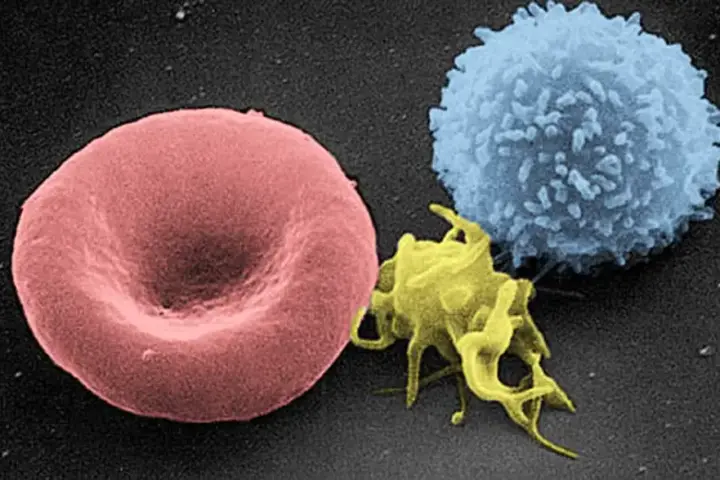
Blood types are determined by proteins present on the surface of red blood cells. While ABO and Rh are widely known, scientists continue to uncover additional blood groups with clinical significance. A collaborative research team from the University of Bristol and NHS Blood and Transplant (NHSBT) has recently identified a new blood group system named Er, solving a 30-year mystery in transfusion medicine.
Three-Decade Mystery Unraveled
The International Blood Group Reference Laboratory (IBGRL) of NHSBT and Bristol’s School of Biochemistry spearheaded an international effort to investigate three antigens that had defied classification for decades. The high incidence red cell antigen Era was first discovered almost 40 years ago, yet its molecular origins remained elusive.
“This study is a great example of how new technologies can combine with more traditional approaches to address long-standing questions that would have been impossible to answer not that many years ago,” said Dr. Tim Satchwell, one of the lead authors at the University of Bristol.
The research team employed cutting-edge DNA sequencing and gene-editing techniques to examine individuals with alloantibodies against the collection of antigens termed Er. They identified specific changes in the gene coding for the Piezo1 protein, which resulted in altered protein expression on cell surfaces.

Clinical Implications for Blood Transfusion Safety
Scientists conclusively demonstrated that Piezo1, a protein with widespread biological significance, is the carrier for these antigens, establishing Er as a new blood group system. Tragically, alloantibodies found in two pregnant women to two newly discovered Er antigens were associated with pregnancy losses, highlighting the clinical importance of this discovery.
The findings enable scientists to develop new tests to identify individuals with uncommon blood groups, improving patient care for those with rare blood types. This advances the field of transfusion medicine, which plays a critical role in surgical procedures, trauma care, and treatment of various medical conditions.
Professor Ash Toye, Professor of Cell Biology at the University of Bristol and Director of the NIHR Blood and Transplant Research Unit, explained: “This work demonstrates that even after all the research conducted to date, the simple red blood cell can still surprise us. Piezo proteins are mechanosensory proteins that are used by the red cell to sense when it’s being squeezed. The protein is present at only a few hundred copies in the membrane of each cell. This study really highlights the potential antigenicity of even very lowly expressed proteins and their relevance for transfusion medicine.”
Broader Significance for Medical Research
Piezo1 is known to have important roles in both health and disease. The importance of Piezo proteins in human physiology was recently recognized by the award of the 2021 Nobel Prize in Medicine and Physiology for their discovery.
This breakthrough enhances scientific understanding of blood group systems and represents another milestone in blood science research. The discovery may have implications beyond transfusion medicine, potentially affecting our understanding of certain genetic conditions linked to Piezo1 mutations.
The study, published in the journal Blood, established a total of five Er blood group antigens: the previously recognized Era (ER1), Erb (ER2), and Er3 (ER3), plus two novel high-incidence antigens now designated as ER4 and ER5.
For more information about health research and scientific discoveries, visit Karmactive’s dedicated sections on medical breakthroughs and public health issues.
An individual’s blood not set by the presence of proteins known as blood groups that are found on the surface of red platelets. Even if many are aware of all these blood groups, there are quite a few important groups. Scientists have discovered a new category of blood group in the UK.
Although the high incidence red cell antigen Era was discovered almost 40 years ago lot of study is going on with the same. Its molecular origins, along with those of the other two Er blood group members, have not yet been fully understood.
The International Blood Group Reference Laboratory (IBGRL) of NHSBT and the School of Biochemistry at the University of Bristol led an international collaboration to look into a 30-year old mystery involving the origin of three known but genetically uncharacterized antigens that did not correspond to any known blood group system.”The fact that Er turned out to be Piezo1, a protein with such widespread interest makes it even more intriguing,” said Dr Tim Satchwell, one of the study’s lead authors at the University of Bristol,
The team established Er as a new blood group system by clearly demonstrating that Piezo1, a protein of broad biological importance, is the carrier for these sites (and more) using a combination of cutting-edge DNA sequencing and gene-editing techniques.”The protein is present at only a few hundred copies in the membrane of each cell. This study really highlights the potential antigenicity of even very lowly expressed proteins and their relevance for transfusion medicine,” concluded Professor Ash Toye, Professor of Cell Biology at the University of Bristol and Director of the NIHR Blood and Transplant Research Unit.