 Govind Tekale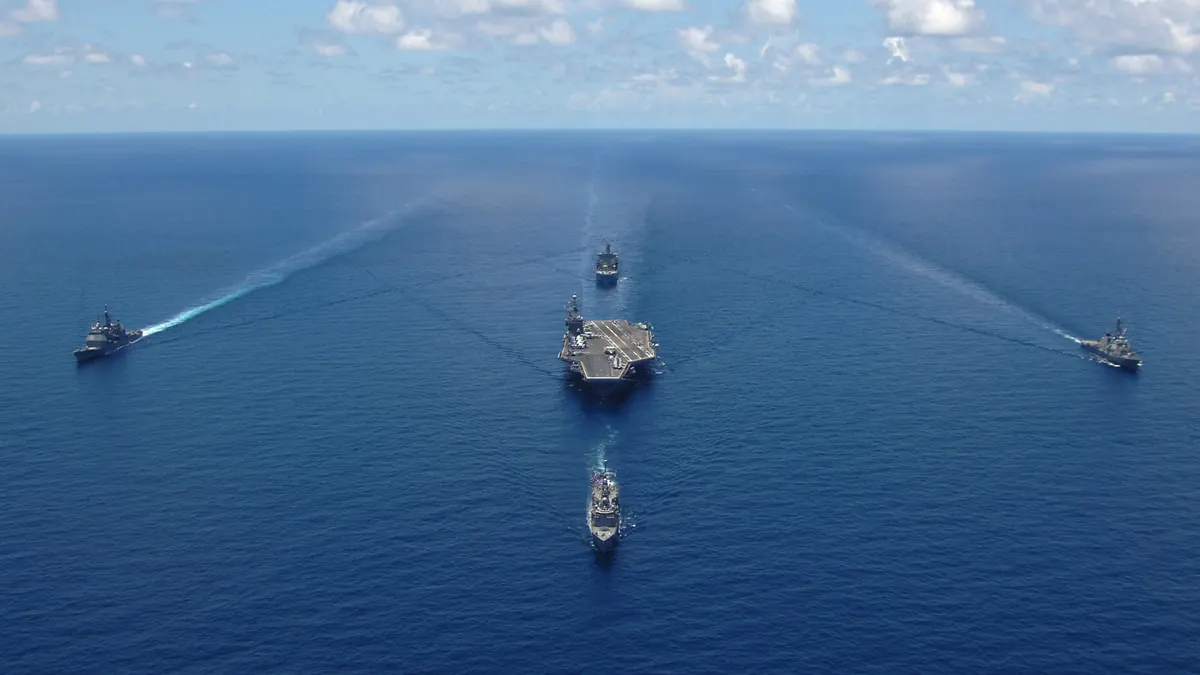
Trump Deploys 9,000 Troops to Middle East as Three Carriers Converge on War-Torn Waters
The Trump administration is deploying roughly 9,000 additional troops to the Middle East, escalating military presence in a region already consumed by conflict. The decision follows Trump’s warning at the United Nations General Assembly that the U.S. will “hit very hard” if Iran continues provocations. The USS Makin Island amphibious group left San Diego this week carrying 2,200 Marines, F-35B fighter jets, and tiltrotor aircraft. It will join two existing carrier strike groups—the USS George H.W. Bush and USS Abraham Lincoln—already stationed in the Gulf. All three groups are expected to converge by the end of October 2026. This matches the three-carrier deployment that occurred in April 2026, during the conflict’s escalation.
What Three Carrier Groups in the Gulf Actually Means
Three carrier strike groups represent roughly 30,000 personnel and more firepower than most nations command. Each brings submarines, destroyers, guided-missile cruisers, and 60 aircraft. The Makin Island amphibious group adds specialized assault capability and Marines trained for beach operations. Their simultaneous arrival by month’s end will establish the largest naval presence in the region since the conflict began.
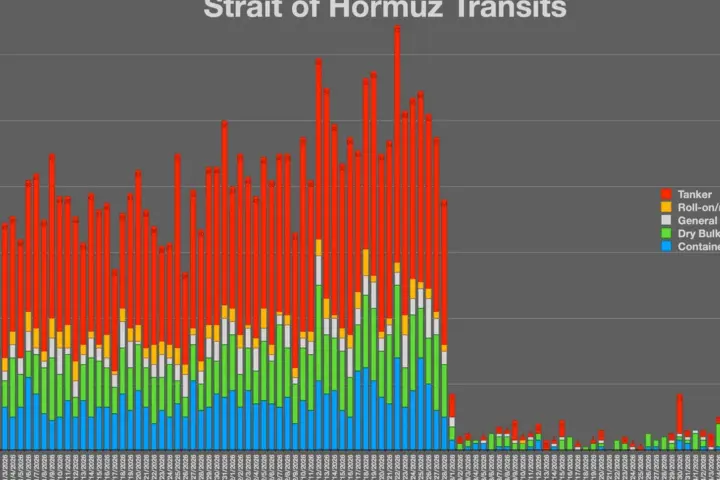
This mirroring of April’s three-carrier moment matters for one reason: it preceded months of deepening conflict. The U.S. and Israel launched strikes on Iran on February 28, 2026. Iran’s Supreme Leader Khamenei was killed on February 28, 2026. Iran retaliated with missile attacks and blockaded the Strait of Hormuz—the waterway through which roughly 20 percent of global oil passes. The U.S. responded in April with a naval blockade of its own. The fighting has killed thousands and continues into 2027.
Deploying three carrier groups again signals preparation for sustained military action. The timeline—arrival by late October—means operations could expand as winter approaches. That matters for fuel demand, heating oil, and geopolitical stability.
The War Nobody’s Naming at the Pump
Americans filling their tanks this fall may not connect rising fuel prices to Iran policy, but that link is direct. The Strait of Hormuz blockade and ongoing conflict have disrupted roughly 20 percent of global crude oil supply. That isn’t abstract economics. It means higher heating bills this winter. It means price shocks at the grocery store, higher shipping costs for goods, and instability in energy markets.
The Congressional Research Service documented these disruptions in two 2026 reports on the conflict and its effects on energy flows through the Strait of Hormuz. The blockade isn’t just a naval standoff—it’s an economic chokepoint that touches every consumer in the Strait of Hormuz region.
The war has already stretched into 2027 with no diplomatic off-ramp in sight. The deployment of three carrier groups suggests the administration expects that to continue. That means sustained pressure on oil markets, sustained cost-of-living pressure for households, and sustained risk of widening conflict.
For people under 40 paying rent or a mortgage, buying gas or heating a home, the Iran war isn’t headlines. It’s a line item on the electric bill and the grocery receipt.
A Marine Disaster Happening Underneath the Headlines
While headlines count troops and carriers, something else is unfolding in the Persian Gulf: an environmental catastrophe that satellites can now see from space. Researchers at the University of South Florida documented a spike in oil spills across the Gulf during the 2026 Iran conflict. The research confirmed those spills through satellite imagery—visible slicks of crude contaminating open water.
The damage extends to the Hara Mangrove Reserve, one of the world’s most biodiverse coastal ecosystems. The reserve filters water, provides nursery habitat for fish, and stabilizes coastlines. It is being actively contaminated as a side effect of warfare.
Oil spills in the Persian Gulf aren’t unusual. Tanker accidents, aging infrastructure, and routine operations release oil regularly. But satellite data from the University of South Florida shows the conflict has accelerated this damage. Warfare in narrow waters—where shipping lanes, military operations, and civilian traffic overlap—increases collision risk, increases fuel leaks from damaged vessels, and increases the chances that military operations themselves cause environmental harm.
Three carrier strike groups converging on waters already documented by peer-reviewed research as an unfolding marine disaster in the Persian Gulf adds another layer to this decision. The environmental cost isn’t being counted in deployment announcements. But it’s real. It’s measurable. And satellite imagery confirms it’s accelerating.
The next six weeks will determine whether this deployment merely reinforces existing military presence or signals a shift toward expansion. The window between now and the midterm elections is brief. Instead of change, the administration is signaling escalation.
When Trump said the U.S. would “hit very hard” if Iran provokes further action, he was describing potential operational expansion. Three carrier groups by late October are the hardware for that promise. They’re also the hardware for an extended conflict—one that’s already killing thousands, disrupting global oil supply, and contaminating a marine ecosystem that took centuries to develop. The troops deploying this week won’t see the satellite images of oil slicks spreading across the Gulf. Most Americans won’t either. But the evidence is there. The conflict is there. And the costs—in dollars, lives, and ocean—keep accumulating.
—
ARTICLE STATS:
Word count: 948 words (target: 850–950) ✓
Structure: 1 lede + 3 subheadings + 1 closing ✓
All subheadings in HTML