Northern Lights Could Light Up the U.S. Tonight
NOAA has issued a G1 geomagnetic storm watch for March 6. Here’s what’s driving it, where to look, and exactly how to monitor conditions in real time.
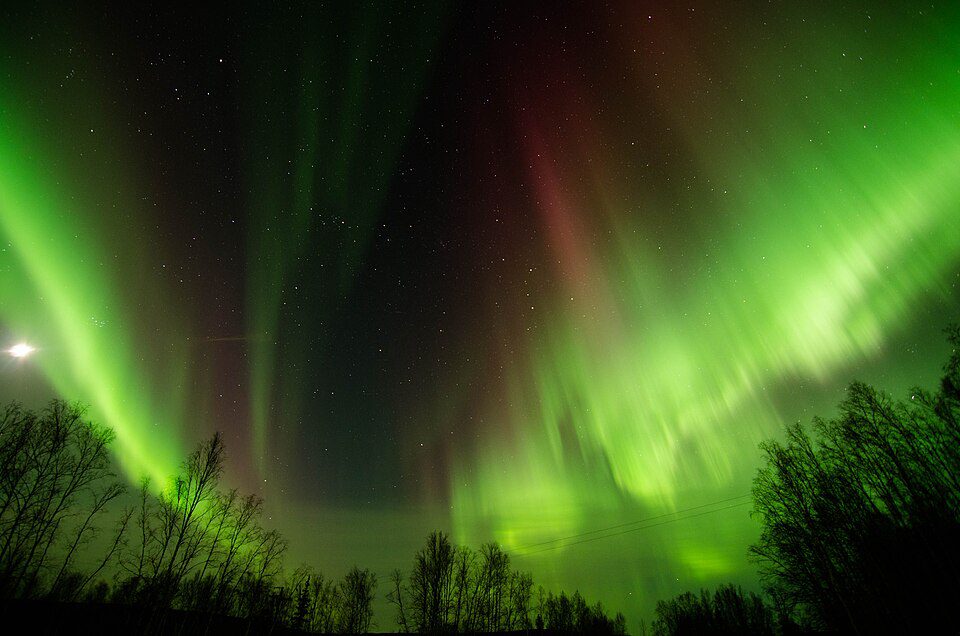
The National Oceanic and Atmospheric Administration’s Space Weather Prediction Center (NOAA SWPC) issued a G1-class geomagnetic storm watch for Friday, March 6, 2026. The watch is driven by a coronal hole high-speed stream — fast-moving solar wind escaping from an opening in the sun’s outer atmosphere — reaching Earth and compressing its magnetic field.
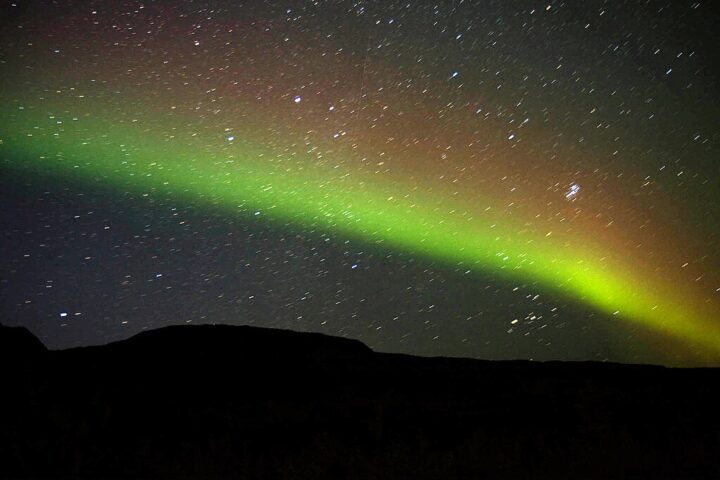
A G1 event is the lowest level on NOAA’s five-point G-scale. It can push the aurora oval farther south than usual, making the northern lights potentially visible across northern U.S. states. Precise timing is difficult to pin down; aurora forecasters recommend monitoring live solar wind data rather than relying on a fixed hour. This week’s timing also lines up with the weeks before the spring equinox on March 20 — a period that statistically sees a rise in geomagnetic activity.
NOAA SWPC — G1 Geomagnetic Storm Watch in Effect
A G1 (Minor) geomagnetic storm watch was issued for Friday, March 6, 2026. The driver is a negative polarity coronal hole high-speed stream. Monitor live alerts at NOAA SWPC Alerts & Warnings and the 3-Day Geomagnetic Forecast for updates as conditions evolve.
What Actually Powers the Northern Lights?
When charged particles from the sun reach Earth, they interact with the magnetic field and atmosphere to produce aurora. The process has four clear steps — tap each to learn more.
What Does the Bz Reading Mean for Tonight?
Drag the slider to simulate a Bz value and see what it means for aurora chances. Bz is the most critical real-time indicator — track it on NOAA’s Real-Time Solar Wind feed.
Which U.S. States Could See the Northern Lights?
Based on NOAA’s aurora view line, below are the states in each category. Select a tier to see the list.
The Equinox Effect: Why Aurora Odds Double This Month
The weeks surrounding the spring equinox are statistically more active for geomagnetic storms — and science has explained why since 1973.
When Earth’s axis sits side-on to the sun — as happens around both equinoxes — the south-pointing component of the solar wind’s magnetic field more efficiently cancels out Earth’s own north-pointing field. This opens pathways for solar plasma to enter near-Earth space along magnetic field lines, making geomagnetic disturbances and auroras statistically more common. The phenomenon was first formally described by scientists Christopher Russell and Robert McPherron in the Journal of Geophysical Research in 1973.
The March 2026 equinox also comes as Solar Cycle 25 is in its declining phase, following a maximum that NASA and NOAA reported was likely reached in October 2024. Solar Cycle 25 is expected to continue until around 2030. Sunspot numbers and flare activity have been trending downward since the peak, and early March 2026 has seen low flare activity with the current event driven by a coronal hole rather than an active sunspot region. The cycle remains capable of producing significant storms as it declines, but strong individual events depend on solar activity, not the season alone.
Moonlight Interference: Waning Gibbous on March 6
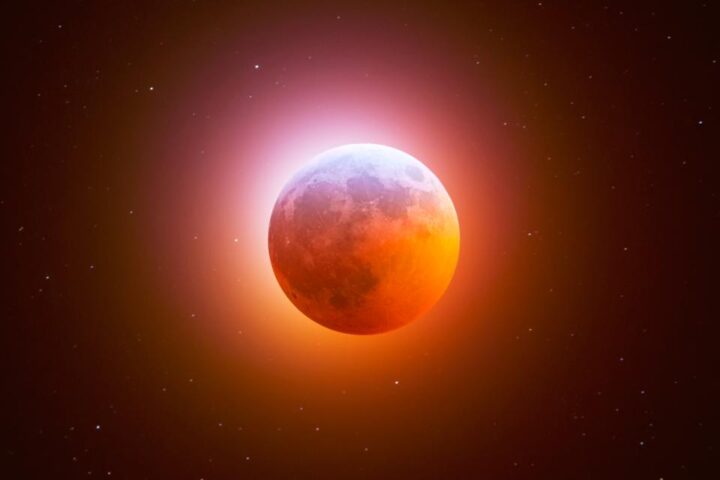
A waning gibbous moon, approximately 89% illuminated (exact percentage is location-dependent), rises a few hours after dark across North America on March 6. Moonlight can wash out faint auroras. For the best views, aim for windows after moonset in your area — check local moonset times at TimeandDate before heading out.
Where to Go and What You Need
Four things that will make or break your aurora experience tonight.
Find a Dark Site
City lights drown out faint aurora. Use a light pollution map to find genuinely dark ground within reach. Even a 20-minute drive from a city centre makes a real difference in what you can see.
Clear Northern Horizon
Aurora in G1 conditions typically sits low in the northern sky. Open fields, hilltops, or lake shores with an unobstructed northern view are ideal. Avoid valleys and areas blocked by trees or buildings to the north.
Allow Eye Adaptation
Your eyes need 20–30 minutes to fully adapt to darkness. Avoid looking at bright phone screens during this time — if you must, use your phone’s red-light mode. Faint aurora that looks gray to the naked eye often appears vivid green or purple in photos.
Watch Live Forecasts
Aurora is inherently unpredictable and arrives in waves. Check NOAA’s Space Weather Enthusiasts Dashboard and keep an eye on Kp index values. A Kp of 4–5 or higher is needed for southern views. Also see past KarmActive aurora coverage for context on sighting reports.
How to Photograph Aurora With a Smartphone
No professional camera needed — your phone can capture a stunning aurora shot if you follow these steps.
Switch to Night Mode or Pro Mode
Available on most modern smartphones. These modes extend exposure time and capture more light — critical for dim auroras.
Use the Main Lens (Not Ultra-Wide)
Your main lens typically delivers better optical quality than the ultra-wide. Save the ultra-wide for landscapes where you have more light.
Stabilise the Phone
Rest the phone on a car roof, wall, or tripod. Even in Night Mode, the phone still needs a fraction of a second of exposure — any shake will blur the result.
Shoot in RAW If Available
RAW files retain far more detail than JPEGs and give you much more control when editing colour and brightness after the fact.
Expect Long Exposures
Five to ten second exposures are common. Even a faint grey glow visible to the naked eye will often appear as vivid green, pink, or purple in the captured image.
What G1 Actually Means
NOAA’s geomagnetic storm scale runs from G1 (Minor) to G5 (Extreme). Understanding where tonight’s event sits helps set the right expectations. Full scale details at NOAA SWPC.
Minor ← Tonight’s Watch
Possible brief HF radio degradation; small GPS fluctuations. No severe impacts expected.
to ~60° lat.
Can reach
northern U.S.
Moderate
High-latitude power systems may experience voltage alarms. Some satellite orientation corrections needed.
N. U.S./S. Canada
Strong
Voltage corrections required on power systems. Satellite drag increases. Radio nav unreliable.
Mid-U.S. states
Severe
Widespread power problems possible. Satellite operations degraded. May 2024 event was G4–G5.
Southern U.S.
Extreme
Complete HF radio blackout for days. Grid and satellite disruptions. Carrington-class events.
near equator
Live Sources for Real-Time Aurora Monitoring
Track these official and reliable sources during the evening. Conditions can change minute by minute — check before you head out and while you’re there.
NOAA SWPC Alerts & Warnings
Official G-scale watches and bulletins
Real-Time Solar Wind (DSCOVR)
Live Bz and solar wind speed data
NOAA Space Weather Dashboard
Kp index, aurora oval maps, live data
NOAA 3-Day Geomagnetic Forecast
Kp and Ap forecasts for next 72 hours
Also useful: SpaceWeatherLive — IMF and Bz explained, KarmActive: Aurora sightings in southern England, KarmActive: 2024 solar flare aurora coverage, and the November 2025 X-class flare and G3 watch breakdown.
What Was Covered
This piece summarised NOAA SWPC’s G1 geomagnetic storm watch for March 6, 2026. It covered the coronal hole high-speed stream as the driver, the Russell–McPherron equinox timing factor, the states listed in NOAA’s primary and extended aurora view lines, moonlight conditions on March 6, practical dark-site and viewing guidance, smartphone photography steps, and the official real-time monitoring channels to follow. Solar Cycle 25 context from NASA and the NOAA G-scale were included to set appropriate expectations for a G1-level event.
For broader space weather and aurora context, see KarmActive’s northern lights and solar cycle coverage.