India’s 2026 Heatwave: Record Temperatures, Government Directives and Public Health Measures
In April 2026, a severe heatwave gripped large parts of India. The India Meteorological Department (IMD) forecast above-normal heatwave days from April to June across East, Central, North-West India and the South-East Peninsula. In a letter to state chief secretaries, the Ministry of Health and Family Welfare issued directives to strengthen health system preparedness.
The Ministry of Health, led by Secretary Punya Salila Srivastava, has directed states and union territories to operationalize dedicated heatstroke management units at all health facilities, ensure ambulance preparedness, and maintain real-time reporting of heatstroke cases on the Integrated Health Information Platform (IHIP) portal.[reference:0]
🌡️ April 2026 Temperature Records & IMD Forecast
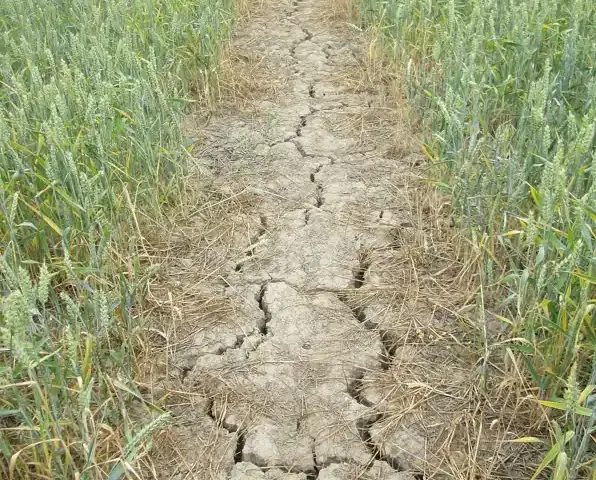
According to the India Meteorological Department, a heatwave is officially declared when the maximum temperature exceeds 40°C and remains 4.5 to 6.4°C above the seasonal average. On April 25, 2026, Banda in Uttar Pradesh recorded 47.4°C — about ten degrees above normal human body temperature — the highest reading in India this year.[reference:5] Across most of the country that day, daytime highs sat between 40°C and 45°C.[reference:6]
The IMD flagged heatwave conditions in 11 states and union territories, including Punjab, Haryana, Delhi, Rajasthan and Uttar Pradesh.[reference:7] In Delhi, the Safdarjung observatory recorded 42.8°C on April 25, which is 5.1°C above its normal for this time of year, meeting the IMD’s heatwave criterion.[reference:8]
The IMD’s seasonal outlook predicts above-normal heatwave days in the peninsula from April to June.[reference:9] For the 2026 southwest monsoon, the IMD has forecast cumulative rainfall at 92% of the Long Period Average (LPA), which would be the first “below-normal” monsoon in three years. The department assigns a 31% probability of ‘below-normal’ rainfall (90-95% of LPA) and a 35% chance of a ‘deficient’ monsoon (below 90% of LPA).[reference:10]
🏛️ Government Response: Health Advisory and Heatstroke Units
The Union Ministry of Health and Family Welfare, in a letter to all states and union territories dated April 28, 2026, directed them to strengthen preparedness for the expected heatwave conditions. Health Secretary Punya Salila Srivastava stated that above-normal heatwave days are likely from April to June 2026 across parts of East, Central, and North-West India, as well as the South-East Peninsula, based on IMD forecasts.[reference:11]
📋 Key Directives from the Ministry of Health:
- Operationalize dedicated heatstroke management units at all health facilities
- Ensure ambulance services are fully prepared
- Disseminate early warnings through multiple channels
- Maintain real-time reporting of heatstroke cases on the IHIP portal[reference:12]
💧 State-Level Water Management and Mitigation Plans
Karnataka Chief Minister Siddaramaiah, warning of a likely deficit monsoon, has instructed deputy commissioners to take precautionary measures to prevent disruption to drinking water supply. 598 gram panchayats across 114 taluks are currently facing shortages, and drinking water is being supplied to 137 villages through 129 tankers. The CM has directed that drinking water supply be prioritized over irrigation and warned that deputy commissioners will be held responsible for any disruption.[reference:13][reference:14]
In Maharashtra, Chief Minister Devendra Fadnavis has activated a state-wide disaster mitigation plan. Warning of heatwaves and irregular rainfall, he directed all departments to implement immediate measures for disaster mitigation through preparedness, proper water management, and accelerating water conservation projects. He emphasized that water planning should account not just for the current year but also for the following summer.[reference:15][reference:16]
📊 Economic Impact: Inflation Risks and Research Findings
The heatwave has created new inflation risks. Dhiraj Nim, an economist at Australia & New Zealand Banking Group, stated: “The ongoing heat wave and erratic monsoon will all impart upside risk to food prices that have remained well behaved so far.” The rain forecasts “along with high energy prices and agricultural inputs costs, make for a perfect storm for food prices down the line,” he said.[reference:17]
A white paper published by the Salata Institute of Climate Change and Sustainability at Harvard University warns that more than 200 million people in India are set to face deadly heat conditions by 2030, yet adaptation policies are “deeply unequal.” The report, titled ‘Critical Perspectives on Extreme Heat in India’, emphasizes that extreme heat is the deadliest climate hazard globally, yet it remains among the least resourced in adaptation planning.[reference:18][reference:19]
The National Human Rights Commission has urged 21 states and the Union Territory of Delhi to take advance measures to protect vulnerable groups as heatwaves intensify. The NHRC warned that the elderly, children and infants face the highest health risks, while extreme heat also threatens livelihoods and raises fire hazards. The states addressed include Andhra Pradesh, Bihar, Gujarat, Karnataka, Madhya Pradesh, Maharashtra, Punjab, Rajasthan, Uttar Pradesh, West Bengal, and others.[reference:20][reference:21]
🌍 The Climate Context: IPCC Assessments
According to the Intergovernmental Panel on Climate Change (IPCC), recent changes in the climate are widespread, rapid, and intensifying, with impacts unprecedented in thousands of years. The IPCC’s Sixth Assessment Report, finalized in 2023, has confirmed that limiting global warming to 1.5°C would require rapid and far-reaching transitions in land, energy, industry, buildings, transport, and cities.[reference:22]
The effects of global warming are already seen through more frequent extreme weather events, rising sea levels, and diminishing Arctic sea ice. Sustainable solutions require investment in heat-resilient infrastructure, early warning systems, water conservation, and international cooperation on emission reduction.
🧴 Heatwave Survival Guide: IMD and WHO Recommendations
If you feel dizzy, nauseous or experience headache, move to a cool place immediately, apply cold compresses and drink water. Seek medical help if symptoms persist. These recommendations align with standard public health guidance issued by the IMD and the World Health Organization for extreme heat events.
📌 Summary of the 2026 Heatwave Events
This article provided an overview of the 2026 heatwave affecting India. The discussion covered the record temperatures recorded in multiple states, the forecast from the India Meteorological Department, and the response from central and state governments. The health advisories issued by the Ministry of Health were described, including the activation of heatstroke units across all health facilities and the real-time reporting of cases through the IHIP portal. The directives from various government bodies on water management were also outlined. Finally, the article presented a public safety guide with preventive measures based on standard health recommendations.
- India Meteorological Department (IMD)
- Press Information Bureau (PIB) – Government of India
- Ministry of Health & Family Welfare – Government of India
- Integrated Health Information Platform (IHIP)
- News On AIR – Prasar Bharati
- Harvard University, Salata Institute for Climate and Sustainability
- Intergovernmental Panel on Climate Change (IPCC)
- National Human Rights Commission of India (NHRC)