Karmactive Team
When the Moon Turns Blood Red Over North America
A complete guide to the 2026 total lunar eclipse — timings across North America, the science behind the copper glow, and how to watch from your backyard.
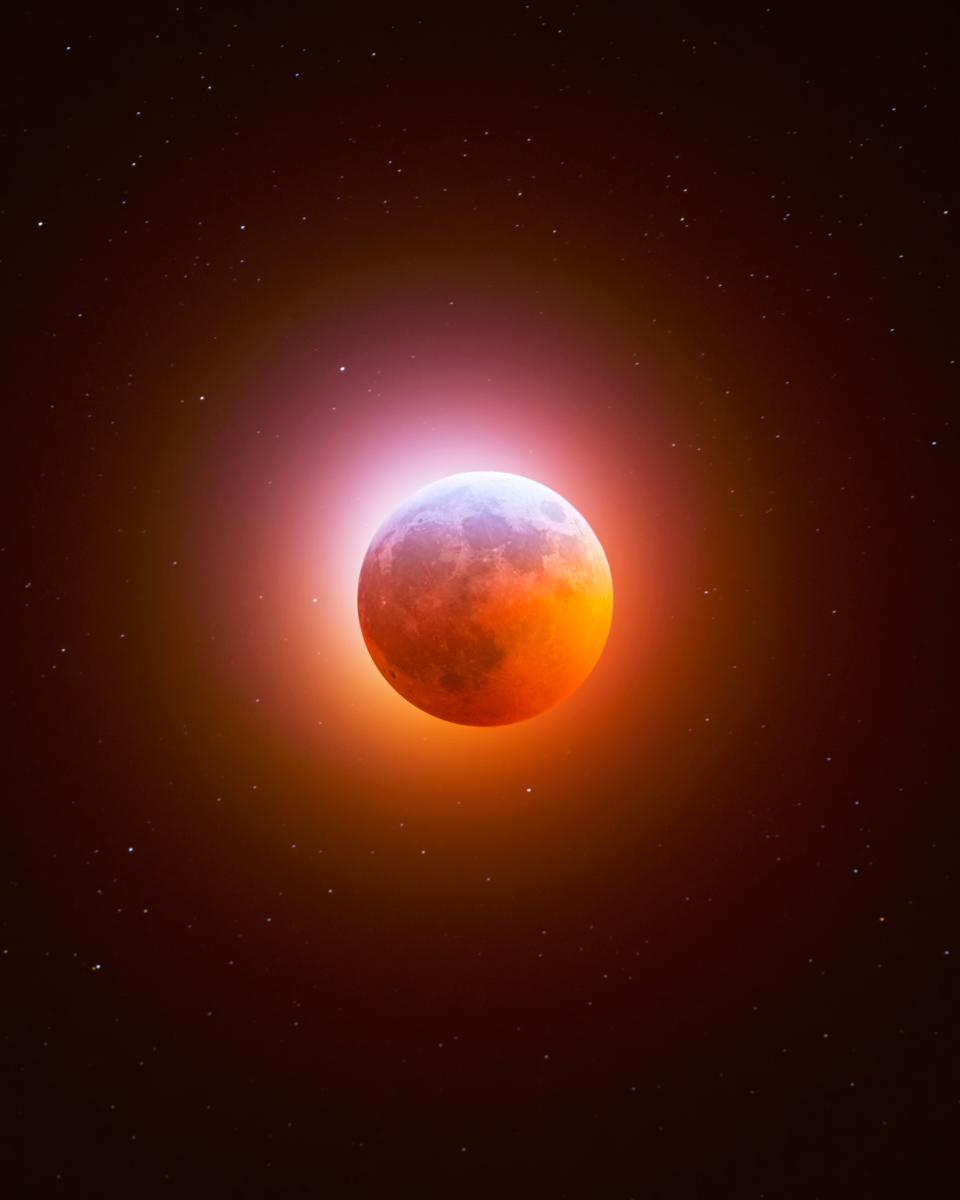
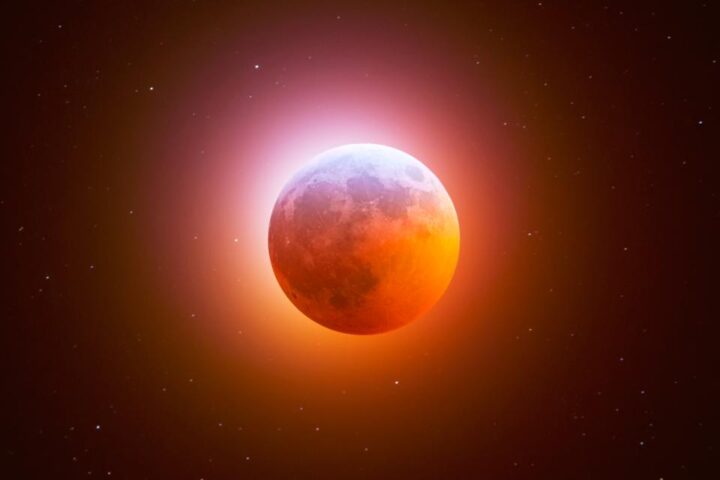
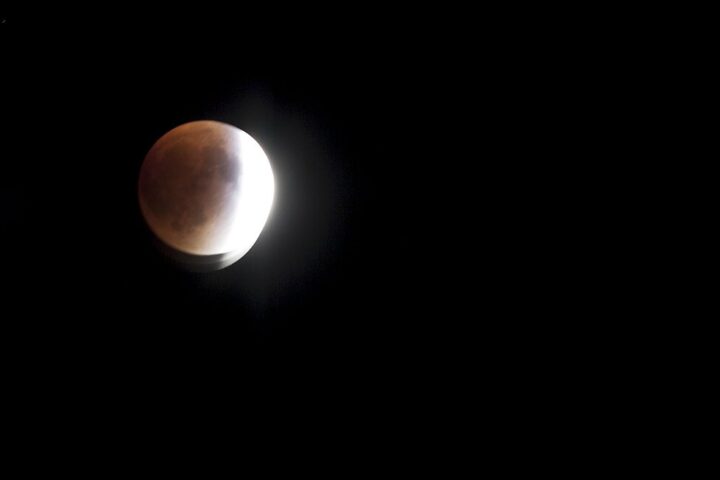
The Moon glows copper-red as it passes fully into Earth’s umbra.
📷 NASA Scientific Visualization Studio / Public Domain
Before dawn on March 3, 2026, skywatchers from California to the Pacific will see the full Moon slide entirely into Earth’s shadow. For nearly an hour the lunar disk will glow a deep copper-red — what astronomers and sky enthusiasts call a “Blood Moon.” According to NASA, this is the first total lunar eclipse visible in the Americas since March 2025, and the only one of 2026.
The eclipse is completely safe to view with the naked eye — no filters or special glasses needed. The penumbral phase begins at 12:44 a.m. PST, with the entire event concluding at 6:23 a.m. PST. Time and Date’s interactive visibility map lets you check exact local timings and moonrise/moonset details for any city worldwide. The interactive sections below walk through every stage, every city, and every detail you need to plan your watch.
The Five Acts of a Blood Moon
Tap any phase to see what’s happening in the sky — and what to expect from your viewing spot.
Select a Phase Above
Tap any circle above to learn what’s happening at that stage of the eclipse.
Totality Times Across North America
Totality (the full Blood Moon) runs from 3:04–4:03 a.m. PST. Here’s when it hits in every time zone.
Where Will You See It?
Key California and U.S. cities — visibility, altitude at mid-totality, and moonset warnings. Data sourced from Time and Date and U.S. Naval Observatory.
How Red Will It Be? The Danjon Scale
Scientists measure totality brightness on a 0–4 scale. Click each bar to explore. Source: NASA/GSFC Danjon Scale.
The Moon’s colour during totality depends on how much dust and aerosol is currently in Earth’s stratosphere. After major volcanic eruptions, eclipses can darken dramatically.
Click a bar to explore the Danjon scale
The Danjon scale (L=0 to L=4) was developed by French astronomer André-Louis Danjon to classify the apparent brightness of the Moon during totality.
Why Red? Rayleigh Scattering
As sunlight passes through Earth’s atmosphere, shorter blue wavelengths scatter in all directions — the same effect that makes our sky blue and sunsets orange. Longer red wavelengths pass through Earth’s limb and bend inward onto the Moon. During totality, the lunar surface is lit by all of Earth’s sunrises and sunsets simultaneously. Research on stratospheric aerosols and lunar eclipse brightness shows that post-volcanic events can shift the Danjon value by two full steps.
Saros 133 & the “Three-Eclipse Run”
This eclipse is the 27th event out of 71 in Saros Series 133, a cycle that repeats every 18 years and 11 days (since 1557). Notably, it is also the third in a rare back-to-back-to-back run of total lunar eclipses for North America: March 2025, September 2025, and now March 2026. After this, North America waits until June 26, 2029 for the next total lunar eclipse, per NASA’s future eclipses page.
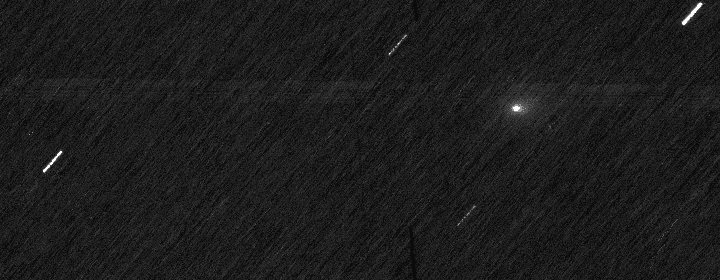
NGC 3423: A Galaxy Behind the Moon
During peak totality, the Moon will pass directly in front of spiral galaxy NGC 3423 — an event called an occultation. Because the Moon’s brightness is dramatically reduced during a total eclipse, astrophotographers can capture the faint light of a distant galaxy in the same frame. Under normal full-moon conditions, this is impossible. The Moon will be positioned in the constellation Leo, near the star Regulus, making it an ideal landmark for deep-sky observers.
Lunar Eclipses as Atmospheric Tools
Beyond the spectacle, astronomers use lunar eclipses to measure Earth’s transmitted light spectrum — a technique used to study atmospheric composition, aerosol loading, and even as an analogue for analysing exoplanet atmospheres. Published research on transmission spectroscopy during lunar eclipses demonstrates that the eclipsed Moon effectively acts as a mirror for Earth’s own atmospheric fingerprint.
Four Things to Do Before You Step Outside
“The ancients had no idea the physics and what was going on. They just saw the moon turning this orange ruddy colour. That’s where the ‘Blood Moon’ comes from. Look up. Put down your cellphone. Seeing astronomical events in person is a wonderful thing.”
— John Zimitsch, Vice President, Minnesota Astronomical SocietyScout the Moon’s position the night before
The night before the eclipse, note exactly where the Moon is setting. On March 3, the Moon will be moving toward the west-southwest at totality — a clear western horizon is essential, particularly for East Coast viewers where the Moon sets during the blood-red phase.
Check cloud cover using NOAA historical data
Historical average cloud cover for early March ranges from about 51% in Los Angeles to 65% in Sacramento, per NOAA’s National Centers for Environmental Information. Check your local NWS forecast the evening before and have a backup location in mind.
Use binoculars — no telescope required
The naked eye is all you need for the Blood Moon. But binoculars reveal the colour gradient that’s hard to see unaided: one limb of the Moon often remains a slightly brighter coppery tone while the centre takes on a deep, bruised crimson. This gradient depends on the Earth’s atmospheric conditions at that moment.
Compose your phone shot with a landmark
According to NASA’s lunar photography guidance, some of the most dramatic images combine the Moon with a familiar landmark or horizon — the scale contrast between the red Moon and a building or hillside tells the story most effectively. Use portrait mode or your camera’s pro mode; expect multi-second exposures during deep totality.
Camera Settings for Each Phase
Based on NASA’s Moon Photography Guide. Always bracket exposures — conditions vary by atmosphere and camera.
Full Moon (Before Eclipse)
ISO 100 · f/11 · 1/250s
Use the “Looney 11” rule as a baseline. The full Moon is extremely bright — expose short to preserve detail in the cratered surface.
Partial Phase (Entry)
ISO 200–400 · f/8 · 1/60–1/15s
As Earth’s shadow creeps across the disc, adjust exposure up. The contrast between the lit and shadowed regions is dramatic — capture both by bracketing.
Mid-Totality (Blood Moon)
ISO 800–1600 · f/5.6 · 1–4s
The Moon drops 1000× in brightness. Switch to manual mode, use a tripod and remote shutter. Bracket aggressively — ±2 stops. Autofocus will hunt; switch to manual focus and target a limb crater.
Include the Horizon
Wide lens · ISO 1600 · f/2.8 · 2–8s
For context shots that include a skyline or landscape, use a wider lens. The dimmed Moon allows for longer exposures without blowing out the lunar disc — frame a building, ridge, or tree line for scale.
What Most Reports Won’t Tell You
Four facts that make the March 3, 2026 eclipse scientifically and culturally distinct.
Lantern Festival Alignment
For East Asian communities, March 3 coincides with the Lantern Festival — the 15th day of the first lunar month. This is the first time since 2017 that a total lunar eclipse has fallen on this specific cultural holiday, creating a rare convergence of astronomical and calendar events.
The Moon in Leo
At the time of the eclipse, the Moon sits in the constellation Leo, near the bright star Regulus. With the Moon’s own glare dramatically reduced during totality, observers can use the dimmed Blood Moon as a landmark to find Regulus and explore the Leo star field — something impossible during a normal full Moon.
Zero-Equipment Viewing
Unlike solar eclipses that require plastic-filtered glasses — often discarded as single-use waste — total lunar eclipses are the most sustainable celestial events to observe. No specialized equipment, filters, or protective gear is needed. The eclipse produces no environmental footprint beyond getting out of bed.
March: the “Worm Moon”
The full Moon of March is traditionally called the Worm Moon, historically tied to the time when ground begins to thaw and earthworms reappear. This Blood Moon eclipse occurs at the cusp of late winter, meaning coastal California viewers may face “March Gray” marine layer — having a backup clear-sky location in mind is practical preparation.
Official Livestreams on March 3
If clouds roll in, these official sources offer high-definition streams with expert commentary.
The observatory will not open Griffith Park for onsite public viewing. The broadcast is online only, with live telescope feeds and commentary from the observatory’s astronomers.
▶ Griffith Official PageAn international team of astronomers will stream the eclipse live with real-time telescope coverage from multiple sites across the Pacific and Americas.
▶ Virtual Telescope ProjectEnter your city to see exact local start times, altitude and azimuth at mid-totality, and a visibility indicator for your specific location.
▶ Check Your CityThe March 3 Blood Moon: What Was Covered
This piece covered the March 3, 2026 total lunar eclipse — what a Blood Moon is, the official NASA-verified stage times for North America, city-by-city visibility, the Danjon scale and aerosol science behind the Moon’s colour, the Saros 133 cycle and the NGC 3423 occultation, photography settings across all phases, and where to livestream the event from the Griffith Observatory and the Virtual Telescope Project.
The Manitoba Museum’s planetarium notes that this eclipse represents an exceptional observing window for the region. For the next total lunar eclipse in North America, the wait extends to June 26, 2029, per NASA’s future eclipses calendar.
Continue Exploring on KarmActive