Australia’s Sky Turns
Blood Red on March 2
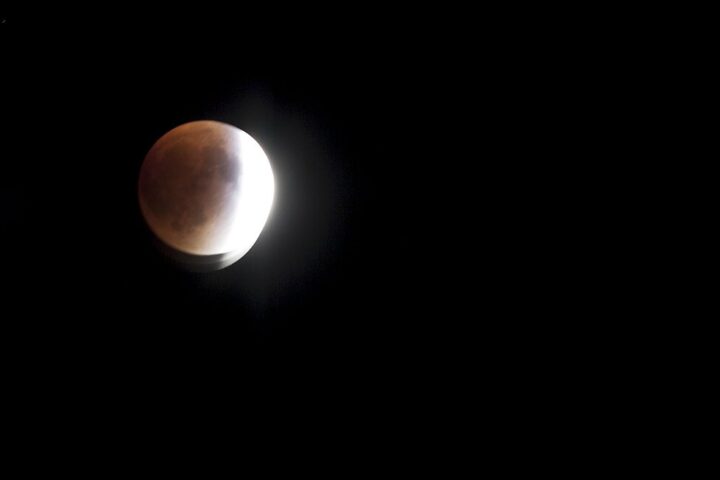
The first total lunar eclipse of 2026 arrives on the night of March 2 — and it is the last one visible over Australia until January 1, 2029.
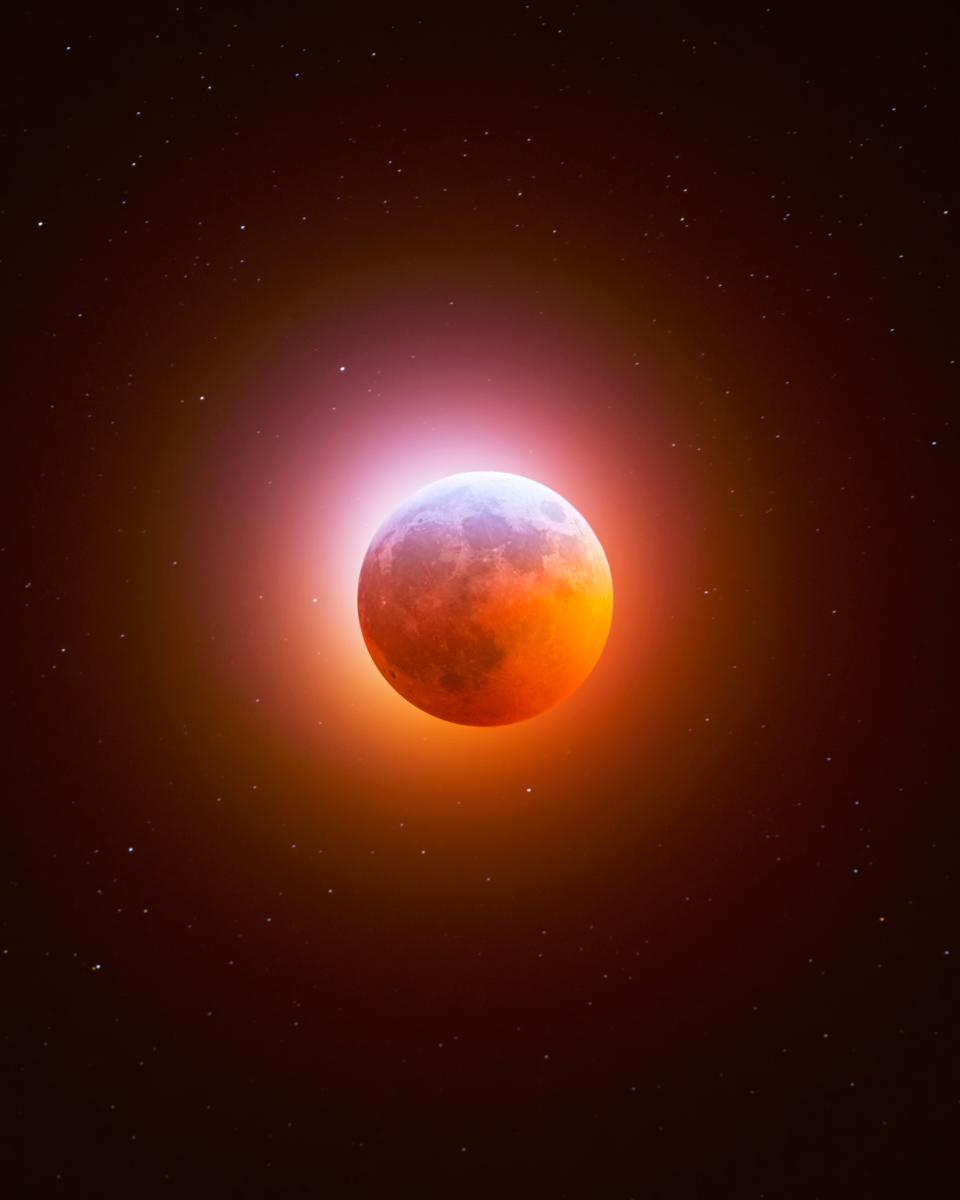
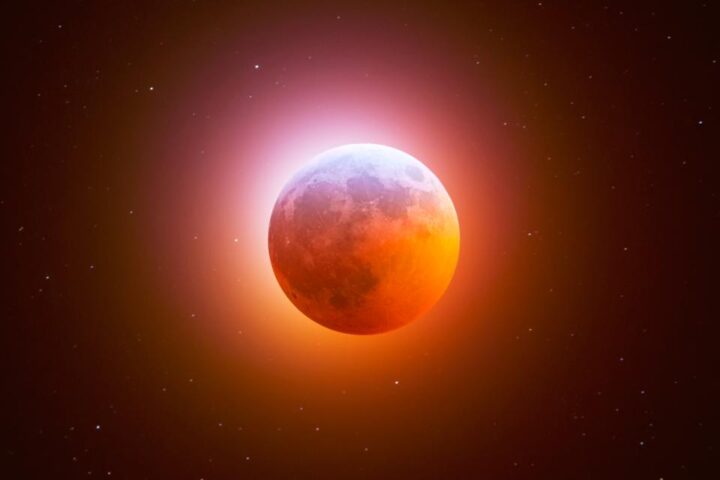
On the evening of Monday, March 2, 2026, the Moon slides fully into Earth’s shadow, turning a deep burnished red in a total lunar eclipse — commonly called a Blood Moon. The event extends into the early hours of Tuesday, March 3. According to NASA, it will be visible across western North America, Australia, New Zealand, and much of Asia — placing more than 3 billion people on the viewing side of the planet.
Australia’s east coast captures the complete arc from first shadow to final glow. Western Australia and parts of central Australia will see the Moon rise already in partial eclipse, so a clear eastern horizon is essential from the start. The totality phase — when the Moon takes on its deepest red — lasts approximately 58 minutes and 19 seconds. The full eclipse sequence spans roughly 5 hours and 39 minutes. No equipment is needed. A blood moon is entirely safe to view with the naked eye.
Watch the Eclipse Happen
Drag the slider to simulate the shadow creeping across the Moon — from full white to deep blood red and back. Press Play to watch it animate step by step.
When to Watch — Every Australian Capital
These are the totality start and end times — when the Moon is fully red. Tap or click any city for location-specific viewing notes.
Perth has the most unusual viewing angle: the Moon rises with partial eclipse already in progress on the evening of March 2. Anyone facing east at sunset will watch a partially shadowed Moon lift above the horizon — the red deepening as the sky darkens. Darwin enters totality first among Australian capitals, at 8:34 PM ACST, while eastern cities wait until 10:04 PM AEDT. Unlike a supermoon or harvest moon, where distance and lighting conditions change the Moon’s appearance in subtle ways, a blood moon is a full colour transformation driven by physics — Earth’s atmosphere acting as a red lens.
This eclipse falls within an eclipse season — a roughly 34-day window when Earth, Moon, and Sun align close enough for eclipses to occur. A solar eclipse preceded this event by approximately two weeks. Looking further ahead, a landmark total solar eclipse in 2027 will cross Spain, Egypt, and Saudi Arabia in what will be the longest land-based totality of the century.
Why the Moon Turns Red
It is not a filter. It is not a trick. It is sunlight bending through Earth’s own atmosphere and landing on the Moon — the same physics as every sunrise and sunset, projected onto the lunar surface all at once.
Red passes
Atmosphere
onto Moon
(Blood Red)
Earth’s atmosphere scatters shorter blue wavelengths outward while bending longer red wavelengths inward — a process called Rayleigh Scattering. During totality, the Moon receives the combined red glow of every sunrise and sunset happening simultaneously around the planet. Full technical geometry and shadow maps are at NASA’s Scientific Visualization Studio.
How Dark Will It Get?
Astronomers rate lunar eclipse darkness on the Danjon Scale (L0–L4). The 2026 eclipse is forecast at L=2 or L=3 — a deep red to brick-red Moon, based on current atmospheric aerosol levels.
The outcome depends on the amount of dust, aerosol, and high-altitude cloud in Earth’s atmosphere at eclipse time. A major volcanic eruption beforehand can push the Moon toward L=0 — near invisible. With no major eruptions anticipated, the current forecast of L=2/L=3 means a dark brick-red to rust-red Moon. Atmospheric data is tracked via the NASA Eclipse Portal.
How to Get the Best View
No telescope, no training, no special gear — just the right spot and the right timing.
Unlike a solar eclipse — visible only along a narrow path — a total lunar eclipse is visible simultaneously to everyone on the night side of Earth. The Moon’s distance from Earth affects its apparent size in the sky but does not change when a lunar eclipse happens or how long it lasts. Throughout history, lunar eclipses were used for navigation calibration, calendar systems, and astronomical record-keeping by civilisations across every continent. The lunar calendar that underpins many cultural traditions globally has tracked these events for thousands of years.
The Blood Moon Through Different Eyes
From ancient fear to orbital mechanics — how the crimson Moon has been understood across cultures. Select a perspective below.
What Was Covered Here
This piece covered the March 2–3, 2026 total lunar eclipse — timings across all Australian capital cities, the physics of the red colouring, the phase-by-phase progression, the Danjon Scale forecast, the Worm Moon and Saros Cycle 133 context, viewing guidance, and cultural perspectives from several traditions. The eclipse takes place on the evening of Monday, March 2, with totality lasting 58 minutes and 19 seconds. All of Australia can observe it without any equipment, and the complete arc from beginning to end is visible from the east coast.
After this event, the next total lunar eclipse visible from Australia falls on January 1, 2029. For more events across the astronomy calendar, including rare moon phases and black moons, and the latest from the space category, those pages are updated regularly. Primary timing data and eclipse calculations are published by the US Naval Observatory.