Petrol Drops 32¢ a Litre — But the Numbers Behind the Relief Are More Complicated
Australia’s federal government and all states have locked in a combined excise and GST cut at the bowser. Here is exactly what changed, what it costs the budget, and what happens if the Iran conflict persists.
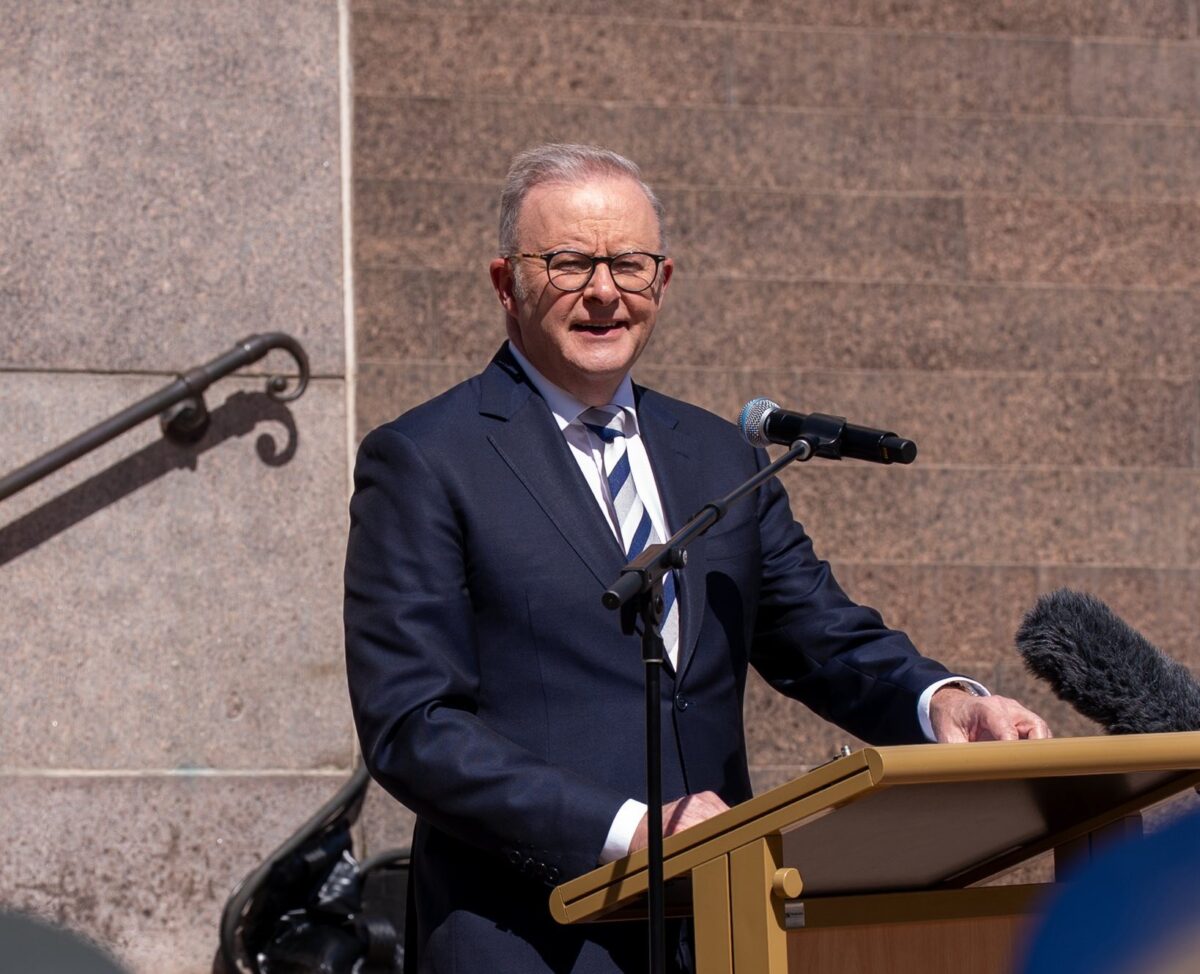
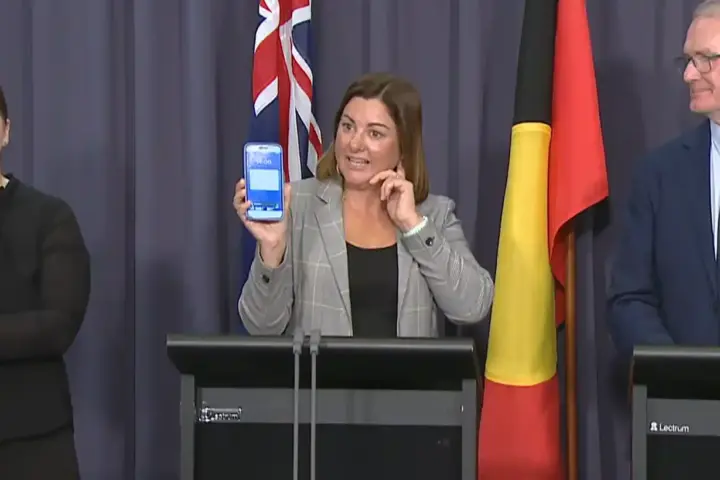
Australian Prime Minister Anthony Albanese at the National Press Club, announcing the combined 32¢ per litre fuel relief package. (Source: Anthony Albanese official Facebook page, public post)
Fuel prices started dropping at service stations across Australia this week after a long-running standoff between the federal government and state leaders was finally resolved. Western Australian Premier Roger Cook confirmed on Thursday that all premiers and chief ministers had signed off on a deal to return a portion of the GST windfall generated by high fuel prices to motorists — on top of the federal government’s own halving of the fuel excise. The combined saving is 32 cents per litre, valid until June 30, 2026.
The price spike was triggered by disruptions following the outbreak of conflict in the Middle East. Australia obtains more than 80% of its petrol, diesel, and jet fuel from Asian refineries — primarily in South Korea, Singapore, Malaysia, and China — and those refineries in turn source 60–70% of their crude oil from the Middle East via the Strait of Hormuz. That external shock translated rapidly into higher prices at the bowser — and a surge in GST revenue for state governments, since GST is applied as a flat 10 per cent on the retail price of fuel, not on a fixed quantity.
Prime Minister Anthony Albanese told reporters at the National Press Club: “This will mean a combined saving of 32¢ on every litre. Treasurer Jim Chalmers has already signed that change in the law, because we want this added relief to start showing up at petrol stations straight away for our truckies.”
What Does 32¢ Actually Mean For You?
Five panels break down the relief package, the tax structure, the government’s four-stage plan, key voices, and Australia’s supply chain situation.
⚠️ These figures are illustrative estimates based on the confirmed 32¢/litre combined reduction. Actual pump prices will vary by location, retailer, and crude oil movements. The relief is scheduled to run until June 30, 2026. Learn more about how rising household energy costs are affecting Australian budgets.
Because GST is applied as a percentage of the final price — not a fixed amount — it rises automatically when global oil prices go up. This is why states received an estimated $400 million/month in extra GST revenue during the current spike. The e61 Institute argues this “windfall” may be partially offset by reduced consumer spending elsewhere.
Australia is currently at Stage 2. The National Fuel Security Plan does not publicly specify the exact trigger thresholds for moving between stages. Internal Treasury modelling, however, reportedly includes supply thresholds that would prioritise healthcare and agriculture in Stage 4. Read more about Australia’s long-term energy security efforts.
Australia’s Fuel Supply Route — Current Disruptions
According to government statements, fuel supplies were expected to arrive “largely as scheduled” until mid-April 2026, with Energy Minister Chris Bowen noting that the second half of April is where more uncertainty exists, under current security measures. Continuation beyond that point depends on the duration of the Strait of Hormuz disruption and the decisions of key Asian supplier nations.
The excise cut did not come without friction. Queensland held out until Thursday morning before signing on — days after most other states backed the plan. Queensland Treasurer David Janetzki said the delay was about ensuring the method of calculation and distribution was clear, not the principle. Victoria also took an extra day before backing the simpler, uniform excise-adjustment model pushed by NSW Premier Chris Minns, which had been judged more legally straightforward than state-specific excise rates that risked constitutional challenges.
“Households will respond to the price signal of higher fuel prices partially by reducing the amount of fuel they buy, and partially by adjusting how much they spend on other products.”
— Lachlan Vass & Josh Clyne, e61 InstituteBeyond the price cut at the pump, the government enacted several technical supply-side measures. The Department of Climate Change, Energy, the Environment and Water (DCCEEW) temporarily amended petrol quality standards to allow higher sulfur levels (up to 50 parts per million, compared with the normal 10ppm), enabling around 100 million litres per month of petrol that would otherwise have been exported to be redirected into the domestic market instead. A separate six-month adjustment also lowered the permitted diesel flashpoint from 61.5°C to 60.5°C to expand diesel supply options. The Heavy Vehicle Road User Charge has also been dropped from 32.4 cents per litre to zero for three months to prevent trucking cost increases from flowing through to grocery prices.
This is not the first time Australia has halved the fuel excise in response to a global oil shock. A comparable cut was made in March 2022 following the invasion of Ukraine. On that occasion, as well as this one, the core challenge has been what economists call the “cliff edge” — when the temporary legislation ends, pump prices typically jump by a similar amount overnight. The RBA’s current cautious rate outlook already reflects concerns about services inflation; another sudden fuel price surge in July could add upward pressure at an awkward time.
Parliament’s last sitting week before the May federal budget has added another layer of political calculation to all of this. Treasurer Jim Chalmers has flagged that the budget will address longer-term energy and economic reform, though the shape of those changes has not been confirmed. With EV uptake still growing and alternative energy investment accelerating, the structural dependence on imported liquid fuel that underlies this crisis has drawn renewed attention from policy observers.
The Treasury Laws Amendment (Doubling Penalties for ACCC Enforcement) Bill 2026, which doubled maximum penalties to $100 million per offence for cartel behaviour and false pricing, has also passed Parliament. The fuel excise reduction itself was implemented through a separate ministerial determination signed by Treasurer Jim Chalmers, ensuring logistics operators received the relief immediately.
This report covered the 32-cent-per-litre reduction in fuel prices reached through an agreement between the federal government and all state and territory governments. It included details on the two components of the cut — the federal excise reduction of 26.3 cents and the state GST return of 5.7 cents — along with the timeline of negotiations, the role of individual state leaders, and the legal steps already completed. The report also presented the e61 Institute’s analysis on the GST windfall question, the four stages of the National Fuel Security Plan, supply-side measures including the release of strategic reserves, and the ACCC’s price monitoring role. The 2022 precedent and the budget context were also noted. The fuel relief is scheduled to remain in place until June 30, 2026.