Karmactive Team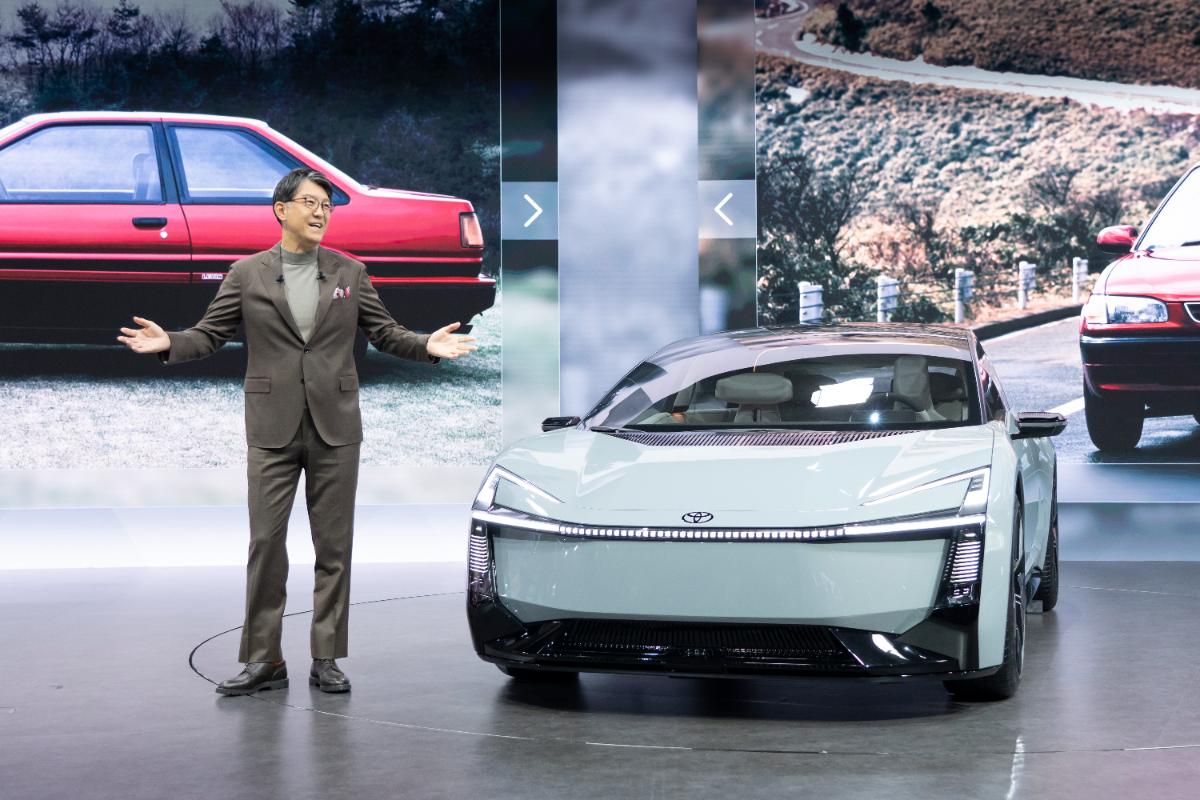
Toyota has shown off a striking new Corolla Concept that barely resembles the car millions of people drive today. Unveiled at the Japan Mobility Show, this futuristic take on the world’s best-selling car signals Toyota’s careful step toward electrification while maintaining its trademark flexibility.
The sleek concept ditches the traditional Corolla shape for something closer to a sporty liftback. With thin LED lights, a distinctive front end, and a charging port visibly placed on the front wing, the design shows Toyota’s electric intentions. Yet company leaders made clear this concept represents more than just an EV.
“The Corolla has always been a car for everyone,” said Toyota CEO Koji Sato at the unveiling. “To stay like that, how should the Corolla evolve? The Earth is vast, and the world is diverse. Roads differ, and so do energy realities.”
Unlike competitors rushing headfirst into all-electric lineups, Toyota continues its cautious “multi-pathway” strategy. The concept is designed to work with electric, hybrid, and even traditional gas engines, reflecting Toyota’s belief that different regions need different power solutions.
Inside, the concept takes an even more dramatic turn. The traditional button-filled dashboard disappears in favor of a minimalist design with multiple screens, including one for the passenger seat. A unique “floating” center panel replaces the traditional console, made possible by the flat floor design common to electric vehicles.
Similar Posts
Toyota designer Lance Scott, who led the project at the company’s European design center in France, explained their bold approach: “When we started the project, we wanted to make a Corolla that people would look at and say ‘I can’t believe that’s a Corolla.'”
While Toyota provided no details about battery size, range, or performance figures, the concept signals serious intent in the affordable EV market. When it eventually reaches production, an electric Corolla would face competition from models like the Volkswagen ID.3, Kia EV3, and Vauxhall Astra Electric.

The current Corolla is seven years old, approaching the typical end of its lifecycle. Toyota hasn’t yet confirmed if the next generation would continue production at its Burnaston plant in Derbyshire, which has built Corollas since 1992.
With over 50 million Corollas sold globally since 1966, any major change to this automotive icon represents a significant shift in the car market. Toyota’s careful balancing act – embracing electric technology while keeping multiple power options available – shows how even the world’s largest automaker must navigate the complex transition to cleaner vehicles.