Humans Head Back to the Moon.
For the First Time Since 1972.
Four astronauts aboard NASA’s Orion spacecraft are set to swing around the far side of the Moon on April 1, 2026 — the first crewed lunar mission in more than 50 years. Here’s everything you need to know.
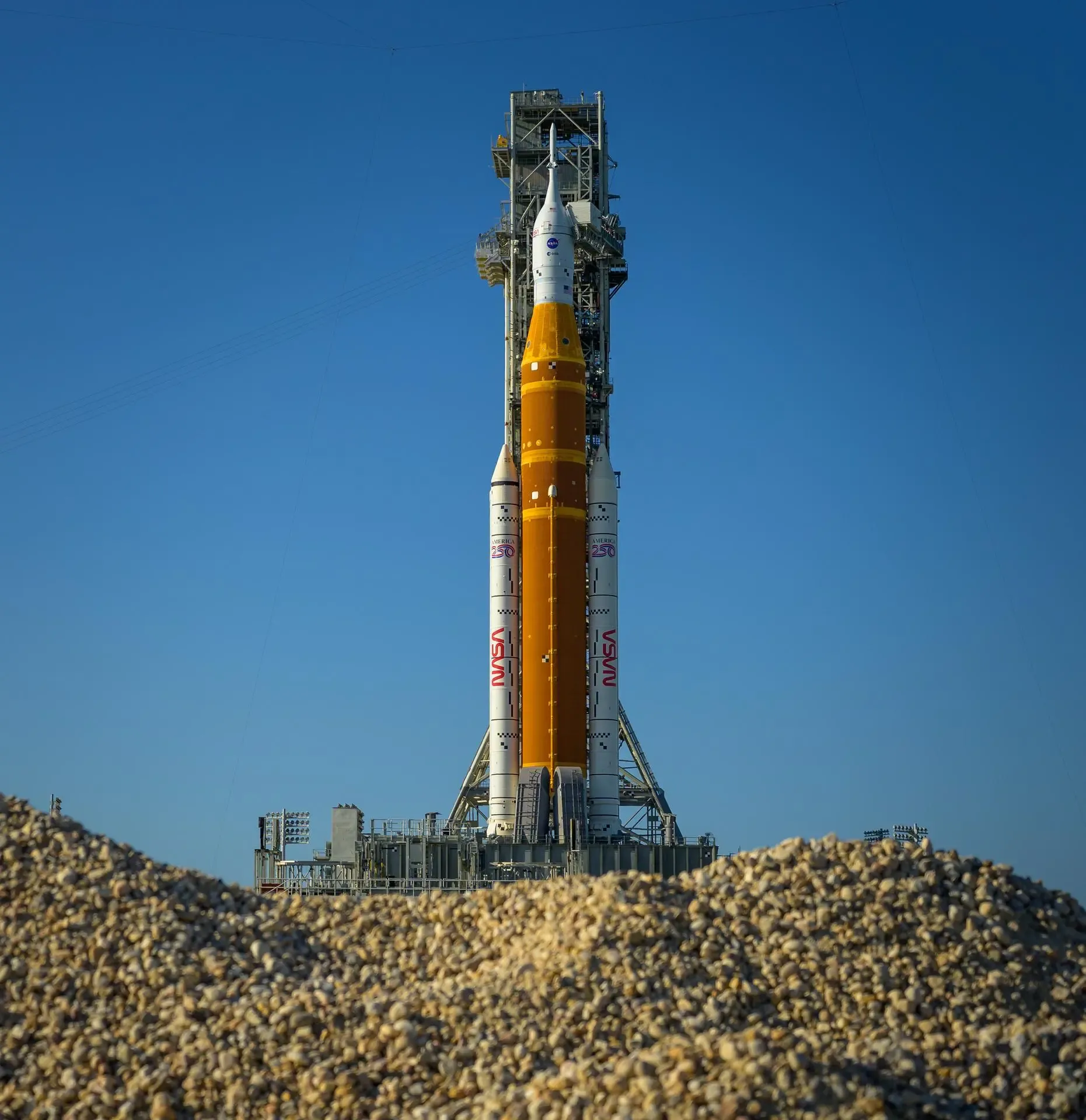
Teams at NASA’s Kennedy Space Center in Florida are in the final stretch of pre-launch preparations for Artemis II, with a launch window opening at 6:24 p.m. EDT on Wednesday, April 1, 2026. The weather outlook stands at 80% favorable, with cloud coverage and high winds as the primary concerns being watched in the days ahead.
This is NASA’s first crewed mission under the Artemis program — and the first crewed journey toward the Moon since Apollo 17 in December 1972. The four-person crew will spend roughly 10 days testing the Orion spacecraft’s systems in deep space before splashing down in the Pacific Ocean off San Diego. It is a flyby, not a landing — but that distinction matters less than what it represents: the first time in half a century that humans have left low Earth orbit.
T-Minus to Launch
The 10-Day Journey
Select a phase to see what happens — from pad to splashdown.
Four Astronauts. One Historic Mission.
Read the official crew bios at NASA and CSA’s mission overview for full records.
Former Chief of the Astronaut Office at NASA. Wiseman will pilot Orion and oversee overall mission operations during the 10-day flight.
First person of color to travel beyond low Earth orbit. Glover will be responsible for navigating the spacecraft, including the manual proximity operations test in Earth orbit.
Holds the record for the longest single spaceflight by a woman (328 days). Koch brings deep experience with life-support systems that will be critical during orbital checkouts.
First non-American to travel to deep space. Hansen’s seat was secured through a U.S.–Canada treaty tied to Canada’s commitment to build Canadarm3 for the future Lunar Gateway.
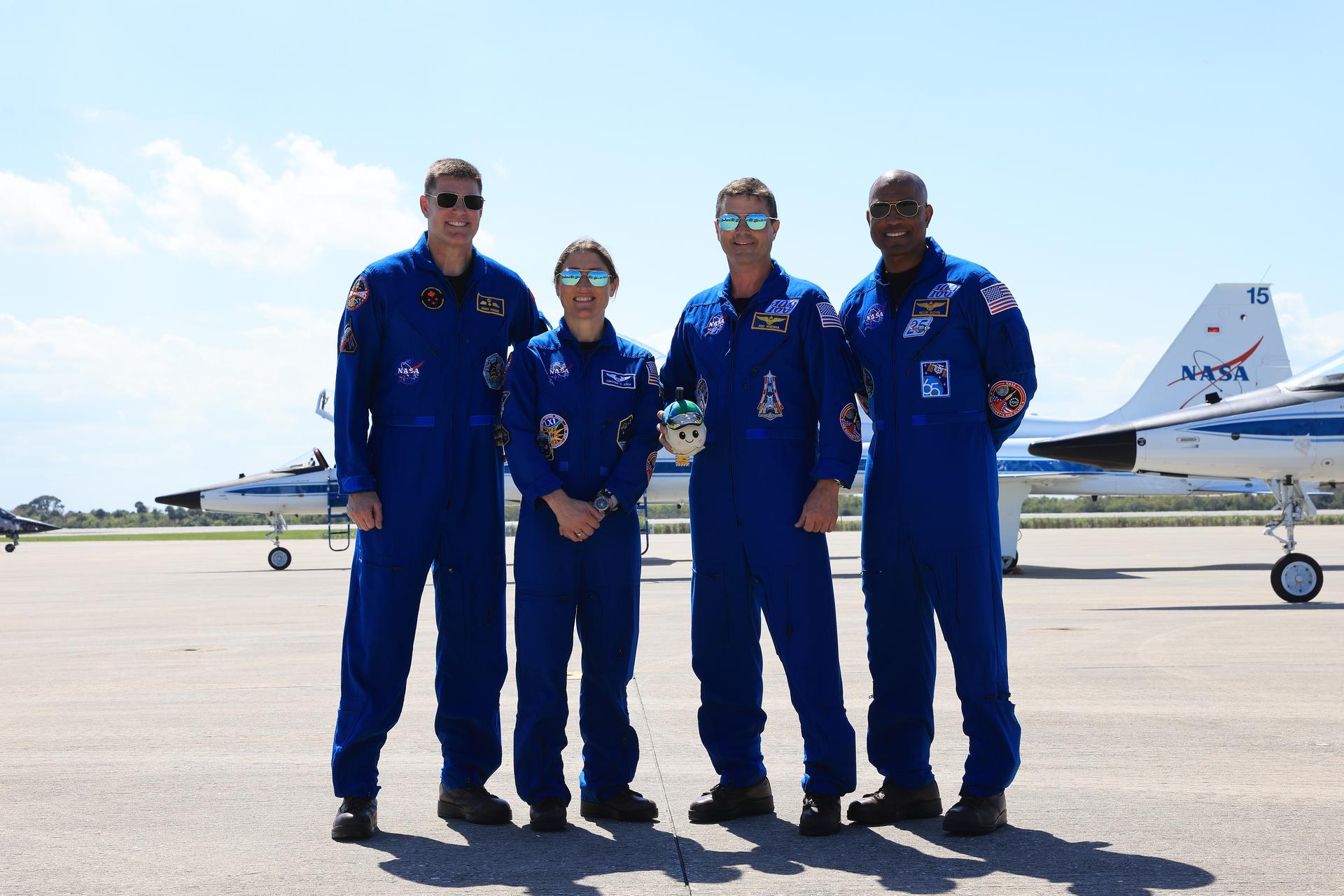
“Things are certainly starting to feel real.”— Christina Koch, NASA Astronaut · March 29, 2026 press conference from quarantine quarters at Kennedy Space Center
Shawn Quinn, program manager for Artemis II ground systems, confirmed at a Sunday briefing: “We can safely say the crew’s ready. Rocket’s ready. Spaceship’s ready. Ground systems are ready — and we only need to have the weather cooperate.”
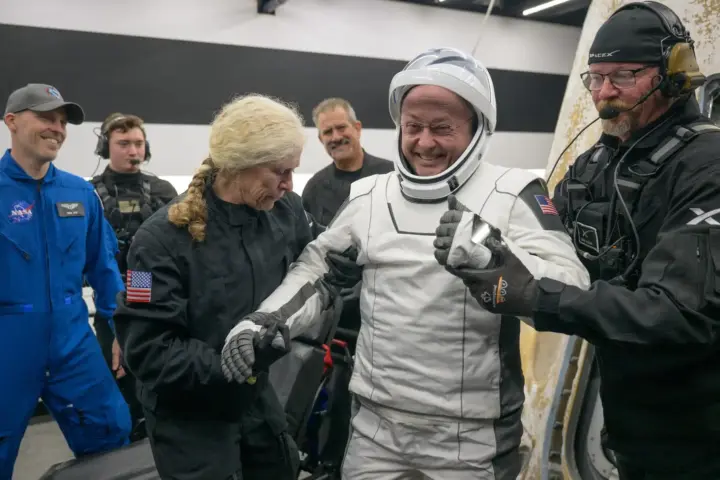
The four astronauts are currently in a precautionary physical quarantine at Kennedy Space Center to avoid illness before or during the mission. Final countdown operations — including tanking of the SLS rocket with liquid hydrogen and liquid oxygen — are scheduled to begin at 7:45 a.m. EDT on April 1. Should a scrub occur, additional daily launch windows are available through April 6.
Inside the Mission: Tech & Science
Artemis II carries more than just four astronauts. These are the key technical objectives that make this mission a step beyond Apollo.
Rendezvous Proximity Operations Demo (RPOD)
One of the most significant — and least covered — objectives is a manual piloting test. After separating from the Interim Cryogenic Propulsion Stage (ICPS), the crew will use Orion’s hand controllers to fly back toward the spent upper stage. This is a direct rehearsal for future docking maneuvers with the Lunar Gateway.
No Apollo-era mission included this kind of autonomous deep-space piloting test. The data collected will shape how future Artemis crews dock with the Gateway station in lunar orbit.
Test type: Manual RPOD Purpose: Future Gateway docking prepOrion Artemis II Optical Communications (O2O)
Artemis II carries the O2O laser communication system — the first time deep-space laser communication will operate at this distance. The infrared system achieves a 260 Mbps downlink, enabling real-time 4K video transmission from the Moon’s vicinity.
For comparison, Apollo’s radio systems transmitted data at a fraction of this rate. O2O is a direct precursor to the communication infrastructure needed for sustained crewed operations on and around the Moon.
Speed: 260 Mbps Tech: Infrared laser, deep-spaceAVATAR: Organ-on-a-Chip Radiation Study
The AVATAR (A Virtual Astronaut Tissue Analog Response) experiment uses living bone marrow cells derived from the astronauts’ own blood, placed on a chip roughly the size of a USB drive. As Orion passes through deep space radiation belts beyond Earth’s magnetosphere, the cells respond in real time.
Paired with the M-42 EXT dosimeter — which offers six times the resolution of previous radiation sensors — this experiment will map heavy-ion radiation effects at the cellular level, supporting safety planning for future long-duration lunar missions.
Method: Organ-on-a-chip Sensor: M-42 EXT (6× resolution)First Crewed Life Support Test in Deep Space
Artemis I flew without crew. This time, Orion’s Environmental Control and Life Support System (ECLSS) must prove it can sustain four humans — managing breathable air, CO₂ scrubbing, thermal regulation, water production, and waste processing — during the initial 24-hour high Earth orbit checkout phase.
The crew will also test the potable water dispenser that will rehydrate food and provide drinking water throughout the 10-day mission. This checkout phase is the critical gateway before Orion is committed to the trans-lunar trajectory.
Orbit altitude: 44,525 × 115 miles (HEO) Duration: ~24 hrs before lunar injectionDistance in Perspective
How does Artemis II’s trajectory compare to previous human spaceflight milestones?
“We cannot be spread thin trying to undertake dozens of externally imposed and self-inflicted distractions, jumping straight to the dream state at the expense of an achievable strategy.”— Jared Isaacman, NASA Administrator · March 24, 2026, NASA Headquarters, Washington D.C.
The Artemis II launch comes days after NASA Administrator Jared Isaacman publicly unveiled an overhaul of America’s lunar space policy on March 24, 2026. Under the updated plan, the Space Launch System will continue through Artemis V, with $20 billion slated for phased development of a permanent U.S. Moon base over the next seven years. NASA is targeting up to 30 robotic lunar landings starting in 2027, with crewed surface missions planned from Artemis IV onward in 2028.
As a geopolitical backdrop, Artemis II launches as China continues working toward a crewed Moon landing by 2030. Crewed missions from Artemis VI onward are expected to incorporate SpaceX, Blue Origin, and other commercial partners.
From Apollo to Artemis
Fifty-four years separate the last crewed lunar mission and this one. Here’s the arc.
Humans left Earth’s orbit for the first time. Frank Borman, Jim Lovell, and Bill Anders broadcast live images of the Moon’s surface on Christmas Eve — producing the iconic Earthrise photograph.
After an onboard explosion, Apollo 13 looped around the Moon on a free-return trajectory without landing. The crew’s safe return remains one of NASA’s most complex rescues. Artemis II is expected to exceed this distance record.
Eugene Cernan and Harrison Schmitt were the last humans to walk on the Moon. Commander Cernan’s words as he left the surface: “We leave as we came, and, God willing, as we shall return.”
The Orion capsule flew 40,000 miles beyond the Moon and returned, validating the heat shield and deep-space systems. No crew was aboard — setting the stage for Artemis II.
Four astronauts aboard Orion will swing around the far side of the Moon on a 10-day mission, testing life support, communications, and piloting systems needed for the crewed Moon landing planned for Artemis IV in 2028.
What’s Flying to the Moon
A plush moon mascot designed by Lucas Ye, selected from 2,600+ entries across 50+ countries. Inspired by Apollo 8’s Earthrise. Contains a micro SD card with 5.6 million names of people who signed up to virtually fly the mission.
A 1×1-inch fabric sample from the original 1903 Wright Flyer aircraft — the same type of material Orville and Wilbur Wright used for the first powered flight in Kitty Hawk, North Carolina.
A 13×8-inch flag that flew on the first Space Shuttle mission (STS-1), the final Shuttle mission (STS-135), and NASA’s SpaceX Demo-2 crewed test flight in May 2020.
How to Watch Artemis II Launch
NASA will provide full coverage across multiple platforms. All times Eastern.
Artemis II is NASA’s first crewed Artemis mission, targeted for launch no earlier than April 1, 2026, from Kennedy Space Center. The four-person crew — Reid Wiseman, Victor Glover, Christina Koch, and Jeremy Hansen — will spend approximately 10 days on a lunar flyby to test the Orion spacecraft, the Space Launch System rocket, and mission-critical systems before a Pacific Ocean splashdown off San Diego. The mission covers life support validation, manual proximity operations, laser communications, and deep-space biological research. It represents the first time humans have traveled toward the Moon since Apollo 17 in 1972.
For continuous updates, follow the official NASA Artemis Blog. For more on the lunar exploration program, read about NASA’s oxygen extraction work on the Moon and what feeding astronauts on deep space missions involves.