 Karmactive Staff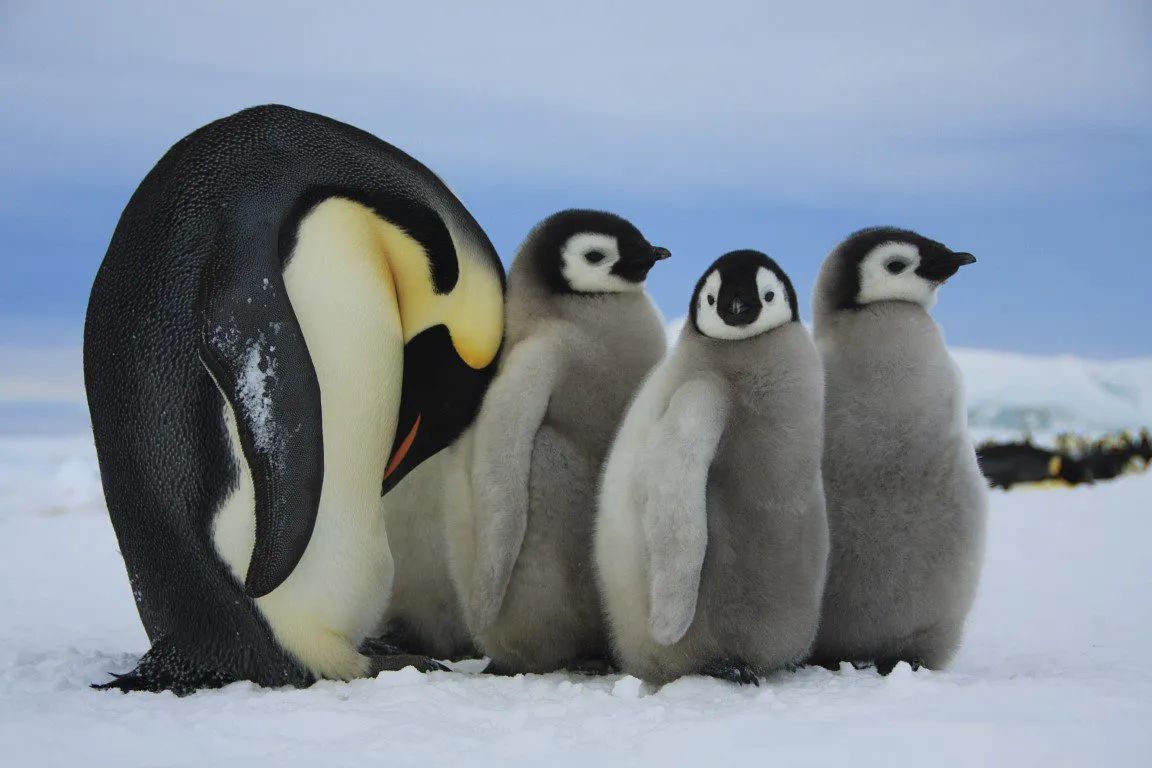
Emperor Penguin and Antarctic Fur Seal Are Now Endangered. Climate Change Is the Cause.
On April 9, 2026, the IUCN moved two iconic Antarctic species to Endangered status — and a third to Vulnerable — in a single Red List update. All three linked to warming seas and disappearing ice.
On April 9, 2026, the International Union for Conservation of Nature (IUCN) formally moved the emperor penguin from “Near Threatened” to “Endangered” on its Red List — the world’s most comprehensive information source on the global conservation status of animal, fungal and plant species. In the same update, the Antarctic fur seal jumped from “Least Concern” directly to “Endangered,” a two-category change that scientists describe as highly unusual. The southern elephant seal was also moved to “Vulnerable” in the same announcement. Three major Antarctic and sub-Antarctic species. One day. One underlying driver: a warming ocean steadily taking the sea ice these animals cannot live without.
The emperor penguin’s current population stands at approximately 595,000 adult individuals — down around 10 percent between 2009 and 2018, across 66 known breeding colonies monitored annually by satellite. The British Antarctic Survey and the IUCN project the population will fall to less than half of today’s count by the 2080s under current emissions trajectories. The Antarctic fur seal’s decline has been even steeper: from approximately 2,190,000 mature individuals in 1999 to approximately 944,000 in 2025 — a loss of more than 50 percent in under three decades. These are the best current population estimates, derived from satellite imagery and ecological modelling.
The IUCN Red List, managed by the world’s largest conservation network, now lists more than 172,600 species assessed, with more than 48,600 threatened with extinction. The April 9 announcement was an early release; the full species assessments for all three Antarctic animals will be published as part of a broader Red List update later in 2026.
From “Least Concern” to “Endangered”
The emperor penguin’s Red List history — 14 years of escalating concern
Emperor penguins are the only warm-blooded animal that breeds on open Antarctic sea ice through winter. Each breeding pair produces a single egg. The male incubates it on his feet for approximately 65 days through polar darkness and temperatures that can drop below −40°C, while the female returns to sea to feed. Chicks hatch in July or August — but they do not develop waterproof adult feathers until December or January. They require approximately nine continuous months of stable fast ice beneath them: sea ice anchored to the Antarctic coastline. When that ice breaks up early, the chick falls into the ocean before it can swim or float. It drowns.
There is no alternative. Emperor penguins cannot migrate to higher ground, shift to a different habitat type, or be sustained through captive breeding programs at any meaningful scale. Their biology is bound entirely to fast ice — and that ice has been at its lowest recorded levels for four consecutive years. According to the National Snow and Ice Data Center (NSIDC), the Antarctic sea ice minimum on February 19, 2023 reached 1.77 million km² — 36 percent below the long-term satellite-era average. The four lowest Antarctic sea ice minimums in 47 years of satellite records all occurred between 2022 and 2025.
Antarctic Sea Ice Annual Minimum (Million km²) — 2016 to 2025
Red bars = record-low territory (<2.0M km²) | Source: NSIDC | † 2025 figure approximate
In 2022, the consequences of ice loss moved from projection to documented catastrophe. Five emperor penguin colonies in the Bellingshausen Sea — Verdi Inlet, Smyley Island, Bryan Peninsula, Pfrogner Point, and Rothschild Island — experienced catastrophic breeding failure when sea ice broke up weeks before chick development was complete. At four of the five sites, satellite images confirmed no chick survival at all.
Peter Fretwell, remote sensing specialist at the British Antarctic Survey, described the event in the BAS announcement: “We have never seen emperor penguins fail to breed, at this scale, in a single season. The loss of sea ice in this region during the Antarctic summer made it very unlikely that displaced chicks would survive.”
It was not the first warning. The Halley Bay colony — once one of Antarctica’s largest, with up to 24,000 breeding pairs — suffered consecutive breeding failures from 2016 to 2018 when sea ice broke up prematurely three years in a row. Most of the colony abandoned the site. By 2022, what had been treated as an anomaly had become a documented and escalating pattern.
Three Species, One Red List Update
All three moved to a higher threat category on April 9, 2026
The Antarctic fur seal’s trajectory is one of conservation history’s sharpest contrasts. Commercial hunters killed more than 1.2 million seals across sub-Antarctic islands from the late 1700s onward, bringing the species close to commercial extinction by the 1920s. Through decades of legal protection, the population at South Georgia alone recovered to an estimated 3.5 million by the early 2000s — widely celebrated as one of the most successful wildlife recoveries ever documented.
Then the ocean warmed. Antarctic krill (Euphausia superba), the small crustaceans that underpin nearly every food chain in the Southern Ocean, shifted to deeper, colder water as surface temperatures rose. Female Antarctic fur seals nurse pups that cannot yet hunt for themselves, and the energy required to dive deeper and farther to find enough krill became unsustainable for many mothers. Pup survival at key breeding sites including Bird Island, South Georgia, began collapsing. According to WWF, the Bird Island population has declined at approximately 7.2 percent per year since 2009. A species saved from human hunters in under a century, undone by atmospheric carbon in under three decades.
This same krill thread connects all three newly listed species. Krill are projected to decline approximately 30 percent by 2100 under current ocean warming trends, according to the Antarctic and Southern Ocean Coalition (ASOC). Proposals for comprehensive catch limits and new Southern Ocean Marine Protected Areas within the Convention on the Conservation of Antarctic Marine Living Resources (CCAMLR) have been blocked repeatedly for three consecutive years, including by countries operating active krill fishing fleets in the same waters where these species feed.
The southern elephant seal’s listing tells a separate but parallel story. Since 2021, H5N1 highly pathogenic avian influenza (HPAI) has swept through seal colonies across the Southern Ocean. A 2024 survey at South Georgia recorded 47 percent fewer breeding females than in 2022. At some sites, mortality among newborn pups exceeded 90 percent. The disease is spreading through seal populations as a compounding threat on top of the climate and food pressures already documented in the same region.
All 66 Known Emperor Penguin Breeding Colonies
Based on BAS and IUCN satellite monitoring data — hover over each dot
“Penguins are already among the most threatened birds on Earth. The emperor penguin’s move to Endangered is a stark warning: climate change is accelerating the extinction crisis before our eyes. Governments must act now to urgently decarbonise our economies.”
“Early sea-ice break-up in spring is already affecting colonies around the Antarctic, and further changes in sea-ice will continue to affect their breeding, feeding and moulting habitat. Human-induced climate change poses the most significant threat to emperor penguins.”
The IUCN’s uplisting is grounded in a 2025 study published in Biological Conservation by Dr. Stéphanie Jenouvrier and colleagues at the Woods Hole Oceanographic Institution (WHOI). It was the first emperor penguin assessment to combine multiple Earth system models and ecological models simultaneously — reducing uncertainty in projections across different warming scenarios. Under the Paris Agreement’s 1.5°C target, emperor penguin populations are projected to stabilize after an approximately 31 percent decline. The species survives. Under current emission trajectories — closer to 3°C of warming by the century’s end — the population is projected to fall below half of today’s numbers by the 2080s, with functional extinction before 2100 a modelled possibility.
The 1.5°C scenario is not a comfortable outcome. A 31 percent decline means the permanent loss of multiple colonies and hundreds of thousands of birds. But it means the species remains. The difference between a 31 percent decline and functional extinction is, in this case, the difference between current national climate commitments and the Paris Agreement’s 1.5°C pathway.
In October 2022, the U.S. Fish and Wildlife Service listed the emperor penguin as Threatened under the Endangered Species Act — the first government-level legal protection for the species. This requires U.S. federal agencies to factor the penguin’s survival into greenhouse gas policy decisions and restricts depletion of key prey in regulated U.S. waters. It is meaningful, but it does not extend over Antarctica itself. That jurisdiction belongs to the Antarctic Treaty — and the meeting that could change things is five weeks away.
🌎 The Policy Window: ATCM48 — Hiroshima, May 11–21, 2026
In 30 days, delegates from 56 nations will gather in Hiroshima, Japan, for the 48th Antarctic Treaty Consultative Meeting (ATCM48), hosted by Japan’s Ministry of Foreign Affairs. BirdLife International, WWF, and the Antarctic and Southern Ocean Coalition (ASOC) are calling on Treaty parties to formally designate the emperor penguin as an Antarctic Specially Protected Species — a status that would create legally binding obligations to reduce human disturbance near breeding colonies and restrict industrial activity in critical habitat. This proposal has been blocked at the Antarctic Treaty for three consecutive years. A single Treaty party rejected it in 2022, citing insufficient scientific evidence. The IUCN’s April 9, 2026 Endangered listing directly addresses that objection.
What You Can Actually Do
In Summary
The IUCN’s April 9, 2026 Red List update recorded the emperor penguin as Endangered, the Antarctic fur seal as Endangered, and the southern elephant seal as Vulnerable. Climate-driven sea ice loss, warming-related krill decline, and the spread of H5N1 avian influenza were identified as the drivers across the three listings. The emperor penguin’s population stands at approximately 595,000 adults — down around 10 percent between 2009 and 2018 — across 66 known breeding colonies. The Antarctic fur seal’s population fell from approximately 2,190,000 mature individuals in 1999 to approximately 944,000 in 2025.
Scientific assessments cited in the April 9 announcement covered the loss of fast ice in Antarctica, the collapse of krill availability in Southern Ocean feeding grounds, and the projected population trajectories under the Paris Agreement’s 1.5°C target versus current emissions scenarios. The announcement was made 32 days before the 48th Antarctic Treaty Consultative Meeting in Hiroshima, Japan (May 11–21, 2026), where a proposal to designate the emperor penguin as an Antarctic Specially Protected Species is expected to be tabled for a fourth consecutive year. The full species assessments will be published as part of a broader IUCN Red List update later in 2026.