India Monsoon 2026: El Niño Threatens August–September Rainfall | KarmActive
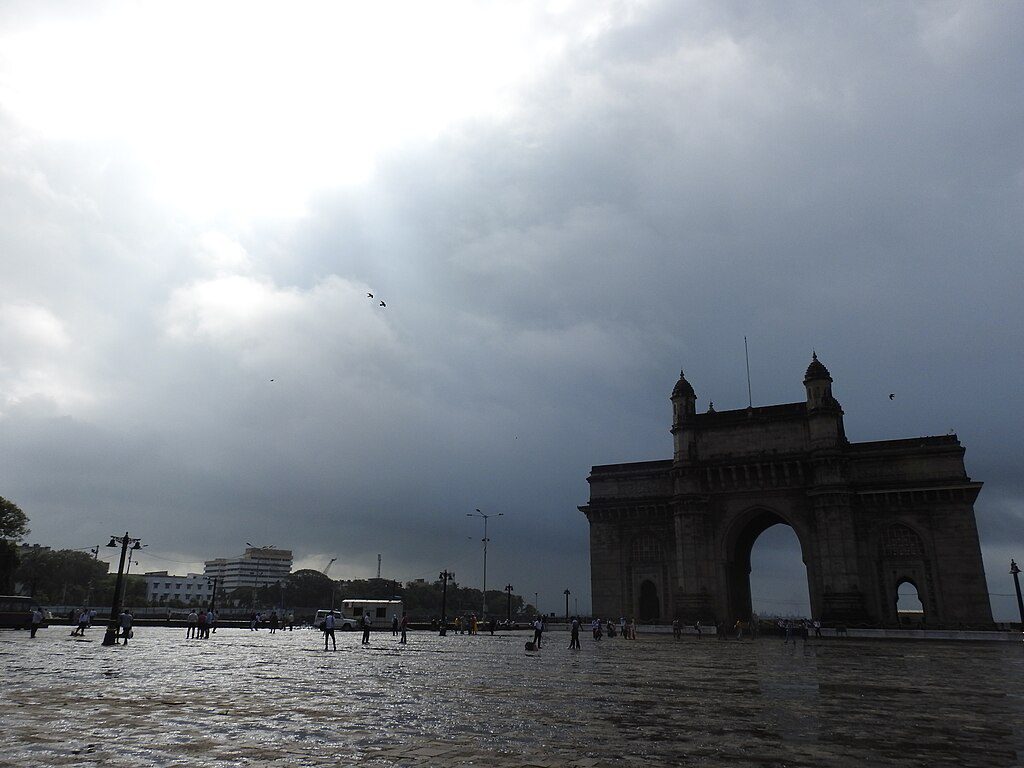
Gateway of India Mumbai during monsoon rainfall
Monsoon 2026

El Niño Is Returning — And India’s August–September Rains Are Already Under Threat

Skymet forecast: 94% of LPA • El Niño expected after June • Northwest and Central India at highest risk

India’s 2026 southwest monsoon is expected to be below normal, with private weather agency Skymet Weather projecting total seasonal rainfall at 94% of the Long Period Average (LPA), with an error margin of ±5%, for the June–September period. The expected range is 90–95% of LPA, placing it in the “below normal” category. In practical terms, this means approximately 817 mm of rain against the standard benchmark of 868.6 mm — a shortfall of about 52 mm.

The forecast was released by Skymet on 7 April 2026. The agency had flagged this concern as early as January 2026, maintaining the same projection. The India Meteorological Department (IMD) is expected to release its own first-stage official forecast later this month. IMD’s early indicators also confirm ENSO-neutral conditions currently prevail in the Pacific, with El Niño development expected to begin after June. The LPA benchmark of 868.6 mm is based on the 1971–2020 period and is the current standard used by both agencies. For context on how 2025’s monsoon arrived 8 days early, see our earlier coverage.

Interactive · Tap a month for details
Month-by-Month Rainfall Forecast, June–September 2026
Projected as % of Long Period Average (LPA) · Source: Skymet Weather, 7 April 2026
Normal (≥100% LPA)
Below Normal (90–99%)
Deficient (<90%)
LPA baseline (100%)
Skymet Probability Distribution
What Are the Chances of a Drought Year?

Skymet’s probability assessment for the full June–September 2026 season

30%
Drought
Rainfall below 90% of LPA. Drought-like conditions across vulnerable regions.
40%
Below Normal
90–95% of LPA. Most likely scenario. Skymet’s central forecast falls here.
20%
Normal
96–104% of LPA. Possible only if the IOD turns strongly positive.

Source: Skymet Weather 2026 forecast. The probability of above-normal rainfall (105–110% LPA) is 10%. The probability of excess rainfall (above 110%) is 0%.

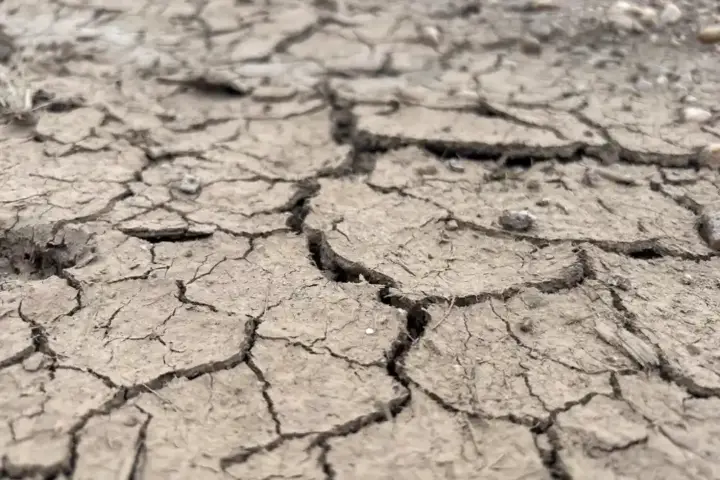
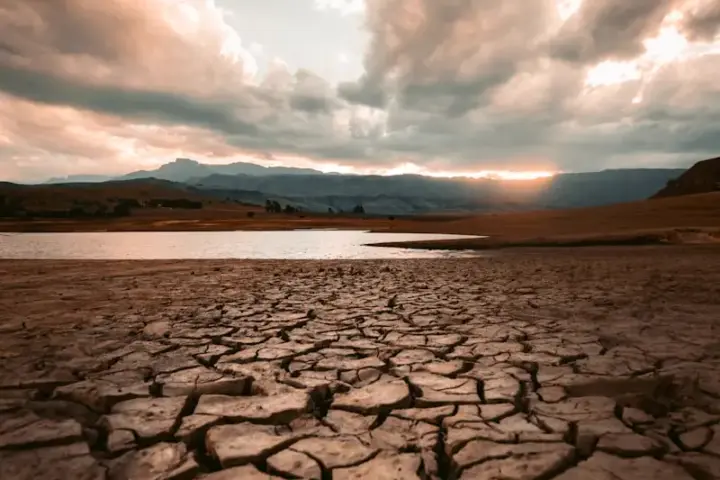
After roughly eighteen months of La Niña — which brought above-average rainfall across much of India in 2024 and 2025 — the Pacific Ocean has returned to ENSO-neutral status. El Niño is now expected to develop during the early phase of the 2026 monsoon and intensify through the second half of the season. The concern this year is the pace: according to Skymet, ocean-atmosphere coupling in the equatorial Pacific is already stronger than usual, meaning El Niño could reach its peak intensity precisely during August and September — the most critical months for Kharif crop development.

The Indian Ocean Dipole (IOD) — an irregular oscillation of sea-surface temperatures between the western and eastern Indian Ocean — is currently projected to be neutral to mildly positive. A positive IOD can partially cushion monsoon circulation against El Niño’s drying influence. However, Skymet notes this mild positive phase is unlikely to be strong enough to prevent a late-season deficit. The IOD may contribute to a decent start in June, but the second half of the season remains at risk.

“After a year and a half of La Niña conditions, the Pacific Ocean has turned favourable for ENSO-neutral. Equatorial Pacific ocean-atmosphere coupling is now stronger than before. El Niño is expected during the early phase of the southwest monsoon and will keep growing stronger till fall of the year. El Niño return may presage a weaker monsoon. The second half of the season is likely to be more unpredictable and erratic.”
— Jatin Singh, Managing Director, Skymet Weather (7 April 2026)
El Niño
La Niña
IOD
MJO
🌡️
What Is El Niño?
El Niño is an irregular warming of sea-surface temperatures in the central and eastern equatorial Pacific Ocean. NOAA defines El Niño conditions as present when the Oceanic Niño Index (ONI) — a 3-month running mean of sea-surface temperature anomalies in the Niño 3.4 region — reaches +0.5°C or higher above average for at least five consecutive overlapping 3-month periods. ENSO shifts irregularly between El Niño and La Niña every 2–7 years, on average.
🌧️
Effect on India’s Monsoon
El Niño disrupts the temperature gradient between the Indian subcontinent and the Indian Ocean, weakening monsoon winds. This reduces or delays rainfall, particularly during August and September. An evolving El Niño — one building through a season rather than already established — can produce especially volatile rainfall: extended dry spells interrupted by concentrated bursts that generate runoff rather than soil absorption.
📅
2026 Timeline
The Pacific is currently at ENSO-neutral. IMD’s Extended Range Forecast from late March 2026 confirmed the transition to ENSO-neutral is most likely in the March–April 2026 window, with El Niño development expected to follow. Both Skymet and IMD agree El Niño intensification will accelerate through July–September, coinciding with the grain-filling stage for Kharif crops.
❄️
What Is La Niña?
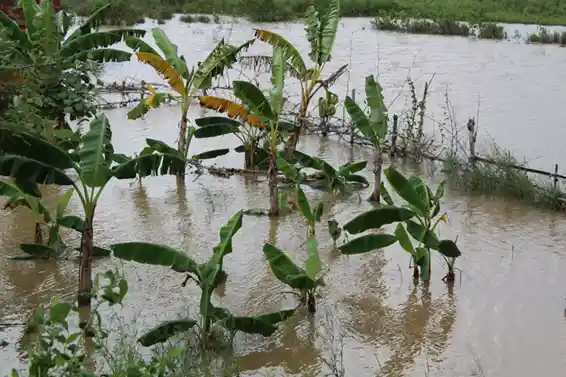
La Niña is the opposite phase: an unusual cooling of the equatorial Pacific. The ONI falls to −0.5°C or below. It typically strengthens monsoon winds, bringing above-normal rainfall to India. La Niña was the dominant Pacific state for approximately 18 months through early 2026.
📈
What La Niña Delivered in 2025
India’s 2025 monsoon arrived over Kerala on 24 May 2025 — 8 days ahead of the normal date of 1 June — the earliest onset in 16 years, per IMD’s onset records. The 2025 season brought strong rainfall supported by an active Arabian Sea and Bay of Bengal. How agencies measure the Niño index in real time is key to understanding these seasonal outlooks.
🔄
The 2026 Shift
La Niña has ended and the Pacific is now at neutral. The warming signal is already building below the Pacific surface. The contrast between 2025’s record early monsoon and 2026’s projected late-season deficit reflects how quickly the Pacific cycle can reverse conditions for Indian agriculture. See KarmActive’s coverage of globally drier-than-normal conditions for broader context.
🌊
What Is the IOD?
The Indian Ocean Dipole (IOD) is an irregular oscillation of sea-surface temperatures between the western Indian Ocean (near the Arabian Sea) and the eastern Indian Ocean (near Indonesia). A positive IOD — where the western side is warmer — tends to pull additional moisture toward India’s west coast and the subcontinent generally.
🛡️
Can It Counter El Niño?
A strongly positive IOD has historically reduced El Niño’s drying impact on India. However, the 2026 IOD is only projected to be neutral to mildly positive — not strong enough to fully offset an intensifying El Niño in the second half of the season. It may support a relatively decent June onset, but this protection is expected to weaken as the season progresses.
📉
IOD Outlook for 2026
Skymet’s assessment is that the IOD “will approvingly contribute to a decent start of monsoon,” but the “chances of monsoon getting impaired during the second half of the season cannot be dismissed.” June’s 101% LPA forecast is partly a product of this mild IOD support, combined with the current MJO pulse.
🌀
What Is the MJO?
The Madden-Julian Oscillation (MJO) is a pulse of enhanced cloudiness and rainfall that moves eastward around the tropics over a 30–60 day cycle. When it passes over the Indian Ocean in its active phases (roughly Phases 2–4), it can temporarily boost monsoon rainfall, even in a weak monsoon year.
📆
Why June Looks Normal
A key reason June is forecast at 101% LPA is the current MJO position, which is providing a temporary moisture boost to the Indian Ocean region. This pulse is expected to support the onset and early weeks of the monsoon before the MJO cycle continues eastward and its protective effect fades.
⚠️
What Happens After June
Once the MJO pulse completes its cycle and El Niño takes over as the dominant driver, the forecast shows a steady decline: July at 95%, August at 92%, and September at 89% of LPA. The combined effect creates a “two-halves” season — a deceptively normal start followed by a progressively weakening second half that threatens the most critical agricultural months. How broader climate signals feed into this pattern is covered here.
Regional Distribution
Where Will the Rain Shortage Hit Hardest?

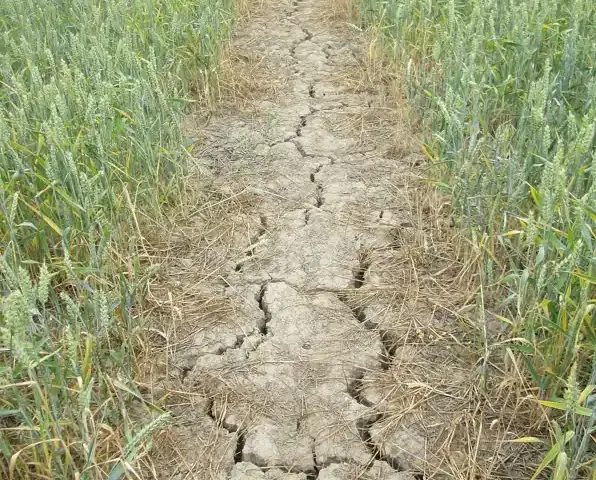
Rainfall distribution in 2026 is expected to be highly uneven. The core monsoon rainfed zones of northwest and central India carry the highest deficit risk, particularly in August–September.

🔴
High Deficit Risk
Punjab, Haryana, Rajasthan, Madhya Pradesh — and parts of western India
August–September: likely below 90% LPA
🟡
Below Normal
Central India, Gujarat, parts of Maharashtra and Uttar Pradesh
Forecast: 90–95% LPA range
🟢
Better Distribution
Bihar, Jharkhand, West Bengal, Odisha, Assam, Meghalaya
Eastern and northeastern states expected to fare better

Source: Skymet Weather 2026 Forecast. The southern peninsula is expected to receive largely normal rainfall. Spatial distribution across all regions carries a risk of being varied and uneven.

Central Water Commission
Reservoir Storage: Heading Into Monsoon Season

Pre-monsoon reservoir levels matter because they are the buffer if the rains disappoint. Low storage in the Northern region means these states are almost entirely dependent on timely rainfall this season.

Northern Region (Punjab, Rajasthan, Himachal)
23%
10-year average: 30%. Significantly below average ahead of the season.
Central Region (UP, MP, Chhattisgarh)
53%
Below last year’s level at the same point in the calendar.
Eastern Region (Bihar, WB, Jharkhand)
61%
Near 10-year average. Better pre-season position.
Overall — 91 Major Reservoirs
63%
Equal to 10-year national average. Regional variation is significant.

Source: PIB / Central Water Commission (PRID: 1486236) & Central Electricity Authority Hydro Reservoir Report. The CWWG report from the Ministry of Agriculture also noted that cumulative rainfall from January–mid February 2026 was 52% below LPA, meaning soil moisture starts the season already at a deficit in many central blocks.

Why This Matters
India’s Agriculture Is Directly Dependent on the Monsoon
51%
of India’s net sown area relies on direct rainfall, with no irrigation
40%
of total food production in India comes from rainfed agriculture
~45%
of India’s working population depends on agriculture for their livelihood

Sources: Ministry of Agriculture & Farmers Welfare — Rainfed Agriculture Division (51% net sown area, 40% food production) & NITI Aayog (approximately 45% of working population in agriculture and allied activities). See also: KarmActive’s coverage of extreme weather and global farming stress.

The India Meteorological Department (IMD) confirmed in early April 2026 that while ENSO-neutral conditions currently prevail, sub-surface warming in the Pacific is already detectable. IMD Director General Dr. Mrutyunjay Mohapatra has stated the department will release its first-stage official forecast this month. IMD’s Extended Range Forecast from late March 2026 confirmed that the transition to ENSO-neutral was most likely in the March–April window, with El Niño expected to follow.

On weather dissemination, the government has activated IMD’s use of Bhashini — an AI-based platform — to share weather information in regional languages, reducing the linguistic barrier for farmers. Separately, Mithuna-FS is NCMRWF’s new-generation coupled global forecasting system operating at 12-km resolution with a 4-km regional model. Both are part of the government’s Mission Mausam initiative, implemented by IMD, NCMRWF, and IITM. The Ministry of Earth Sciences’ Mission Mausam aims to boost weather forecast accuracy and coverage across India.

The Ministry of Agriculture’s CWWG weekly report from February 2026 recorded cumulative rainfall at 52% below LPA from January through mid-February — meaning the ground goes into monsoon season already moisture-depleted in many central farming blocks. Separately, fertilizer market volatility from earlier West Asian supply chain disruptions remains a monitoring concern for the June sowing window. These dynamics connect to the global trend of water stress accelerating under shifting climate conditions.

What Agromet Advisories Are Recommending for 2026
  • 🌱 Sow early in June. With June forecast at 101% LPA, the season’s most reliable rainfall window is at the start. Completing sowing before the monsoon weakens in July reduces crop exposure to the projected late-season deficit.
  • 🌾 Shift to short-duration crop varieties in Northwest India. ICAR advisories recommend short-duration pulses and oilseeds in Punjab, Haryana, and Rajasthan that can mature before September’s projected dry spell. Late-sown paddy varieties face water stress and potential heat stress during grain filling in September.
  • 💧 Prioritise in-situ water conservation. Mulching and community-level rainwater harvesting are advised, particularly in areas where Northern reservoirs are at only 23% capacity. Stored water cannot compensate for a weak August–September in regions that depend almost entirely on rainfall.
  • 📱 IMD is using Bhashini to deliver weather information in regional languages. Farmers can access district-level advisories via the Meghdoot and Mausam apps, integrated with state government platforms across India.

Sources: ICAR agromet advisories & PIB PRID 2241701 (IMD weather dissemination)

Summary
What Was Covered: The 2026 Monsoon Outlook

The 2026 monsoon was summarised around a projected seasonal rainfall of 94% of the Long Period Average — a below-normal outcome, with a 40% probability of landing in that range and a 30% probability of drought-level conditions below 90% LPA. The reports detailed a transition from La Niña through ENSO-neutral to a developing El Niño, with Pacific ocean-atmosphere coupling identified as the primary driver of the late-season deficit risk.

The monthly outlook documented a pattern starting with a near-normal June at 101% of LPA — supported by the current MJO pulse and a mildly positive IOD — followed by declining rainfall through July (95%), August (92%), and September (89%). August and September carry the highest probability of below-normal conditions: approximately 60% and 70% respectively, per Skymet’s probability distribution.

The regional breakdown identified northwest and central India — particularly Punjab, Haryana, Rajasthan, and Madhya Pradesh — as the zones carrying the highest deficit risk, while eastern and northeastern states are expected to fare comparatively better. Reservoir data from the Central Water Commission showed the Northern region at 23% capacity against a 10-year average of 30%. Cumulative pre-monsoon rainfall from the CWWG report was recorded 52% below LPA through mid-February, indicating depleted soil moisture across central farming blocks. These conditions and their connection to wider climate variability are documented in KarmActive’s coverage on the UN’s climate crisis warnings and the broader impacts of climate-driven heat stress.


Karmactive Whatsapp group - https://www.whatsapp.com/channel/0029Vb2BWGn77qVMKpqBxg3D

Rahul Somvanshi

Rahul, possessing a profound background in the creative industry, illuminates the unspoken, often confronting revelations and unpleasant subjects, navigating their complexities with a discerning eye. He perpetually questions, explores, and unveils the multifaceted impacts of change and transformation in our global landscape. As an experienced filmmaker and writer, he intricately delves into the realms of sustainability, design, flora and fauna, health, science and technology, mobility, and space, ceaselessly investigating the practical applications and transformative potentials of burgeoning developments.

Leave a Reply

Your email address will not be published.

Dozens of poodle-cross dogs overcrowded inside a house during RSPCA multi-animal rescue in the UK
Previous Story

“This Photo Is Not AI” — RSPCA Rescues 250 Dogs as UK Multi-Animal Cases Hit a 70% Rise

Latest from Weather

Don't Miss